
Super Cone Rubber Fenders: The Ultimate Guide to Next-Generation Marine Protection
02/04/2026W Type Rubber Fenders: The Ultimate Protection for Tugs and Heavy-Duty Vessels
09/04/2026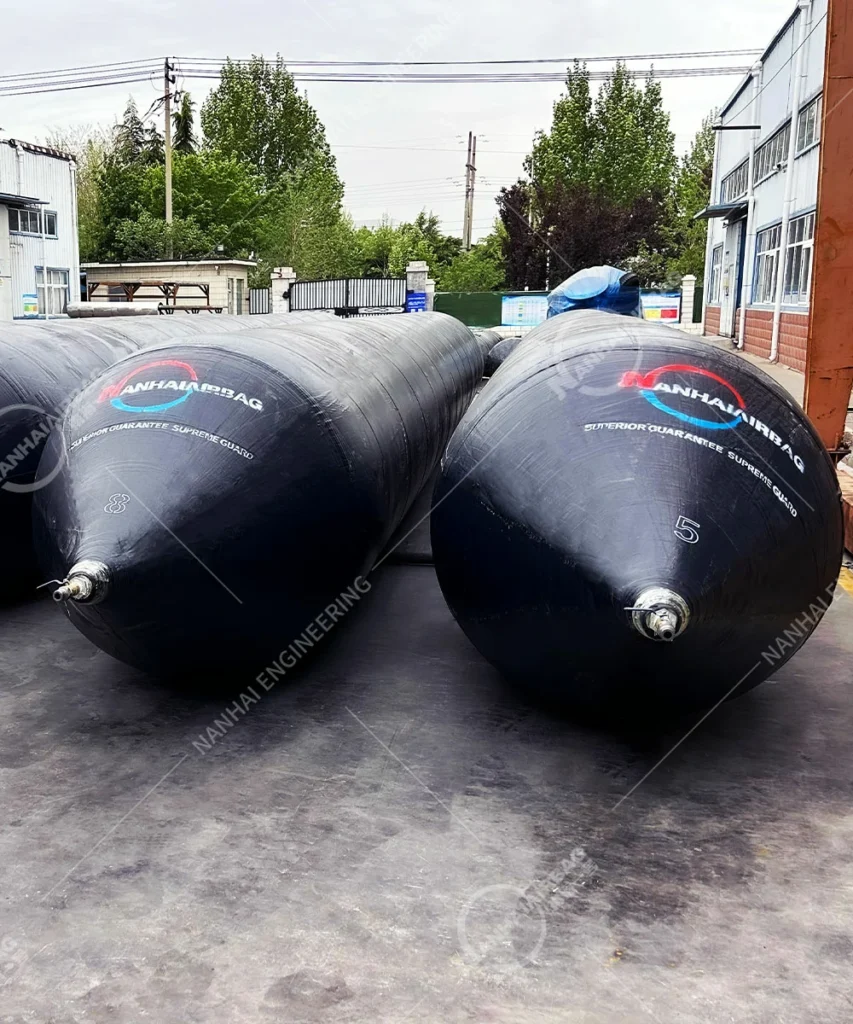
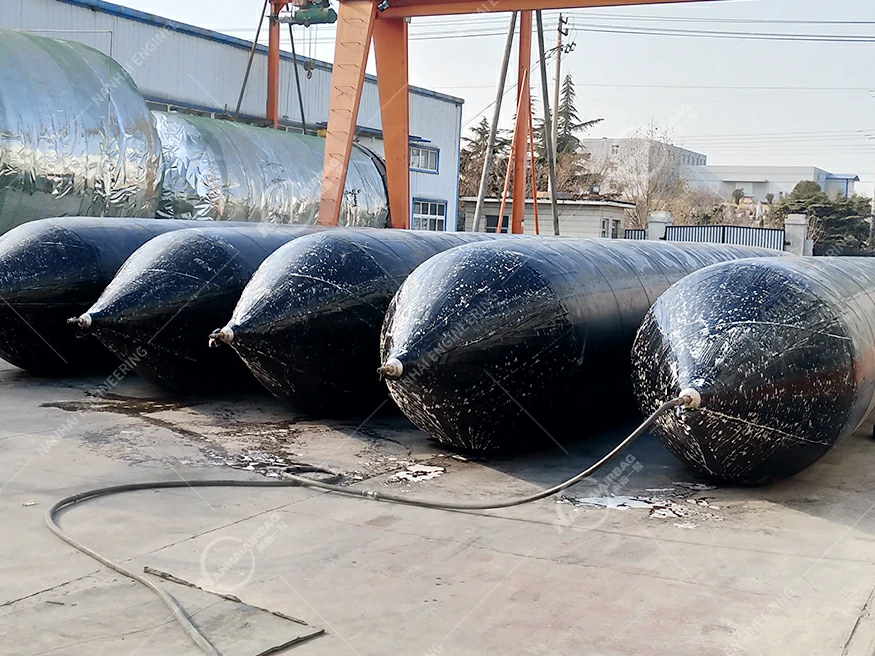
Ship launching airbags (also known as marine airbags, launching air tubes, or inflatable lifting bags) are flexible, high-strength rubber systems that revolutionize how vessels are launched into water. By placing these inflatable bags under a ship’s hull and inflating them, they create buoyancy and rolling power to smoothly slide the vessel from land to sea. This method eliminates the need for expensive fixed slipways or dry docks, reducing capital investment by 30%-50% while offering unparalleled flexibility for shipyards of all sizes. With their multi-layer synthetic tire cord fabric construction and durable rubber coatings, these airbags can handle extreme conditions, resist punctures, and maintain flexibility even at very low temperatures—making them ideal for operations in high-latitude ports like Russia, Northern Europe, and Canada.
Why Shipyards Worldwide Are Switching to Airbag Launching Technology
Imagine launching a 5,000-ton vessel without a multi-million dollar slipway or months of dry dock preparation. That’s the reality with ship launching airbags, which have transformed vessel launching from a capital-intensive process into an efficient, flexible operation. Unlike traditional methods that subject hulls to abrupt shocks, these systems absorb and distribute stress evenly, protecting vessels from costly structural damage. Research from naval architects shows that shipyards using airbag technology experience 62% fewer hull deformation problems during vessel launching compared to traditional slipways .
Key Advantages with Real-World Impact:
- Significant Cost Savings: Compared to constructing dry docks or purchasing large-scale lifting equipment, airbags reduce capital investment by 30%-50% while eliminating long-term maintenance of complex facilities .
- Enhanced Safety: The even pressure distribution prevents “hotspots” where damage typically occurs, minimizing hull damage and mechanical stress during launching operations .
- Operational Flexibility: One airbag set can serve multiple projects and be easily moved, deployed, and shared between different locations—perfect for smaller shipyards expanding capacity or large shipyards needing backup systems .
- Durability in Extreme Conditions: Next-generation designs like the “Bee Nest” airbag feature high-strength anti-puncture composite layers and honeycomb surface designs that maintain flexibility at very low temperatures .
How Ship Launching Airbags Work: Technology Behind the Innovation
Core Components & Construction
Ship launching airbags consist of three primary elements that ensure reliable performance:
- Reinforced Body: Made with multiple layers of synthetic tire cord fabric using holistic wrapping techniques, providing high density and strong resistance to tearing .
- Protective Rubber Layers: The inner layer ensures air tightness and pressure resistance, while the outer layer protects against abrasion, aging, UV light, and seawater corrosion .
- Valve System: Includes swivel joints, safety valves, stainless steel ball valves, and pressure gauges to ensure proper air sealing and easier operation .
The Launching Process Simplified
The operation follows a straightforward yet carefully engineered sequence:
- Positioning: Airbags are strategically placed under the vessel’s hull according to weight distribution calculations.
- Inflation: Using industrial air compressors, the bags are inflated to predetermined pressure levels.
- Lifting & Rolling: As the airbags expand, they lift the vessel and create a rolling motion toward the water.
- Controlled Launch: The vessel smoothly slides into the water with minimal stress on the hull structure.
5 Critical Applications Where Ship Launching Airbags Excel
1. Small to Medium Shipyards
For facilities without permanent launching infrastructure, airbags provide an affordable entry point. They enable smaller operations to launch vessels up to 10,000 tons without massive capital investment in slipways .
2. Emergency & Salvage Operations
Beyond new vessel launches, these airbags serve as salvage airbags and water-blocking airbags for emergency situations, offering versatile solutions for marine rescue teams .
3. Remote & Challenging Locations
In areas with limited infrastructure or difficult terrain, airbags can be transported and deployed with minimal equipment—perfect for offshore projects or temporary shipbuilding sites .
4. Large Shipyard Supplementation
Even well-equipped shipyards use airbags as backup systems during slipway maintenance or for launching special vessel types that require flexible approaches .
5. Civil Engineering Projects
Beyond ship launching, this technology has been adapted for caisson sinking and other heavy lifting applications in marine construction .
FAQs: Answering Your Top Ship Launching Airbag Questions
Q1: How do ship launching airbags differ from marine fenders or rubber fenders?
A: While marine fenders and rubber fenders are designed for docking protection (absorbing impact between vessels and docks), ship launching airbags are specifically engineered for launching vessels from land to water. They provide lifting capacity and controlled movement rather than just impact absorption .
Q2: What’s the maximum vessel size that can be launched using airbags?
A: Modern airbag systems can handle vessels up to 10,000 tons, with specialized configurations available for even larger projects. The key factors are proper weight distribution and using sufficient airbags with appropriate pressure ratings .
Q3: How long do ship launching airbags typically last?
A: With proper maintenance and storage, high-quality airbags can last 15-20 years. Regular inspections of the exterior, valves, and pressure systems are essential for maximizing lifespan .
Q4: Are airbags safe for all types of hulls, including fiberglass and aluminum?
A: Yes—the even pressure distribution actually makes airbags safer for delicate hulls than traditional methods. The flexible contact surface adapts to hull contours, preventing concentrated pressure points that could damage sensitive materials .
Q5: What’s the total cost of implementing an airbag launching system?
A: Beyond the airbags themselves, you’ll need an air compressor, towing equipment, and labor. However, the total investment is typically 30-50% lower than constructing permanent launching infrastructure, with faster payback periods .
Q6: Can airbags be used in cold weather conditions?
A: Advanced models like the “Bee Nest” airbag are specifically designed for high-latitude operations, maintaining flexibility and performance even at extremely low temperatures encountered in regions like Russia, Northern Europe, and Canada .
Making the Switch: Practical Considerations for Implementation
Choosing the Right Airbag System
When selecting ship launching airbags, consider these key factors:
- Load Capacity: Match airbag specifications to your typical vessel weights with a safety margin of at least 20%.
- Material Quality: Look for multi-layer synthetic tire cord fabric and durable rubber coatings that resist abrasion, UV degradation, and seawater corrosion .
- Temperature Range: Ensure the airbags can operate in your local climate conditions, especially if working in cold environments .
- Manufacturer Experience: Choose suppliers with documented project success and technical support capabilities.
Maintenance Best Practices
To maximize your investment and ensure safety:
- Regular Inspections: Check for surface damage, valve integrity, and pressure gauge accuracy before each use.
- Proper Storage: Clean and dry airbags thoroughly before storage, and keep them in a cool, dry place away from direct sunlight.
- Pressure Management: Never exceed recommended pressure limits, and monitor pressure throughout the launching process.
- Professional Training: Ensure all personnel understand proper positioning, inflation, and deflation procedures.
The Future of Vessel Launching: Why Airbags Are Here to Stay
As shipbuilding continues to evolve toward more flexible, cost-effective solutions, ship launching airbags represent not just an alternative to traditional methods, but a superior approach for many applications. Their ability to reduce capital costs while improving safety makes them particularly valuable in today’s competitive marine industry. Whether you’re a small shipyard looking to expand capabilities or a large operation seeking backup systems, airbag technology offers proven benefits that translate directly to your bottom line.
For shipyards ready to embrace this innovative approach, the transition begins with consulting experienced suppliers who can provide customized solutions based on your specific vessel types, site conditions, and operational requirements. The combination of reduced infrastructure costs, enhanced safety, and operational flexibility makes ship launching airbags one of the most valuable investments a modern shipyard can make.
Keywords: marine airbags, marine fenders, rubber fenders, ship launching airbags, vessel launching technology, inflatable launching systems, shipyard cost reduction, marine safety equipment.
