
Super Cone Rubber Fenders: Maximum Energy Absorption for High-Performance Marine Berths
30/06/2026Super Cell Rubber Fender: The High-Performance Choice for Heavy-Duty Marine Protection
08/07/2026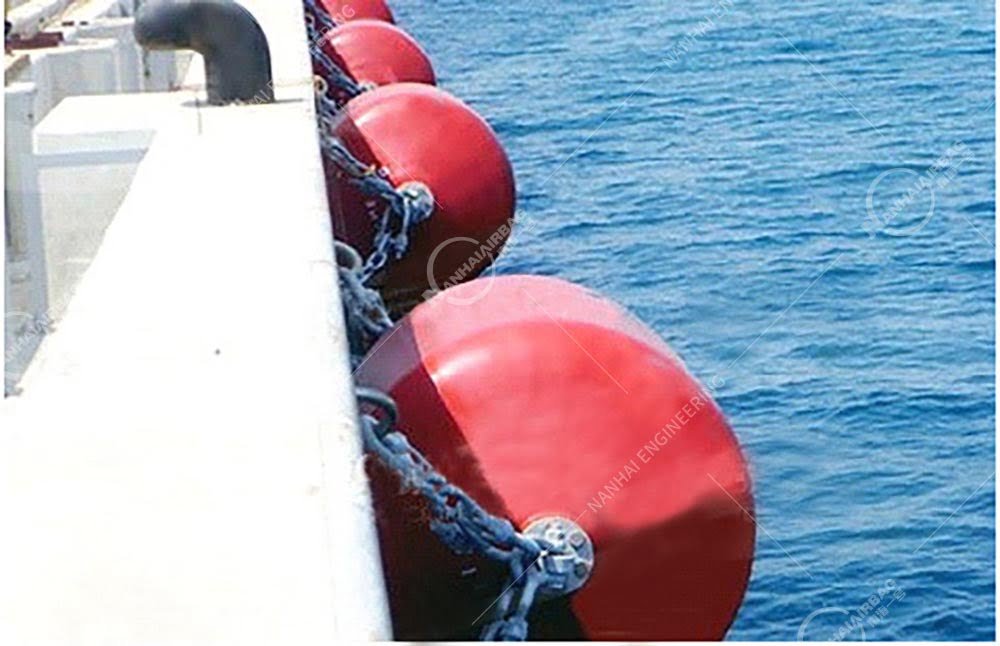
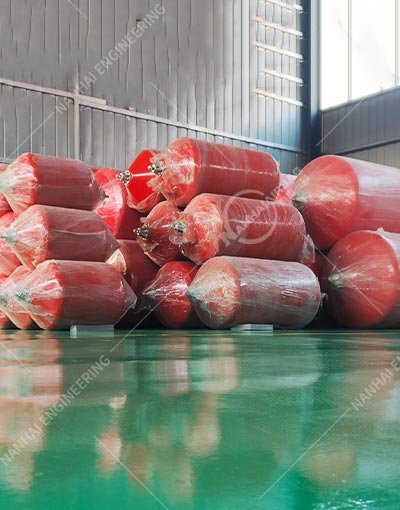
Foam Filled Fenders—officially known as Closed-Cell Polyethylene Foam Filled Marine Fenders—are high-performance, unsinkable impact barriers constructed with a resilient foam core and a tough, abrasion-resistant polyurethane elastomer skin. Unlike pneumatic fenders that rely on compressed air, these fenders cannot burst, lose pressure, or sink, making them the ultimate “fit-and-forget” solution for ship-to-ship (STS) transfers, offshore platform defense, and high-traffic ports where reliability is non-negotiable.
Why Ports Are Moving Away from Pneumatic Fenders
For decades, pneumatic rubber fenders (the “Yokohama-type”) were the gold standard for high-energy berthing. However, they come with a significant Achilles’ heel: they are pressurized. A single puncture from a sharp hull feature, a rogue piece of rebar, or excessive over-compression can lead to a catastrophic blowout or a slow leak that renders the fender useless precisely when it’s needed most.
Foam Filled Fenders eliminate this risk entirely. Instead of air, they use a core of closed-cell polyethylene foam. If the tough polyurethane (PU) skin is punctured, the foam remains intact, buoyant, and fully functional.
Real-World Advantages in Action
Offshore Safety: On a North Sea oil platform, maintenance crews replaced their pneumatic fenders with foam-filled equivalents after a storm caused a tear in a pneumatic unit, leaving the platform vulnerable during a tanker offload. Since switching, the fenders have survived impacts from vessels in 4-meter swells without a single pressure-related failure.
Zero-Downtime Operations: A busy ferry terminal in the Mediterranean used to spend 10 hours a week inspecting and topping up pneumatic fenders. After switching to foam-filled fenders, that time dropped to near zero. The fenders simply hang in place, absorbing the daily wear and tear of high-frequency ferry berthing without any intervention.
Salvage and Temporary Berthing: Because they are lightweight yet incredibly robust, foam-filled fenders are often deployed alongside marine airbags during salvage operations. While airbags provide the heavy lift to refloat a vessel, foam fenders protect the hull from secondary impacts against the dock or other vessels during the towing process.
The Engineering Edge: 4 Reasons Foam Filled Fenders Excel
1. Unsinkable by Design
The closed-cell foam core contains millions of tiny, sealed air pockets. Even if the outer skin is completely compromised, the fender maintains 100% of its buoyancy. This is why they are mandatory for many naval and coast guard operations where a sinking fender could become a navigation hazard or foul a propeller.
2. Progressive Energy Absorption
As a vessel pushes against a foam-filled fender, the foam compresses. The energy absorption curve is “progressive,” meaning the harder the impact, the more energy the fender absorbs. This prevents the “snap-back” effect sometimes associated with solid rubber fenders like Arch or Square types, providing a smoother deceleration for the vessel.
3. Ultra-High Abrasion Resistance
The outer skin is typically a nylon-reinforced polyurethane elastomer. This material is significantly tougher than the rubber used in standard pneumatic fenders. It resists scraping against rough concrete quay walls, barnacle-covered hulls, and steel structures, leading to a service life often exceeding 15 years in harsh conditions.
4. Low Reaction Force
Similar to their pneumatic cousins, foam-filled fenders offer a low reaction force relative to their energy absorption. This is critical for protecting lightweight aluminum vessels, patrol boats, or older wharf structures that cannot withstand high impact loads.
Foam Filled vs. Pneumatic Fenders: A Quick Comparison
| Feature | Foam Filled Fenders | Pneumatic Rubber Fenders |
|---|---|---|
| Core Material | Closed-cell Polyethylene Foam | Compressed Air |
| Risk of Sinking | None (Unsinkable) | Possible if ruptured |
| Maintenance | Minimal (Rinse and inspect) | High (Pressure checks, valve maintenance) |
| Impact Performance | Progressive absorption | Linear absorption |
| Initial Cost | Higher | Lower |
| Total Cost of Ownership | Lower (Long lifespan, no repairs) | Higher (Repairs, downtime, inspections) |
Related Questions (People Also Ask)
❓ What is the difference between foam filled fenders and pneumatic fenders?
The primary difference lies in the core. Pneumatic fenders use compressed air to absorb impact, requiring constant pressure monitoring and carrying a risk of bursting. Foam filled fenders use a solid core of closed-cell foam, making them unsinkable and virtually maintenance-free. While pneumatic fenders are cheaper upfront, foam fenders offer a lower total cost of ownership over a decade.
❓ Can foam filled fenders be repaired?
Yes, but it is rarely necessary. Minor cuts or abrasions in the polyurethane skin can be repaired using a specialized two-part polyurethane patching compound. Because the foam core is closed-cell, water cannot penetrate the interior, so even a puncture doesn’t compromise the fender’s buoyancy or structural integrity.
❓ Are foam filled fenders suitable for ship-to-ship (STS) transfers?
Absolutely. In fact, STS transfer is one of their primary applications. Because they cannot deflate during a transfer—where vessels are constantly moving against each other—they provide a much safer and more reliable barrier than pneumatic fenders, which can lose pressure if pinched between two hulls.
❓ How do I choose the size of a foam filled fender?
Sizing depends on the vessel’s displacement, berthing velocity, and the allowable reaction force of the dock. Manufacturers provide performance curves (Energy vs. Deflection). Generally, foam fenders are selected based on the required “Energy Absorption” (kJ) measured in kilojoules. For large tankers, diameters of 3.3m x 6.5m or larger are common.
❓ Do foam filled fenders need to be inflated?
No. This is their biggest advantage. There is no air pressure to monitor, no valves to check (beyond the initial sealing plug), and no risk of a slow leak. They are ready to deploy straight from storage, making them ideal for emergency response or temporary berthing situations.
❓ How do foam filled fenders compare to solid rubber fenders?
Solid rubber fenders (like Arch, D, or Square types) are typically bolted to a dock and offer high energy absorption but with a much higher reaction force. Foam filled fenders are floating fenders. They are generally better at absorbing high-energy impacts with less stress on the vessel’s hull than solid rubber fenders, and they can be moved and repositioned as needed.
The Bottom Line
While the initial purchase price of a foam filled fender is higher than a pneumatic one, the savings in maintenance, the elimination of downtime, and the guarantee of unsinkable performance make them the smartest long-term investment for any serious marine operation. Whether you are protecting a billion-dollar LNG carrier or ensuring the safety of a naval fleet, foam filled fenders provide peace of mind that no other marine fender can match.
Next Step: If you are currently using pneumatic fenders and experiencing high maintenance costs, consider requesting a “Total Cost of Ownership” comparison from a supplier. You might be surprised to find that switching to foam-filled technology pays for itself faster than you think.
Keywords: Foam Filled Fenders, marine airbags, marine fenders, rubber fenders, closed-cell foam fenders, unsinkable fenders, ship-to-ship fenders.
