
How to choose the right pneumatic fender?
30/12/2025How to Choose Yokohama Fenders: A Comprehensive Guide for Marine Safety & Efficiency
07/01/2026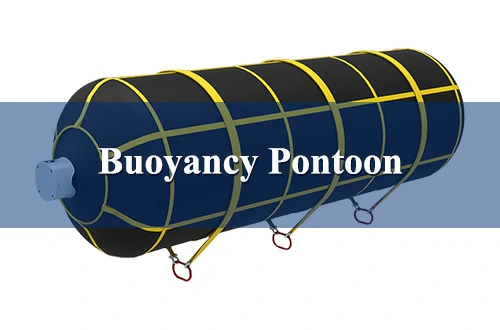
In the realm of marine engineering, innovation often comes in the form of simple, yet powerful tools. Buoyancy rubber airbags, also known as marine airbags, are a prime example. These inflatable devices have transformed traditional practices in shipbuilding, salvage, and heavy lifting, offering a blend of safety, efficiency, and cost savings that is hard to match.
Google Selected Summary: The Core of Buoyancy Airbag Applications
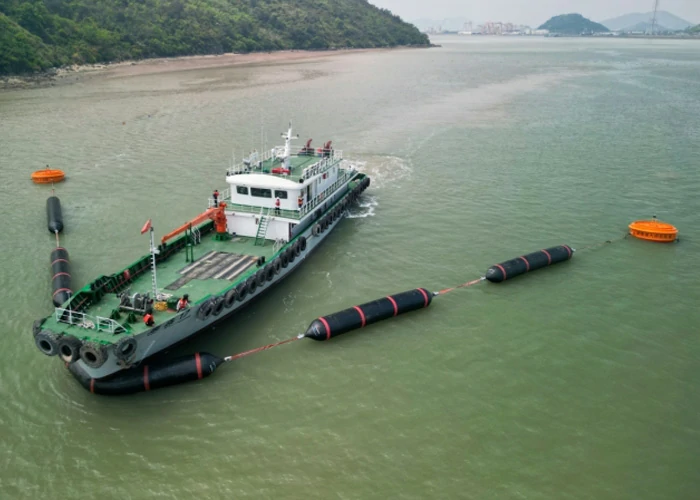
Buoyancy rubber airbags are heavy-duty, inflatable tubes made from reinforced rubber, designed to provide controlled lift and buoyancy in marine environments. As a specialized type of marine airbag, they are used to launch ships, haul heavy vessels, assist in salvage operations, and protect assets during emergencies. Their modular design allows them to be arranged in various configurations to suit different tasks, making them incredibly versatile. The primary applications of buoyancy rubber airbags include ship launching and recovery, where they replace costly dry docks; heavy object relocation, such as moving stranded barges; and emergency flotation for submerged structures. They are also used as temporary bumpers, functioning similarly to marine fenders or rubber fenders, to shield vessels during unexpected berthing. Their high strength-to-weight ratio and reusability make them a cornerstone of modern maritime operations.
The Advantages and Applications of Buoyancy Rubber Airbags
Buoyancy rubber airbags are celebrated for their unique combination of strength, flexibility, and economic efficiency. Here are some of their key applications, illustrated with real-world examples.
1. Ship Launching and Recovery: A Modern Alternative
Perhaps their most famous application is in launching newly built ships or recovering grounded vessels. By placing a series of airbags under the hull and inflating them, a ship can be gently slid into the water. Example: A shipyard in Shandong, China, used over 100 large marine airbags to successfully launch a 90,000-ton bulk carrier, demonstrating the feasibility of this method for even the largest vessels.
2. Heavy Lifting and Moving
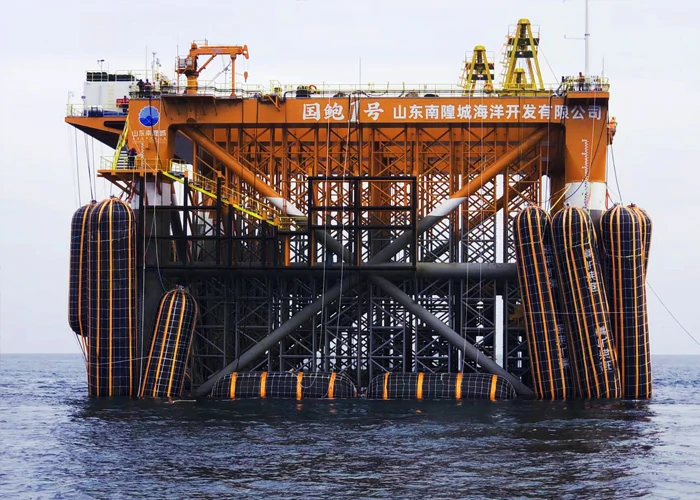
These airbags can be used to lift and move extremely heavy objects, such as sunken ships, bridge sections, or oil rig components. By distributing the weight evenly, they prevent structural damage. Example: Engineers in the Netherlands used a set of high-capacity airbags to rotate a decommissioned submarine upright for scrapping, a task that would have been impossible with conventional cranes.
3. Salvage Operations
In emergencies, buoyancy airbags provide an immediate flotation device for sunken or damaged vessels. They can be quickly deployed to raise a wreck or keep it afloat for towing. Example: After a fishing trawler sank off the coast of Alaska, responders deployed marine airbags to bring it back to the surface, saving the crew and preventing an environmental disaster.
4. Temporary Marine Fendering
In a pinch, a row of airbags can be positioned along a pier to act as temporary marine fenders or rubber fenders. They absorb impact energy, protecting both the vessel and the dock structure during an unexpected arrival. Example: A cargo ship with steering failure used a line of airbags laid out by a tugboat as a soft landing zone, preventing millions of dollars in damage to the port’s wharf.
Engage: Could One Airbag Solve Your Biggest Maritime Challenge?
Imagine having a single piece of equipment that can launch a supertanker, lift a sunken wreck, and protect your dock—all while saving you hundreds of thousands of dollars. That’s the power of buoyancy rubber airbags. But how do you choose the right airbag for your specific job? And what are the critical safety considerations? The answers lie in understanding the technology’s full potential.
Related Questions (FAQs)
- What are buoyancy rubber airbags? They are inflatable tubes made of reinforced rubber, also known as marine airbags, used to provide lift and buoyancy for ships and heavy objects.
- How do marine airbags work? They are positioned under a vessel or object and inflated with compressed air, creating a cushion of buoyancy that can be used to lift, move, or launch the item.
- What is the difference between marine airbags and marine fenders? Marine airbags are primarily used for launching, lifting, and salvage. Marine fenders (or rubber fenders) are stationary or floating bumpers designed to absorb collision energy during berthing. However, airbags can be used as temporary fenders.
- What materials are buoyancy rubber airbags made of? They are made from synthetic rubber (like natural rubber or chloroprene) reinforced with strong nylon or polyester cords for high tensile strength.
- Can buoyancy rubber airbags be reused? Yes, they are designed for multiple uses. After deflation and inspection for damage, they can be reinflated and deployed again.
- What is the lifespan of a marine airbag? With proper storage and maintenance, a high-quality marine airbag can last 6-10 years, depending on usage and environmental exposure.
Final Thoughts
The applications of buoyancy rubber airbags are vast and varied, touching nearly every aspect of marine operations. From the shipyard to the salvage site, these robust tools offer a smarter way to handle heavy loads and challenging environments. As a critical component of the marine airbags family, they continue to prove their value against more traditional methods, including stationary marine fenders and rubber fenders. Investing in this technology is an investment in efficiency, safety, and innovation.
Keywords emphasized: marine airbags, marine fenders, rubber fenders.
