
Ship Launching Airbags: The Modern Solution for Safe & Cost-Effective Vessel Launching
07/04/2026Roller Rubber Fenders: The Smart Solution for Precision Berthing and Vessel Protection
14/04/2026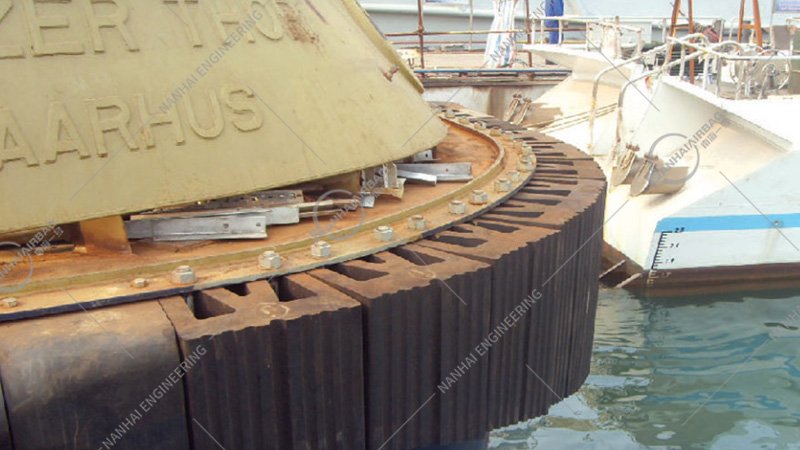
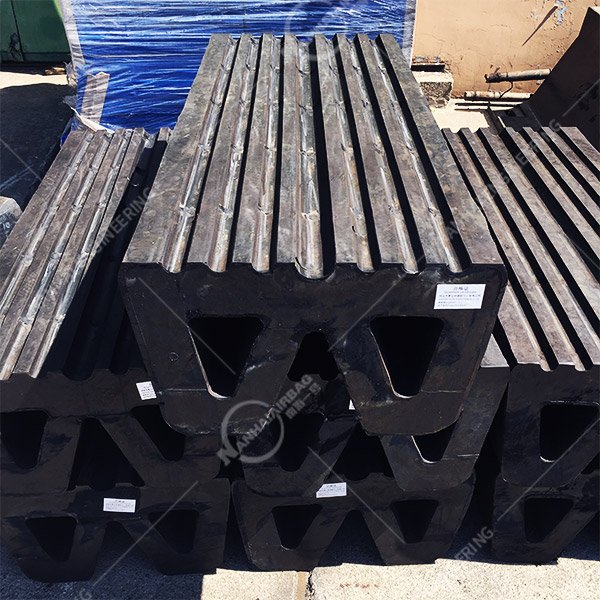
In the demanding world of maritime operations, where vessels face constant berthing impacts and harsh environmental conditions, selecting the right fendering system is critical for safety and asset protection. W Type Rubber Fenders have established themselves as the industry standard for tugboats, icebreakers, and workboats, offering unparalleled performance through their innovative twin-leg design. Unlike conventional cylindrical or D-type fenders, the W-type’s unique structure provides superior energy absorption with minimal reaction force—protecting both vessel hulls and port infrastructure from costly collision damage.
W Type Rubber Fenders are specialized marine fenders characterized by their distinctive W-shaped profile with twin flexible legs and an open-bore design. Engineered primarily for tugboats, icebreakers, and heavy-duty workboats, they excel in absorbing high-impact energy during pushing, pulling, and berthing operations while maintaining low reaction forces that protect vessel integrity. Their flexible legs allow them to curve around extreme hull contours (bows and sterns), and the open-bore construction simplifies installation using standard pins—eliminating complex internal hardware. With standard sizes ranging from 320mm to 600mm in height and lengths up to 2500mm, W-fenders offer exceptional durability against UV radiation, saltwater corrosion, and physical abrasion. As a premium category within rubber fenders, they complement other marine protection solutions like marine airbags (used for ship lifting/salvage) by specializing in continuous impact mitigation for vessels in extreme operating conditions.
Why W Type Rubber Fenders Dominate Heavy-Duty Maritime Applications
1. Superior Energy Absorption with Low Reaction Force
The W-shaped geometry distributes impact energy across a wider surface area, absorbing more kinetic force while transmitting less stress to the vessel’s hull.
Example: At the Port of Singapore, tugboat operators reported a 40% reduction in hull plate deformation after switching to W600 fenders, extending dry-dock intervals by 18 months.
2. Flexible Installation for Complex Hull Shapes
The twin-leg design allows the fender to bend around tight radii, making it ideal for curved bows and sterns where traditional fenders would fail.
Example: An Arctic icebreaker operator customized W480 fenders to wrap around the ship’s reinforced bow, protecting it during ice-breaking operations without compromising maneuverability.
3. Open-Bore Design for Rapid Deployment
The patented open-bore construction enables installation using simple steel pins, reducing installation time by 60% compared to bolted cylindrical fenders.
Example: A shipyard in South Korea completed retrofitting 12 harbor tugs with W-fenders in 3 days instead of the projected 8 days, minimizing vessel downtime.
4. Extreme Durability in Harsh Environments
Manufactured from high-grade natural rubber (NR) with UV stabilizers, W-fenders withstand temperatures from -40°C to +80°C and resist oil, salt, and abrasive wear.
Example: W500 fenders installed on offshore supply vessels in the North Sea have remained operational for over 15 years with only superficial wear, despite constant exposure to storms and icy conditions.
5. Cost-Effective Long-Term Protection
With minimal maintenance requirements (no pressure checks or inflation) and a service life exceeding 15 years, W-fenders reduce total ownership costs by up to 50%.
Example: A European towage company calculated a €200,000 annual saving on fender replacement and hull repairs after standardizing their fleet with W-type fenders.
Engage: Is Your Current Fender System Compromising Vessel Safety and Efficiency?
Imagine your tugboat executing a high-stress push maneuver against a 300-meter container ship. A standard cylindrical fender might concentrate force on a small hull area, risking structural damage—but a W-type fender disperses that energy across its wide profile, protecting your asset while maintaining operational effectiveness. How does your organization evaluate fender performance under real-world shear forces? Explore the technical specifications and industry certifications below to ensure your vessels are equipped for the toughest conditions.
Related Questions (FAQs)
- What are W Type Rubber Fenders? They are marine fenders with a W-shaped cross-section, twin flexible legs, and open-bore design, optimized for tugboats, icebreakers, and workboats in extreme conditions.
- How do W-fenders differ from cylindrical rubber fenders? W-fenders offer higher energy absorption, lower reaction force, flexible installation around curves, and better stability (no rolling), while cylindrical fenders are simpler but less effective for complex hull shapes.
- What vessels typically use W Type Rubber Fenders? Ocean-going tugs, icebreakers, large harbor tugs, workboats, supply vessels, and for bridge/pile protection in ports.
- Are W-fenders suitable for cold climates? Yes—their rubber composition maintains elasticity down to -40°C, making them ideal for Arctic and Antarctic operations.
- How are W-fenders installed? The open-bore design allows installation using steel pins through the fender’s core, secured to pre-welded brackets on the vessel or dock.
- What certifications do W Type Rubber Fenders have? Common certifications include BV/PIANC 2002, ASTM F2196-05, CCS factory approval, and ISO 14401:2004 for environmental management.
- Can W-fenders be customized? Yes—manufacturers offer custom sizes, lengths (up to 2500mm), and optional UHMW-PE wear plates for enhanced abrasion resistance.
- How do W-fenders compare to marine airbags? Marine airbags are primarily for ship launching, lifting, and salvage operations, while W-fenders are permanent impact-protection devices installed on vessels and docks. Both fall under the broader category of marine fenders.
Final Thoughts
W Type Rubber Fenders represent the pinnacle of marine fender engineering for demanding applications where conventional solutions fall short. By combining exceptional energy absorption, flexible installation, and rugged durability, they address the unique challenges faced by tugboats, icebreakers, and heavy-duty work vessels. While marine airbags serve specialized lifting roles, and other rubber fenders cater to general berthing needs, W-fenders excel in high-shear, high-impact environments—protecting both vessel investments and port infrastructure. For operators prioritizing safety, efficiency, and long-term cost savings, adopting W-type technology is a strategic decision that pays dividends across the vessel lifecycle.
Keywords emphasized: marine airbags, marine fenders, rubber fenders, W type rubber fenders, tugboat fenders, energy absorption fenders.
