
Yokohama Fender: The Complete Guide to Pneumatic Rubber Fenders for Safe Berthing
22/09/2026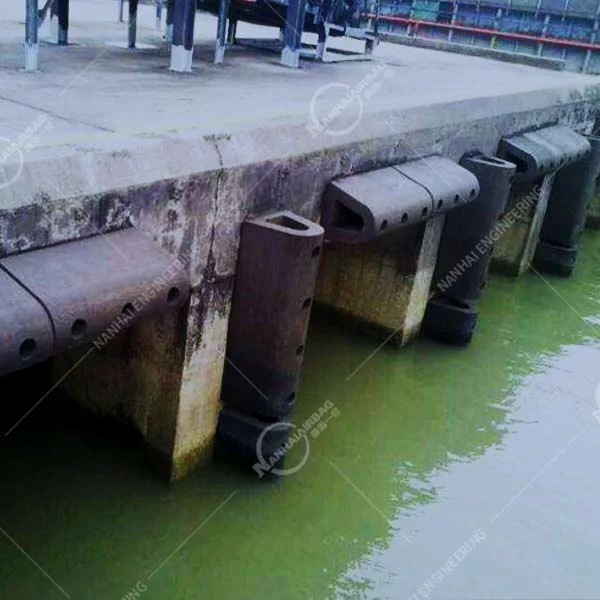
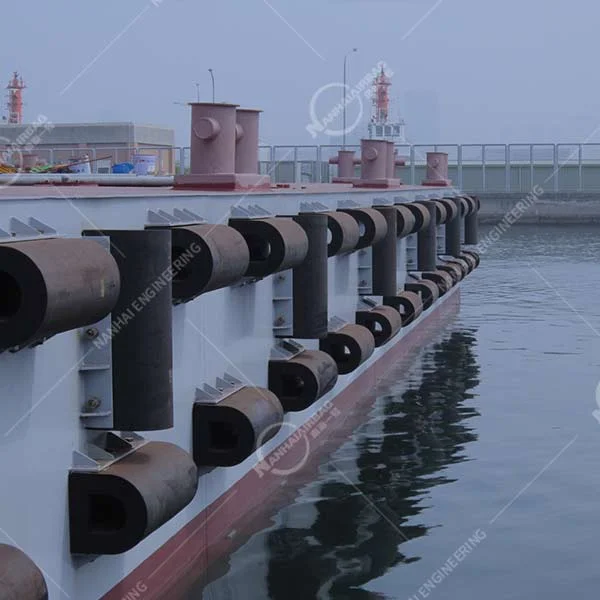
There’s a reason you see D rubber fenders on almost every marina finger pier, fishing harbor, tug hull, workboat side, and inland waterway lock wall: they’re the cheapest way to get reliable berthing protection without sacrificing space.
No frontal panels. No complex brackets. No air pressure to check. Just an extruded rubber profile with a flat back and a curved face that bolts flush to concrete, steel, or a boat hull — and quietly eats the daily bumps, scrapes, and push-offs that would otherwise dent hulls and chip quay edges.
If your operation involves small-to-medium vessels, low-to-moderate berthing energy, and a tight budget, the D fender is usually the first profile to spec — and often the only one you need.
Keep reading and you’ll see exactly where D fenders win, where they fail, how to size them, how they compare to other marine fenders and rubber fenders, and the Google-search FAQs buyers actually type before they buy.
📌 Google-Selected Summary (Key Takeaway)
D Rubber Fenders are extruded marine rubber fenders with a “D” cross-section: a flat rear face for mounting and a curved front face that compresses to absorb berthing impact. They’re the entry-level, high-volume workhorse of the rubber fenders family — simple, compact, low-cost, and easy to install with bolts or a steel flat bar run through the central bore. Standard sections commonly run from 100 × 100 mm up to 500 × 500 mm, supplied in lengths such as 1000 mm, 2000 mm, or 3000 mm and cut to project length, pre-drilled, chamfered at corners, or pre-curved to hull shape. D fenders are best for marinas, small quays, wharves, fishing boats, tugs, barges, pontoons, workboats, lock walls, and floating bridge protection — anywhere the berthing energy is low-to-moderate and space is tight. They are not a substitute for super cell, cone, or pneumatic fenders on large commercial berths, and they are not marine airbags: airbags lift and launch vessels; D fenders cushion berthing contact. Typical referenced performance at 50% deflection for a D200 × 200 mm section is around 211 kN reaction and 8.6 kN·m energy absorption per meter, but values vary by compound and supplier and must be confirmed from the manufacturer’s certified curve (±10% tolerance is common).
Why the “D” Shape Keeps Winning
Cut a D fender in half and the design logic is obvious.
- Flat back = mounts flush against the structure. No bulky standoff. No wasted slip space. No trip hazard on passenger pontoons.
- Curved front = progressive compression. The rubber squeezes and spreads impact load across the length instead of concentrating it at one point.
- Constant cross-section = extruded in long lengths, cut to size, drilled, chamfered, or pre-bent. Installation is a flat bar and bolts, not a civil works project.
That combination is why D fenders show up everywhere from a 6-meter sailing club pontoon to the side hull of a harbor tug pushing a barge.
💡 The core insight: D fenders trade raw energy capacity for simplicity and footprint. You don’t buy them to stop a 50,000 DWT bulker. You buy them to protect a dock line, a tug hull, a pontoon edge, and a fishing boat’s gelcoat — every single day, for years, with almost zero upkeep.
The Advantages — With Operational Examples
1. Flush Mounting Saves Real Slip Space
Cylindrical fenders stand proud of the wall. Pneumatic fenders float out even further. D fenders sit flat against the quay or hull.
- Example: A marina finger pier with 1.2 m of usable width can’t afford a 150 mm standoff on both sides. A D150 fender mounts flush, protects the edge, and leaves the berth width unchanged. Multiply that across 40 slips and you’ve removed the “fender tax” on every berth.
2. 10-Minute Class Installation
No frontal panels. No UHMW-PE pads. No air lines.
Mounting options:
- Steel flat bar through the central bore, bolted to the wall
- Pre-drilled holes through the top and bottom of the profile
- Welded brackets or U-channel on vessel hulls
- Pre-curved sections for bow/stern radii on tugs and pilot boats
- Example: A fishing port adding 180 m of fender line along a new concrete wharf for 500–2,000 DWT trawlers. Super cell was overkill; W fender needed custom drilling. They spec DD200 D fenders, pre-drilled, M24 galvanized bolts, flat bar every 400 mm. Two crews finish in days, including corner chamfers. Fender material cost stays a fraction of a heavy fixed-fender system.
3. You Can Tune Stiffness: DD vs. DC
Most buyers don’t realize there are two common D variants:
| Variant | Core | Behavior | Best for |
|---|---|---|---|
| DD (solid D / double-D) | Solid center | Stiffer, higher reaction, very durable | Fixed wharves, lock walls, bollard faces |
| DC (D with central bore) | Hollow center bore | More compliant, lighter, flexes with hull | Tug sides, workboat belts, vessel-mounted use |
- Example: A harbor tug operator specs DC250 along port/starboard sides because the hull needs to flex during push operations, but DD300 on the nightly berth dolphins where the wall is fixed and stiffness matters more. Same product family, two behaviors, one procurement line.
4. Scales from Dinghy Dock to 10,000 DWT Barge
Standard D sections commonly run:
- 100 × 100 mm → light craft, marina edges
- 150 × 150 mm → small quays, workboats
- 200 × 200 mm → standard commercial stock profile
- 250–300 × 250–300 mm → medium-tonnage berthing lines
- 400–500 × 400–500 mm → heavier small-commercial wharves
Referenced energy absorption scales from roughly 0.9 kN·m/m on a small section up to ~32–36 kN·m/m on a large D500 section at rated deflection — so a small fishing pier and a barge dock can both stay in the D family, just sized up.
⚠️ Those numbers are supplier reference values, not a universal standard. Always use the curve from the specific manufacturer you’re buying from.
5. Low Maintenance — Unlike Pneumatic Fenders or Airbags
Once bolted down, a D fender just sits there and works.
- No pressure gauge
- No re-inflation
- No puncture risk
- No deflation
- Inspect annually, rinse salt off, check bolts, replace a cut section if needed
Compare that to a pneumatic fender (pressure checks, valve care, burst risk) or marine airbags (inspection for puncture, launch-day use only). D fenders are permanent infrastructure for daily berthing.
- Example: A ferry terminal running 20+ dockings a day doesn’t want inflatables on the fixed berth face. D fenders take the repetitive low-angle contact, and the maintenance crew checks bolt torque during scheduled pier walks. No downtime.
Where D Rubber Fenders Dominate: Application Map
| Application | Why D fenders fit |
|---|---|
| Marinas & yacht harbours | Flush mount, clean look, protects gelcoat and pontoon edges |
| Small quays & fishing ports | Low-cost line protection for trawlers, crabbers, inshore boats |
| Tugs & workboats | Mount on hull sides/bow; absorb push-and-berth contact |
| Barges & pontoons | Continuous protective band, easy to cut and replace |
| Inland waterway locks | Narrow chambers, fixed walls, repeated low-energy contact |
| Floating bridges & walkways | Low profile, no trip hazard, bolt-down simplicity |
| Industrial waterfront loading bays | Same profile protects barge hulls and concrete walls |
| Ship repair berths | Modular sections, individual replacement, compact footprint |
Transition: When “Cheap and Simple” Is Exactly the Right Engineering Call
A lot of specifiers feel guilty buying a D fender because it isn’t a cone or a super cell. That’s backwards.
The right fender is the one whose energy capacity matches the berthing energy — with margin — at the lowest lifecycle cost. On a marina, a lock wall, a tug hull, or a fishing quay, over-specifying a cone fender wastes money and mounting space. The D fender’s “limitation” (moderate energy) is also its advantage: compact, cheap, maintainable.
But the opposite mistake is dangerous: putting D fenders on a berth that sees large displacement, high approach speed, or frequent heavy contact. That’s where you step up to arch, W, cell, cone, or pneumatic systems.
The rest of this guide tells you exactly where the line is.
D Rubber Fenders vs. Other Marine Fenders
| Fender type | Profile | Best for | Limitation |
|---|---|---|---|
| D rubber fender | Flat-back D, extruded | Marinas, tugs, small quays, barges, pontoons | Moderate energy only |
| Cylindrical | Round | Fishing ports, piles, general docks | Needs standoff space |
| Arch | Curved saddle | Small-medium ports, flexible mount | Slightly higher cost than D |
| W / wing | Twin-leg base | Frame wharves, ferries, tugs | Wider footprint than D |
| Cone | Conical, frontal panel | Container terminals, tanker berths, angular berthing | Higher capital cost |
| Super cell | Hollow cylinder | Large commercial quays | Overkill for small berths |
| Pneumatic | Air-filled, floating | STS transfer, large tankers, offshore | Needs pressure maintenance |
| Foam filled | Closed-cell foam, floating | Harsh_env, offshore, zero-maintenance floating | Higher upfront cost |
Source consensus: D fenders are cost-effective for low-to-medium-energy berthing; cone/cell/pneumatic take over when vessel deadweight, approach speed, or angular berthing demands low reaction force and high energy absorption.
Specifications: Example Reference Table
The table below is supplier reference data at ~50% deflection. Treat it as a starting point, not a guarantee. Confirm with your supplier’s certified compression curve.
| Size (mm) | Length (mm) | Holes | Reaction force (kN) | Energy absorption (kN·m) |
|---|---|---|---|---|
| D150 × 150 | 1000 | 3 | ~115 | ~3.2 |
| D200 × 200 | 1000 | 3 | ~211 | ~8.6 |
| D250 × 250 | 1000 | 3 | ~252 | ~9.2 |
| D300 × 300 | 1000 | 3 | ~300 | ~12.0 |
| D300 × 360 | 1000 | 3 | ~330 | ~14.3 |
| D400 × 400 | 1000 | 3 | ~390 | ~20.0 |
| D500 × 500 | 1000 | 3 | ~460 | ~32.0 |
Performance tolerance commonly ±10%. Hole patterns vary by length: short lengths often 3 holes, 3000 mm lengths often 8 holes.
Typical material spec to request
- Rubber compound: NR, SBR, or NR/SBR blend; EPDM for specific weathering/chemical cases
- Hardness: commonly 65–75 Shore A; softer for small boats, harder for commercial use
- Tensile strength: ≥12 MPa typical for SBR compounds
- Elongation at break: ≥250%
- Ozone resistance: no cracking per ISO 1431-1 Method A
- Temperature range: check compound; SBR blends commonly cited around -30°C to +110°C, while some general marine compounds are rated -20°C to +60°C
Installation Essentials
① Flat Back = Simple Mount
Run a steel flat bar through the bore and bolt to the wall, or use pre-drilled top/bottom holes with marine-grade bolts. Hot-dip galvanized or stainless fixings.
② Cut and Chamfer Corners
D fenders can be cut to length and mitred at corners to keep a continuous protective line around quay edges and masonry corners.
③ Pre-Curve for Hulls
On tugs and workboats, order pre-curved sections to match bow/stern radius. Glue-and-bolt or bracket-mount per hull plate layout.
④ Don’t Overspace the Fixings
Follow the supplier hole pattern. If field drilling, keep bolt spacing tight enough to stop the rubber lifting under shear from tidal movement and vessel slide.
⑤ Pair With the Right System Upstream
A marina might use D fenders on the fixed pontoons and small floating fenders on visiting yachts. A small shipyard might use D fenders on the repair berth wall and marine airbags for haul-out or launch — different tools, same site. D fenders are not airbags and don’t float vessels; airbags don’t replace a berth fender line.
When NOT to Use D Rubber Fenders
❌ Large commercial berths with high vessel displacement
❌ High approach-speed situations
❌ Vessels where reaction force could damage hull plating
❌ Ship-to-ship transfers in open water → pneumatic fenders
❌ Large container/tanker terminals with angular berthing → cone or super cell
❌ Remote offshore where you need unsinkable floating protection → foam filled
❌ Launching or salvaging a vessel → marine airbags / buoyancy airbags
If you’re asking “can a D fender stop a Panamax,” the answer is no. Size up the fender type, not just the D section.
Maintenance: The 4-Check Routine
Inspect on a schedule tied to traffic — busy ferry terminals more often, quiet marina annually.
- Surface — look for deep cuts, ozone cracking, abrasion through to the bore, embedded debris
- Bolts/fixings — check torque, corrosion, loose flat bar
- Permanent set — rubber should rebound; if it stays crushed, compound has aged or load exceeded design
- Structure behind — check concrete spalls or steel corrosion at the mount line
Replace individual sections; you don’t rip out the whole line.
Typical service life: around 5–10 years in normal marine use, longer in light-traffic marinas, shorter in high-frequency commercial push operations. Compound quality, UV, oil, and impact frequency drive the number.
FAQ — The Questions People Actually Search About D Rubber Fenders
❓ What is a D rubber fender?
A D rubber fender is an extruded marine fender with a D-shaped cross-section: flat on the back for mounting, curved on the front to compress and absorb impact. It’s a fixed rubber fender used to protect docks, pontoons, tugs, workboats, barges, and small quays during low-to-moderate-energy berthing. It mounts flush with bolts or a steel flat bar through the central bore.
❓ What are D fenders used for?
Marinas, yacht harbours, small fishing ports, wharves, lock walls, tugs, pilot boats, workboats, barges, pontoons, floating bridges, and waterfront industrial bays. Anything where vessels make repeated light-to-moderate contact and you want a compact, permanent, low-maintenance bumper.
❓ Are D fenders better than cylindrical fenders?
They solve different problems. D fenders mount flush and save space, with good impact distribution along the length — ideal for walls, pontoons, and hull sides. Cylindrical fenders stand off the surface and suit piles, open corners, and general-purpose docks where standoff protection helps. If space is tight and the wall is flat, D wins. If you need 360° contact or pile protection, cylindrical is better.
❓ Can D rubber fenders be used on boats?
Yes. Tugs, pilot boats, offshore support vessels, and workboats often have D fenders bolted or bracketed along the hull sides and bow. Pre-curved sections match the hull radius. They let the vessel push against barges, docks, or rigs without damaging its own plating.
❓ How long do D rubber fenders last?
Typically 5–10 years in normal saltwater service, sometimes longer in light marina use. Lifespan depends on rubber compound, Shore hardness, UV and ozone exposure, oil contact, impact frequency, and bolt maintenance. Annual inspection and rinsing salt off extend service life.
❓ What size D fender do I need?
Match the section to vessel size, displacement, approach speed, and contact frequency — not just boat length. Common stock sections:
- 60–100 mm: light craft, marina edges
- 150 mm: small quays, workboats
- 200 mm: standard commercial profile
- 250–300 mm: medium-tonnage berthing
- 400–500 mm: heavier small-commercial wharves
For anything above small commercial use, run a berthing-energy check or ask the supplier for the certified reaction/energy curve at rated deflection.
❓ Do D fenders need air like pneumatic fenders?
No. D fenders are solid/vulcanized extruded rubber. No air, no valves, no pressure checks. That’s a key advantage over pneumatic marine fenders, which need periodic inflation and have puncture/deflation risk. D fenders are also completely different from marine airbags, which are inflatable lift devices for launching, haul-out, or salvage — not berthing protection.
❓ What’s the difference between DD and DC D fenders?
DD is a solid-center D — stiffer, higher reaction, best for fixed walls and lock structures. DC has a central bore — more compliant and lighter, better when mounted on a vessel that flexes during push or tow operations.
❓ Are D rubber fenders good for large ships?
Generally no. They’re designed for low-to-moderate berthing energy. Large ships, high approach speeds, or heavy displacement need arch, W, cell, cone, or pneumatic fenders with documented energy absorption and lower reaction force. Using D fenders beyond their energy range leads to premature crushing and hull or dock damage.
❓ How are D fenders installed?
Two common methods:
- Steel flat bar through the central bore, bolted to the quay or steel wale
- Pre-drilled holes through top/bottom of the profile with marine-grade bolts
They can be cut to length, mitred at corners, and pre-curved for hulls. Use hot-dip galvanized or stainless fixings in saltwater.
❓ What rubber hardness should I specify?
Softer rubber (around 60–70 Shore A) is gentler on small boat hulls. Harder rubber (75–85 Shore A) absorbs more impact for commercial vessels and tugs. Don’t pick hardness alone — it interacts with section size, deflection, reaction force, and allowable hull pressure. Ask the supplier for the performance curve at your target hardness.
❓ Can D fenders replace marine airbags?
No. Marine airbags lift, launch, haul out, or refloat vessels. D fenders cushion berthing contact on a fixed structure or hull. A small shipyard might use both — D fenders on the repair berth, airbags on launch day — but they are not interchangeable.
The Bottom Line
D Rubber Fenders are the most underrated item in the marine fenders catalog because they’re not impressive on a spec sheet — until you price the alternative.
They give you:
✅ Flush mounting and saved slip space
✅ Fast bolt-down or flat-bar install
✅ Tunable stiffness with DD/DC variants
✅ Scalable from dinghy docks to barge wharves
✅ Almost no maintenance versus pneumatic fenders
✅ Low capital cost versus cone/cell systems
And they stay in their lane: low-to-moderate energy, fixed installation, daily-use bumpers for marinas, tugs, workboats, barges, pontoons, and small quays.
The mistake is either over-speccing them onto a heavy berth or under-speccing a fancy cone system onto a marina finger pier. Match the energy, match the space, match the budget.
Next step: Write down your largest regular vessel, its approximate displacement, typical approach speed, contact angle, and the available mounting face. Then ask suppliers for the certified reaction force and energy absorption at rated deflection for the D section you’re considering — not just a catalog number. If the energy number clears your berthing calc with margin and the reaction force is acceptable for hull and wall, the D fender is probably the smartest money you’ll spend on that berth.
Pair it correctly with the rest of your site: D fenders for daily berthing, pneumatic or foam-filled marine fenders for floating or heavy operations, and marine airbags for launch/haul-out/salvage. That’s how a complete waterfront protection plan actually works.
Keywords naturally covered: D Rubber Fenders, marine fenders, rubber fenders, marine airbags, D type rubber fender, extruded D fender, DD fender, DC fender, marina fender, tug fender, workboat fender, pontoon fender, lock wall fender, flat-back fender, low maintenance marine fender, pneumatic fenders vs rubber fenders, ship launching airbags vs fenders, PIANC berthing energy, Shore A hardness, pre-drilled fender, steel flat bar mounting.
