
Square Rubber Fenders: The Practical Berthing Protection Every Dock Owner Should Know
15/10/2026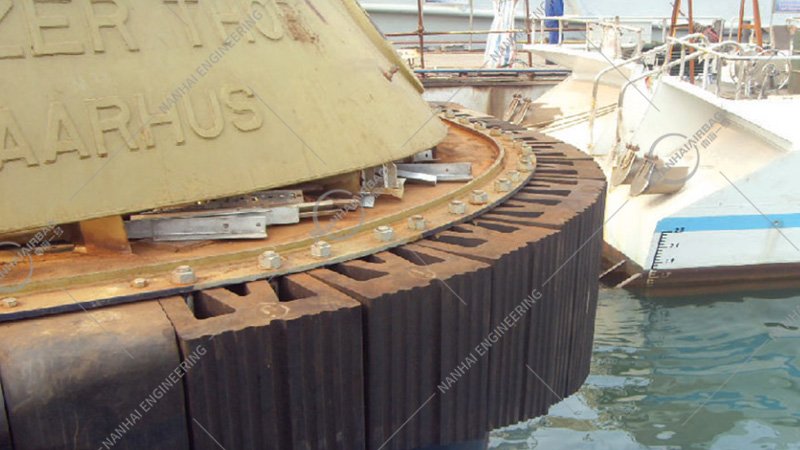
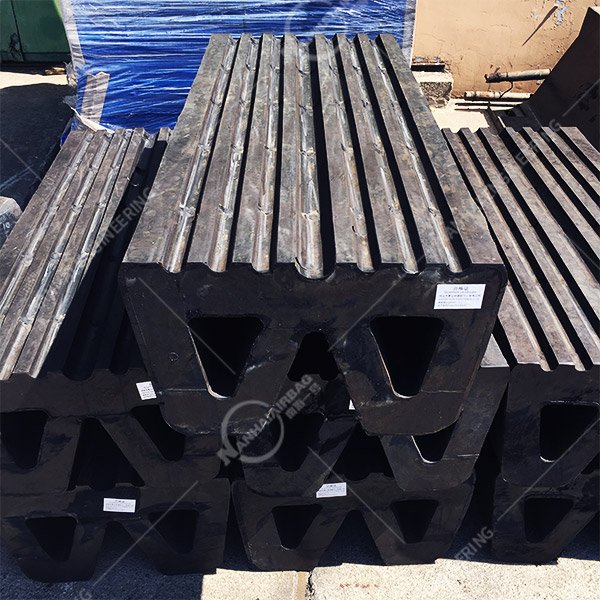
W rubber fenders are solid, W-shaped marine rubber fenders designed for high energy absorption with relatively low reaction force. Their twin-leg profile flexes around hull curvature, gives a wide grooved contact face, and is commonly fitted to tug bows and sterns, workboats, barges, icebreakers, quay corners, and bridge piles. Unlike marine airbags—which are used for ship launching, haul-out, or floating cushioning—W rubber fenders are fixed impact-protection fenders bolted or pinned to a vessel or berth structure for repeated docking and push operations.
If your fender job involves pushing, rubbing, angled contact, or a curved hull line, a flat square block may not be the best tool. Keep reading—because W fenders solve a very specific problem: how to absorb hard contact without bouncing the hull back or slipping out of position.
What Are W Rubber Fenders?
W fenders—also called W-type fenders or W-shaped rubber fenders—are part of the solid rubber fenders family. The cross-section looks like a double arch or “W,” with two flexible legs and often an open bore or mounting holes through the base.
They are usually made from marine-grade natural rubber, NR/SBR blends, or specialty compounds for low temperature, oil resistance, or UV/ozone performance.
Where they’re normally used
- Tugboat bow and stern protection
- Push boats and tow boats
- Workboats and offshore supply vessels
- Barge berths
- Icebreaker hull contact zones
- Quay corners and angular structures
- Bridge piles and pontoon edges
Standard sizes are usually compact compared with large quay fenders—common ranges sit around 320–600 mm wide, with lengths often up to 2000–3000 mm depending on the manufacturer.
Why W Fenders Exist: The Problem They Solve
A cylindrical fender rolls. A square fender gives a flat face but doesn’t follow a curve well. A D-fender is good for straight wall mounting, but not always ideal for heavy tug push duty.
W fenders were developed for vessels that constantly make contact—not just one gentle berthing event.
Think of a harbor tug holding a bulk carrier alongside in wind and current. The tug’s bow is pressed, rubbed, angled, and sheared against another hull for minutes at a time. A basic fender either:
- slips out of position,
- rolls under load,
- concentrates pressure on one spot,
- or transfers too much reaction force back into the tug’s plating.
W fenders reduce those problems through geometry, not gadgets.
Key Advantages of W Rubber Fenders
1. Twin-leg compression = smoother energy absorption
When a hull presses into a W fender, the arches compress progressively. Instead of one hard wall of rubber, the profile deflects through multiple contact points.
The practical result: high energy absorption without an aggressive rebound.
Example:
A 35 m harbor tug fitted with W fenders on the bow can push against a flat-sided barge or ship hull and keep continuous face contact. The fender doesn’t roll away like a round fender might during side-angle pushing.
2. Flexible legs wrap around hull radius
The biggest reason tug operators specify W fenders is fit.
The two legs can be curved around a bow or stern radius using guide rods or mounting pins. That makes them ideal for:
- tug bow rakes,
- stern pushing bands,
- curved sponsor lines,
- narrow vessel ends where flat fenders leave gaps.
Example:
A ship-assist tug with a pronounced bow flare can run a continuous W-fender line that follows the curve instead of leaving exposed steel between straight fender sections.
3. Grooved face gives grip during pushing
Many W fenders have grooves along the contact face. Those grooves increase friction/grip against the other vessel’s hull during push operations.
That matters because a tug fender isn’t only “absorbing shock”—it’s also staying put while the tug applies thrust.
Example:
In push-boat work on rivers or canals, the fender face is constantly sliding against a barge. A grooved W profile helps reduce slip better than a smooth round surface.
4. Lower reaction force than square profiles
Square fenders are great for flat-wall berthing. But they’re stiff, and reaction force rises quickly as compression increases.
W fenders spread contact across a wider, shaped face. For the same installation space, they often give better energy-to-reaction behavior than square or D-type sections.
That means less force transferred into:
- thin tug plating,
- older quay walls,
- lightweight barges,
- aging fender backing structures.
5. Simple pin or bolt installation
Most W fenders use an open bore or pre-drilled holes. Installation is done with:
- steel pins/rods through the bore,
- bolt plates,
- brackets on tug hulls,
- or clamp plates on quay faces.
They can also be cut to length and angled to fit bow/stern sets.
Example:
A workboat operator can order W fenders pre-cut for port/starboard bow sections, then mount them with guide rods—no complex cradles required.
W Rubber Fenders vs. Other Marine Fenders
Here’s the comparison buyers actually care about.
| Fender type | Strength | Limitation | Best use |
|---|---|---|---|
| W fender | Good energy absorption, low reaction, curves around hulls | Smaller standard sizes, less suited to giant quay berths | Tugs, workboats, push bars, quay corners |
| Square fender | Flat face, simple mount, cheap sections | Stiffer reaction, poor curve fit | Barge walls, pontoons, fixed quay faces |
| Cylindrical fender | Multi-angle contact, versatile | Can roll/slip in push work | General berths, floating docks, STS support |
| D fender | Compact, easy flat mounting | Lower energy than W in heavy push duty | Marina edges, vessel sides, light berths |
| Cone/cell fender | Very high energy for big ships | Bulky, higher cost, fixed systems | Large ports, tanker/carrier berths |
| Marine airbags | Inflatable cushioning for launch/haul-out | Not a fixed berthing fender | Ship moving, salvage, dry-dock support |
W fenders are not marine airbags
This gets confused often in procurement searches.
- W rubber fenders → permanently mounted impact protection
- Marine airbags → inflatable units for launching, lifting, haul-out, salvage, or temporary floating fendering
A shipyard might use marine airbags to move a hull, then fit W fenders once the tug or workboat is in service.
Typical Specs to Request
When asking a supplier for a quote, don’t just say “W fender.” Specify:
- Profile width and height — e.g. W480×300, W500×450
- Length per piece
- Bore/hole type — open bore, pin hole, bolt hole
- Rubber compound — NR, SBR, CR, EPDM blend
- Hardness — commonly around 60 ±5 Shore A
- Mounting method — pins, plates, brackets
- Application — tug bow, stern push, quay corner, bridge pile
- Temperature/oil/UV exposure
Common sizes
Examples from typical supplier charts:
- W320×200
- W480×300
- W500×350
- W500×450
- W600×300
- W600×400
Lengths vary by maker; many W fenders are supplied up to ~2000–3000 mm.
Installation Tips
A W fender only performs well if the backing structure is right.
Good practice:
- Use guide rods or pins that match bore size
- Support the legs so they don’t tear at the root
- Pre-curve gently—don’t force a tight radius the rubber wasn’t sized for
- Use backing plates on thin hull plating
- Align grooves outward for hull contact
- Inspect pins and brackets monthly on tug operations
For quay walls, clamp-plate or through-bolt mounting works well.
Maintenance
W fenders are low-maintenance compared with pneumatic systems, but not “fit and forget.”
Check for:
- cuts along the leg roots,
- permanent compression set,
- torn groove edges,
- loose pins or brackets,
- rubber hardening/cracking from UV,
- oil saturation in engine-prone areas.
Unlike marine airbags, there’s no air pressure to monitor—just mechanical wear.
Who Should Choose W Fenders?
✅ Choose W rubber fenders if you operate:
- tugs and push boats
- workboats
- icebreakers
- barge-handling vessels
- supply boats
- quay corners with angled impact
- bridge pile protection
❌ Consider another fender if you need:
- VLCC/tanker terminal berthing → cone/cell fenders
- Floating ship-to-ship cushion → pneumatic marine fenders
- Straight marina finger pier → D or square fender
- Launch/haul-out operation → marine airbags
Related Questions People Ask About W Rubber Fenders
These mirror common Google searches before purchase.
What are W rubber fenders used for?
They protect tugs, workboats, barges, and dock structures during berthing, pushing, and angled contact. They’re especially common on tug bows and sterns.
Why do tugboats use W fenders instead of cylindrical fenders?
Because W fenders follow hull curves better and give a wider, more stable contact face. Cylindrical fenders can roll or shift during push operations; W fenders stay oriented and grip better.
Are W fenders better than square rubber fenders?
For curved hulls and push duties, yes. Square fenders are better for flat-wall berthing and simple dock edges. W fenders usually give lower reaction force and better shape conformity.
How are W fenders installed?
Usually with pins or rods through the open bore, or bolts through pre-drilled holes. They can be mounted on vessel hulls or quay structures.
What size W fender do I need?
It depends on vessel size, contact area, and impact energy. Small workboats may use compact W320/W480 profiles; larger tugs often use W500 or W600 sizes.
Are W rubber fenders the same as marine airbags?
No. W fenders are fixed solid rubber fenders. Marine airbags are inflatable and used for launching, lifting, haul-out, or temporary floating protection.
Can W fenders be used on bridge piles?
Yes. Their shape works well on corners and pile protections where impact angles change constantly.
How long do W fenders last?
Service life depends on rubber quality, UV exposure, oil contact, and impact frequency. Good marine-grade W fenders can last many years in commercial tug service with inspections.
Bottom Line
W rubber fenders aren’t the right choice for every berth—but for tugs, push boats, workboats, and angled dock corners, they’re one of the most practical profiles in the marine fenders category.
They combine three things operators need at once:
- high energy absorption,
- lower reaction force than flat blocks,
- and a shape that wraps the hull instead of fighting it.
If your vessel pushes, rubs, or works alongside other hulls daily, W fenders usually beat square blocks and cylindrical fenders in real operating conditions.
👉 Next step: measure the bow/stern radius or quay corner, estimate the heaviest regular contact vessel, and ask suppliers for W480/W500 drawings with bore/pin details.
Want help comparing W fenders vs M fenders or D fenders for a specific tug? Start with one question: is the fender mostly absorbing berthing impact, or actively pushing another hull? That answer decides the profile.
Keywords used
W rubber fenders · marine fenders · rubber fenders · marine airbags · tug fender · W-type fender · workboat fender · barge berthing · quay corner fender · bridge pile protection
