
Floating Foam Fenders
30/04/2026Salvage Airbags: The Ultimate Heavy-Lift Solution for Maritime Recovery & Ship Refloating
07/05/2026
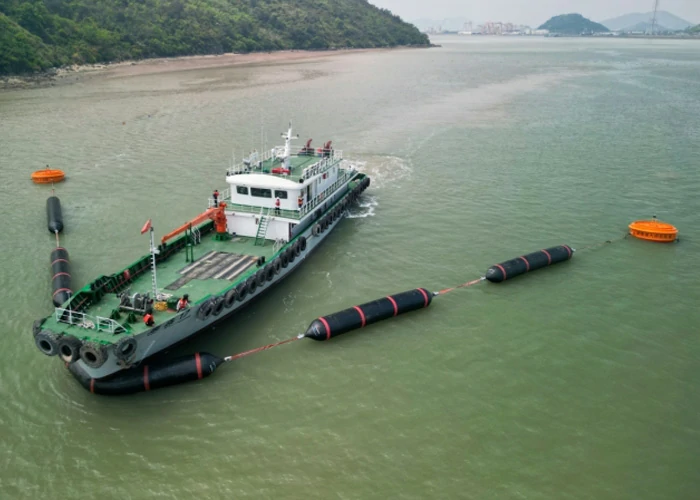
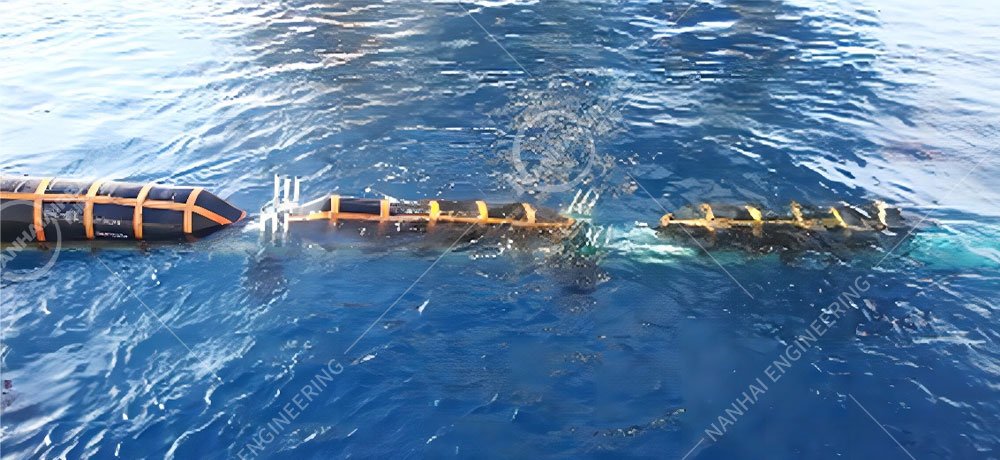
When a massive vessel runs aground, a heavy submarine cable needs precise laying, or a sunken wreck must be refloated from the ocean floor, traditional lifting equipment simply won’t cut it. This is where Buoyancy Airbags step in. These heavy-duty, inflatable, cylindrical devices are the unsung heroes of the maritime industry, providing immense uplift force and stability in the harshest marine environments. Whether you call them marine airbags, salvage bags, or underwater lift bags, their ability to generate controlled, powerful buoyancy makes them an absolutely indispensable tool for modern marine engineers, salvage teams, and naval architects.
Google Selected Summary: How Buoyancy Airbags Work
Buoyancy Airbags are heavy-duty, inflatable cylindrical or elliptical devices constructed from reinforced, high-tensile synthetic tire-cord layers and durable outer rubber compounds, specifically engineered to provide massive lifting force and flotation support in marine environments. Unlike standard marine fenders that are designed to absorb impact energy during berthing, buoyancy airbags utilize compressed air to displace water and generate upwards thrust, effectively allowing stranded or submerged vessels to be refloated without the need for dry docks. Compliant with rigorous ISO 14409 standards, these robust rubber fenders-like structures can be deployed rapidly for emergency salvage, ship launching, heavy object recovery, and even deep-water cable installation. By offering a flexible, portable, and incredibly powerful alternative to traditional cranes and pontoons, Buoyancy Airbags have revolutionized offshore logistics, turning impossible recovery missions into routine, safe, and highly cost-effective operations.
The Unmatched Advantages of Buoyancy Airbags (With Real-World Examples)
Transitioning from traditional rigid steel pontoons or massive floating cranes to flexible Buoyancy Airbags is like swapping a cumbersome medieval catapult for a precision-engineered hydraulic jack. The core advantage of these marine airbags lies in their brilliant simplicity: fill them with compressed air, and they displace water, creating instant, controllable lift. But their benefits go far beyond just basic flotation. Let’s explore the distinct advantages that make them a maritime game-changer, complete with practical examples.
1. Unrivaled Lifting Capacity for Mega-Scale Salvage Operations
Traditional salvage methods often require massive, expensive cranes that are limited by their boom length and lifting capacity. Buoyancy Airbags, however, can be clustered together to lift thousands of tons from the seabed. Because they work on the principle of water displacement rather than mechanical leverage, they can generate enormous uplift forces even in deep or confined waters.
- Example: Imagine a 5,000-ton cargo vessel that has run aground on a shallow reef. A heavy-lift crane might not be able to reach it, or worse, attempting to lift it could snap the ship’s back due to uneven weight distribution. By strategically positioning and inflating multiple high-capacity Buoyancy Airbags beneath the hull, salvage teams can gently and evenly lift the entire vessel back to the surface. In a famous real-world scenario, these airbags were famously used to successfully refloat a stranded 22,000-ton ferry, saving the shipowner millions in potential losses and avoiding a catastrophic oil spill .
2. Precision Buoyancy Control for Delicate Subsea Installations
When laying heavy submarine communication cables or installing subsea pipelines, dragging the weight across the seabed can cause severe damage. Buoyancy Airbags can be attached to these lines to provide temporary, adjustable lift, allowing the cables to be laid gently and precisely along pre-surveyed routes.
- Example: Consider a team deploying a fragile, high-speed fiber-optic internet cable across a trench in the Atlantic Ocean. Using specialized underwater lift bags, engineers can buoy the heavy cable every few hundred meters. As the cable is paid out, the airbags are gradually deflated via remote control, allowing the cable to settle perfectly into the trench without stretching or snapping. This level of pinpoint accuracy is simply unattainable with traditional ballast weights or rigid floats .
3. Rapid Deployment and Cost-Effective Ship Launching
Building a massive dry dock or hiring a floating crane for ship launching costs millions of dollars and takes months of planning. Many modern shipyards, especially those constructing vessels up to 100,000 DWT (Deadweight Tonnage), have completely replaced dry docks with heavy-duty Buoyancy Airbags. They are incredibly easy to transport, deflate, and store, making them a highly economical, “green” alternative.
- Example: A shipyard in Southeast Asia needs to launch a newly built 8,000-ton barge. Instead of waiting weeks for a high-tide window and an expensive heavy-lift vessel, the crew simply inflates a series of massive cylindrical airbags beneath the barge’s keel. Once the airbags are fully pressurized, the barge gently lifts off its supports. The team then simply guides the barge down the slipway and into the water—a seamless process that takes mere hours and costs a fraction of traditional methods .
4. Superior Durability Against Harsh Marine Elements
The ocean is an incredibly hostile environment, filled with jagged rocks, corrosive saltwater, and powerful currents. Buoyancy Airbags are built like tanks. Constructed with multiple layers of cross-hatched synthetic tire-cord fabric and coated with a specialized blend of natural and neoprene rubbers, they are highly resistant to abrasion, punctures, and seawater corrosion.
- Example: During a North Sea oil rig decommissioning project, salvage teams needed to recover heavy machinery from the seabed in freezing, turbulent waters. Traditional steel buoyancy modules were deemed too risky due to potential rust and structural failure. The team deployed heavy-duty, reinforced Buoyancy Airbags. Despite being dragged across sharp, barnacle-encrusted steel structures and battered by strong undercurrents, the airbags maintained their structural integrity, successfully lifting the heavy machinery to the surface without a single tear or pressure drop .
Is Your Maritime Project Sitting on a Financial Time Bomb?
Picture this: A sudden storm hits, and your multi-million-dollar vessel is hard aground on an unforgiving rocky coastline. The clock is ticking, the hull is groaning under the stress of the crashing waves, and every minute that passes increases the risk of a total structural failure or a devastating fuel leak. If you have to wait days for a massive floating crane to arrive—or worse, realize your current salvage plan is completely inadequate for the rough seas—you are facing a financial and ecological nightmare. Why gamble with outdated, rigid equipment when a highly adaptable, battle-tested solution is readily available? Discover how integrating Buoyancy Airbags into your maritime strategy can provide you with ultimate operational flexibility, drastically reduce your salvage and launching costs, and act as your ultimate insurance policy against the unpredictable fury of the ocean.
Related Questions (FAQs)
Here are the answers to some of the most frequently asked questions about Buoyancy Airbags and how they compare to other marine fenders and lifting equipment:
- What exactly are Buoyancy Airbags and how do they generate lift? Buoyancy Airbags (often referred to as marine salvage bags or underwater lift bags) are heavy-duty, inflatable devices made from reinforced rubber and synthetic cords. They generate lift using Archimedes’ principle of buoyancy: when air is pumped into the bag, it expands and displaces a volume of water equal to its own submerged volume. This displaced water creates an upward buoyant force, effectively “lifting” the submerged object. The more air pumped in, the greater the lifting capacity .
- How do Buoyancy Airbags differ from standard marine fenders or rubber fenders? While they may look somewhat similar when deflated, their functions are completely opposite. Standard marine fenders (including rubber fenders and pneumatic fenders like the YOKOHAMA type) are designed to absorb and dissipate kinetic energyto protect a vessel’s hull during berthing or mooring. Buoyancy Airbags, conversely, are designed to generate lift and provide flotation. You use a fender to prevent damage when hitting a dock; you use a buoyancy airbag to lift a sunken ship off the seafloor .
- What are the main types of Buoyancy Airbags available for maritime use? Buoyancy Airbags are generally categorized based on their shape, pressure rating, and specific application. The most common types include:
- Cylindrical Airbags: The most versatile type, heavily used for ship launching, hauling, and heavy object lifting. They distribute weight evenly along a hull or beam .
- Elliptical / Parachute Airbags: Shaped like a dome or parachute, these are primarily used for vertical salvage operations and subsea cable installations where a concentrated lifting point is required .
- Low-Pressure vs. High-Pressure Bags: Low-pressure bags are used for surface flotation and light salvage, while high-pressure bags are engineered for deep-water operations where immense external water pressure requires a highly rigid, robust structure .
- Are Buoyancy Airbags difficult to deploy in emergency situations? On the contrary, their greatest strength is rapid deployability. Unlike traditional salvage pontoons that require massive support cranes and days of preparation, Buoyancy Airbags can be rolled, folded, and transported on a small tugboat. Once on-site, they can be inflated using a standard high-capacity air compressor or even pressurized nitrogen cylinders. Many modern airbags are equipped with remote-controlled dump valves, allowing salvage teams to deflate and reposition them quickly without sending divers into dangerous, murky waters .
- Do Buoyancy Airbags comply with international maritime safety standards? Absolutely. Reputable manufacturers produce Buoyancy Airbags in strict compliance with the international ISO 14409 standard (Ships and marine technology — Marine airbags for ship launching and landing). This standard dictates the rigorous testing protocols for material tensile strength, seam integrity, and maximum safe working pressures to ensure absolute reliability during critical heavy-lift and salvage operations .
Final Thoughts
In the unpredictable, high-stakes world of maritime operations, having versatile, reliable, and powerful equipment isn’t just a luxury—it’s an absolute necessity. Buoyancy Airbags represent the pinnacle of flexible marine engineering, offering an unbeatable combination of raw lifting power, pinpoint precision, and exceptional durability. Whether you are refloating a grounded supertanker, launching a new barge, or delicately laying subsea cables, these heavy-duty marine airbags provide a safe, cost-effective, and highly adaptable alternative to traditional heavy machinery. Don’t let the limitations of outdated equipment sink your next project—embrace the power of controlled buoyancy, and ensure your valuable assets stay afloat and operational in even the most challenging ocean conditions.
