
Buoyancy Airbags: The Underwater Powerhouse of Modern Maritime Salvage & Heavy Lifting
05/05/2026Donut Fenders
13/05/2026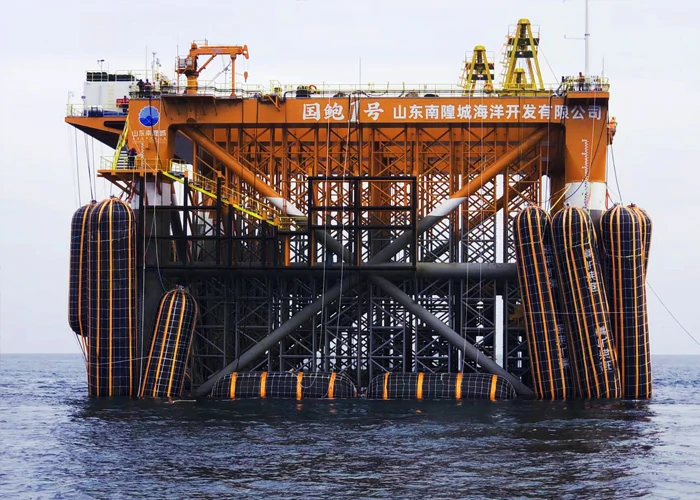
A vessel grounding, a sudden hull breach, or a massive container ship running aground—in the high-stakes world of maritime operations, disaster can strike in an instant. When a multi-million-dollar asset is stranded, taking on water, or sitting precariously on the ocean floor, traditional salvage methods often fall short. Dispatching massive heavy-lift cranes takes too much time, and towing a damaged vessel to a dry dock miles away is often financially ruinous. So, what is the modern maritime industry’s secret weapon for rapid, cost-effective, and incredibly powerful recovery? Enter Salvage Airbags. Also widely known as marine airbags, these heavy-duty, inflatable cylindrical devices have fundamentally revolutionized marine salvage, heavy lifting, and ship launching. By harnessing the simple yet profound physics of water displacement, salvage airbags provide immense, controllable uplift forces that can gently refloat stranded vessels, recover sunken wrecks, and lift massive heavy objects from the seabed without causing structural damage.
What Are Salvage Airbags?
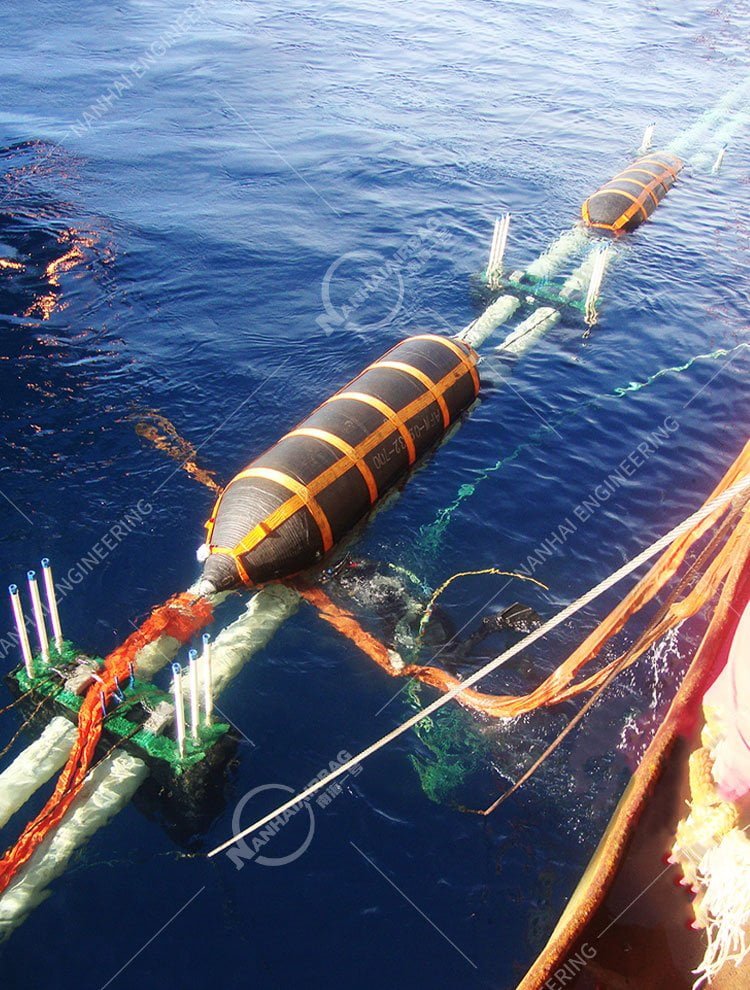
Salvage Airbags are heavy-duty, inflatable, cylindrical or elliptical devices constructed from reinforced, high-tensile synthetic tire-cord layers and durable outer rubber compounds, specifically engineered to provide massive lifting force and flotation support in marine environments. Unlike standard marine fenders that are designed to absorb impact energy during berthing, salvage airbags utilize compressed air to displace water and generate upwards thrust, effectively allowing stranded or submerged vessels to be refloated without the need for dry docks. Compliant with rigorous ISO 14409 standards, these robust rubber fenders-like structures can be deployed rapidly for emergency salvage, ship launching, heavy object recovery, and even deep-water cable installation. By offering a flexible, portable, and incredibly powerful alternative to traditional cranes and pontoons, Salvage Airbags have revolutionized offshore logistics, turning impossible recovery missions into routine, safe, and highly cost-effective operations.
The Unmatched Advantages of Salvage Airbags (With Real-World Examples)
Transitioning from traditional rigid steel pontoons or massive floating cranes to flexible Salvage Airbags is like swapping a cumbersome medieval catapult for a precision-engineered hydraulic jack. The core advantage of these marine airbags lies in their brilliant simplicity: fill them with compressed air, and they displace water, creating instant, controllable lift. But their benefits go far beyond just basic flotation. Let’s explore the distinct advantages that make them a maritime game-changer, complete with practical examples.
1. Rapid Deployment for Emergency Crisis Response
When a vessel runs aground, time is quite literally money—and every passing hour increases the risk of environmental catastrophe. Traditional salvage methods, such as dispatching massive heavy-lift cranes or constructing temporary dry docks, can take days or even weeks to mobilize. In stark contrast, salvage airbags can be folded flat, transported on a modest tugboat, and deployed in a matter of hours.
- Example: Consider a scenario where a 3,000-ton ferry runs aground during a fierce storm. With waves battering the hull and fuel tanks threatening to rupture, waiting days for a heavy-lift crane is not an option. A local salvage team arrives on-site within hours, inflates several massive marine airbags beneath the ferry’s hull, and gently lifts the vessel free from the rocks before the tide turns. This rapid response directly prevents a potential ecological disaster.
2. Colossal, Evenly Distributed Lifting Capacity
Because they rely on the physics of water displacement rather than mechanical pulleys, salvage airbags can generate a massive upward buoyant force capable of refloating vessels weighing tens of thousands of tons. Furthermore, because the lifting force is distributed across the entire contact area of the airbag, the risk of damaging the vessel’s structural integrity is minimized.
- Example: Imagine a 10,000-ton sunken barge resting on the seabed. Lifting it with traditional steel pontoons would require an incredibly complex rigging setup that places immense stress on the barge’s frame. By using a synchronized network of high-pressure salvage airbags, engineers can distribute the 10,000-ton load evenly across the hull. The barge rises smoothly and evenly, entirely supported by the cushioning force of the airbags, showcasing a level of heavy-lift synergy that rigid equipment simply cannot match.
3. Superior Cost-Effectiveness and Logistical Flexibility
Building a dry dock or chartering an ocean-going heavy-lift vessel costs millions of dollars and requires months of advance booking. Salvage airbags, conversely, are highly portable, reusable, and eliminate the need for such massive capital expenditures. They allow shipyards and salvage operators to perform heavy lifting and refloating operations in remote locations or shallow waters where large cranes simply cannot operate.
- Example: A small coastal shipyard needs to repair a leaking 500-ton fishing trawler, but the nearest dry dock is 500 miles away, and the cost of towing the damaged vessel is prohibitive. Instead, the shipyard uses a set of affordable, locally sourced salvage airbags to lift the trawler right off the beach during high tide. The trawler is safely hauled onto the shore for repairs within a single afternoon, saving the shipowner tens of thousands of dollars in towing and dry-dock fees.
4. Hull-Safe Operation Compared to Rigid Fenders
While traditional rubber fenders and steel pontoons are rigid and can exert localized pressure that damages a vessel’s plating, salvage airbags provide a compliant, cushioned interface. Their flexible rubber construction conforms to the shape of the hull, distributing the load and preventing dents or structural fatigue during the lift.
- Example: During the delicate recovery of a historic wooden schooner that had sunk in a freshwater lake, salvage teams faced a dilemma: traditional steel straps and pontoons would crush the fragile wooden hull. By using low-pressure salvage airbags meticulously placed along the vessel’s keel, the team was able to float the historic ship to the surface without inflicting a single new scratch or stress fracture on the century-old timber.
Is Your Maritime Project Sitting on a Financial Time Bomb?
Picture this: A sudden storm hits, and your multi-million-dollar vessel is hard aground on an unforgiving rocky coastline. The clock is ticking, the hull is groaning under the stress of the crashing waves, and every minute that passes increases the risk of a total structural failure or a devastating fuel leak. If you have to wait days for a massive floating crane to arrive—or worse, realize your current salvage plan is completely inadequate for the rough seas—you are facing a financial and ecological nightmare. Why gamble with outdated, rigid equipment when a highly adaptable, battle-tested solution is readily available? Discover how integrating Salvage Airbags into your maritime strategy can provide you with ultimate operational flexibility, drastically reduce your salvage and launching costs, and act as your ultimate insurance policy against the unpredictable fury of the ocean.
Related Questions (FAQs)
Here are the answers to some of the most frequently asked questions about Salvage Airbags and how they compare to other marine fenders and lifting equipment:
- What exactly are Salvage Airbags and how do they generate lift? Salvage Airbags (often referred to as marine salvage bags or underwater lift bags) are heavy-duty, inflatable devices made from reinforced rubber and synthetic cords. They generate lift using Archimedes’ principle of buoyancy: when air is pumped into the bag, it expands and displaces a volume of water equal to its own submerged volume. This displaced water creates an upward buoyant force, effectively “lifting” the submerged object. The more air pumped in, the greater the lifting capacity .
- How do Salvage Airbags differ from standard marine fenders or rubber fenders? While they may look somewhat similar when deflated, their functions are completely opposite. Standard marine fenders (including rubber fenders and pneumatic fenders like the YOKOHAMA type) are designed to absorb and dissipate kinetic energyto protect a vessel’s hull during berthing or mooring. Salvage Airbags, conversely, are designed to generate lift and provide flotation. You use a fender to prevent damage when hitting a dock; you use a salvage airbag to lift a sunken ship off the seafloor .
- What are the main types of Salvage Airbags available for maritime use? Salvage Airbags are generally categorized based on their shape, pressure rating, and specific application. The most common types include:
- Cylindrical Airbags: The most versatile type, heavily used for ship launching, hauling, and heavy object lifting. They distribute weight evenly along a hull or beam .
- Elliptical / Parachute Airbags: Shaped like a dome or parachute, these are primarily used for vertical salvage operations and subsea cable installations where a concentrated lifting point is required .
- Low-Pressure vs. High-Pressure Bags: Low-pressure bags are used for surface flotation and light salvage, while high-pressure bags are engineered for deep-water operations where immense external water pressure requires a highly rigid, robust structure .
- Are Salvage Airbags difficult to deploy in emergency situations? On the contrary, their greatest strength is rapid deployability. Unlike traditional salvage pontoons that require massive support cranes and days of preparation, Salvage Airbags can be rolled, folded, and transported on a small tugboat. Once on-site, they can be inflated using a standard high-capacity air compressor or even pressurized nitrogen cylinders. Many modern airbags are equipped with remote-controlled dump valves, allowing salvage teams to deflate and reposition them quickly without sending divers into dangerous, murky waters .
- Do Salvage Airbags comply with international maritime safety standards? Absolutely. Reputable manufacturers produce Salvage Airbags in strict compliance with the international ISO 14409 standard (Ships and marine technology — Marine airbags for ship launching and landing). This standard dictates the rigorous testing protocols for material tensile strength, seam integrity, and maximum safe working pressures to ensure absolute reliability during critical heavy-lift and salvage operations .
Final Thoughts
In the unpredictable, high-stakes world of maritime operations, having versatile, reliable, and powerful equipment isn’t just a luxury—it’s an absolute necessity. Salvage Airbags represent the pinnacle of flexible marine engineering, offering an unbeatable combination of raw lifting power, pinpoint precision, and exceptional durability. Whether you are refloating a grounded supertanker, launching a new barge, or delicately laying subsea cables, these heavy-duty marine airbags provide a safe, cost-effective, and highly adaptable alternative to traditional heavy machinery. Don’t let the limitations of outdated equipment sink your next project—embrace the power of controlled buoyancy, and ensure your valuable assets stay afloat and operational in even the most challenging ocean conditions.
