
How to Choose Pneumatic Fenders: Ultimate Guide for Maritime Safety & Efficiency
26/03/2026Super Cone Rubber Fenders: The Ultimate Guide to Next-Generation Marine Protection
02/04/2026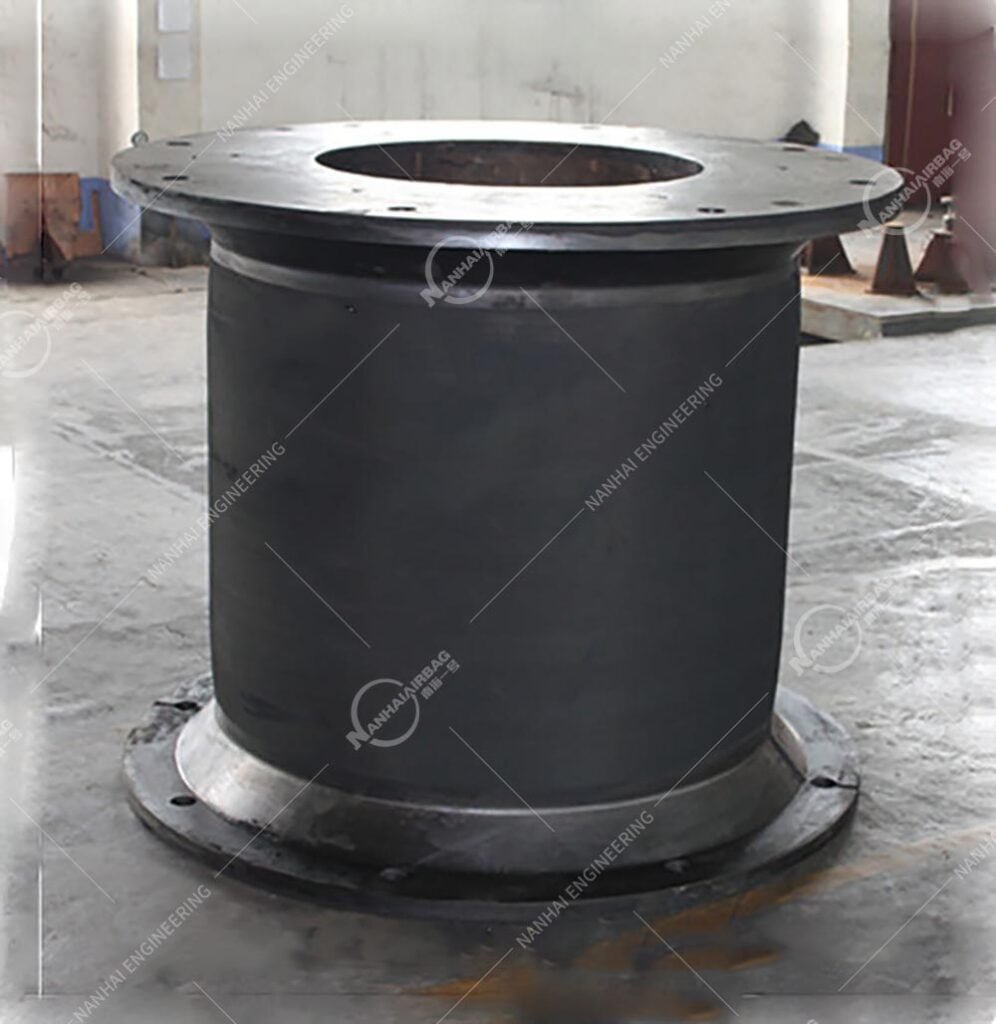

Cell Rubber Fenders are engineered marine safety systems designed to absorb kinetic energy during ship docking, berthing, and towing operations. Featuring a hollow cylindrical structure reinforced with radial buckling columns, these fenders distribute impact forces evenly while maintaining low hull pressure. Unlike rigid marine airbags or foam-filled alternatives, Cell Rubber Fenders excel in dynamic conditions—absorbing up to 1,500 kNm of energy and reducing hull pressure to <50 kPa. Certifications like PIANC 2002 and ISO 17357 validate their global compliance, while customizable sizes (400mm–3,000mm height) and modular designs support vessels from fishing boats to VLCCs. Choosing the right model hinges on vessel tonnage, docking angles, and environmental stressors, ensuring optimal protection and cost savings.
Why Cell Rubber Fenders Outperform Traditional Solutions
Marine fenders and rubber fenders are not mere accessories—they are engineered solutions that prevent millions in annual repair costs. For example, the Port of Rotterdam replaced traditional wooden fenders with super cell rubber fenders, reducing hull repairs by 70% and cutting maintenance expenses by €2.3 million annually . Unlike rigid marine airbags, which crack under stress, Cell Rubber Fenders use elastic deformation to dissipate energy, ensuring consistent performance even after 10,000+ compression cycles.
Key Advantages:
- Dynamic Stress Distribution: Cylindrical fenders adjust to vessel curvature, ideal for LNG carriers with large bow flares .
- Low Hull Pressure: W-type fenders distribute force evenly, minimizing pressure to 80 kPa even in tight docking zones .
- Durability: EPDM rubber coatings withstand -55°C to 120°C temperatures and saltwater corrosion, extending service life to 15–20 years with proper maintenance .
5 Factors Driving Optimal Cell Fender Performance
1. Vessel Specifications
Cell fender sizing must align with vessel tonnage and hull curvature. For instance:
- 500-ton tugs: 1.2m×2.4m cylindrical fenders (density: 65 Shore A).
- 20,000-ton LNG carriers: 3m×6m fenders with dual-layer EPDM for Arctic use .
2. Docking Environment
- High-Traffic Ports: Opt for rotating roller fenders at marinas to handle frequent berthing (e.g., Dubai’s Palm Jumeirah) .
- Chemical Terminals: EPDM rubber fenders resist oil and alkalis, as seen in Rotterdam’s bulk terminals .
3. Certifications & Compliance
- PIANC 2002: Validates pressure stability during collisions (mandatory for EU ports).
- DNV/GL: Required for Arctic operations due to -55°C cold resistance .
4. Installation & Maintenance
- Pre-Installation Checks: Verify chain tension (±5% deviation) and mounting flange alignment .
- Bi-Annual Inspections: Use soap solution tests to detect air leaks in pneumatic models .
5. Cost vs. Performance
While Cell fenders cost 20–30% more upfront than standard types, their 3× longer lifespan and 15% higher E/R-H yield long-term savings. For instance, Dubai’s Jebel Ali Port reduced maintenance costs by 60% after switching to Cell fenders .
Real-World Applications Highlighting Advantages
- LNG Terminal Protection: A 260,000m³ LNG carrier in Qatar uses Cell 4.5m×10,600mm fenders to dock safely in 3m swells, absorbing 1,500 kNm of energy .
- Military Port Defense: The U.S. Navy deploys D-type Cell fenders at Yokosuka Naval Base to shield carriers from typhoon-force waves .
- Offshore Wind Farms: Foldable EPDM Cell fenders enable rapid deployment at 50m-depth sites .
FAQs: Your Cell Fender Questions Answered
Q1: Can Cell fenders replace marine airbags?
A: They serve complementary roles. Marine airbags launch vessels during salvage, while Cell fenders protect during docking .
Q2: How often should I inspect Cell fenders?
A: Monthly checks for air leaks (soap solution test) and bi-annual pressure adjustments. Replace if cracks exceed 1cm depth .
Q3: Best material for chemical-resistant fenders?
A: EPDM rubber withstands -55°C to 120°C and resists oil, saltwater, and UV degradation .
Q4: Cost comparison: W-type vs. M-type fenders?
A: W-type costs 20% more but offers 40% higher energy absorption for ice-class vessels .
Final Tips for Maximizing Fender Lifespan
- Pair with Swivels: Prevent chafe during dynamic mooring.
- Monitor Pressure: Use digital gauges for real-time adjustments (critical in rough seas).
- Train Crews: Simulate berthing scenarios to maximize efficiency .
By prioritizing PIANC compliance, size accuracy, and environmental adaptability, Cell Rubber Fenders become your fleet’s first line of defense. For tailored solutions, consult ISO-certified suppliers like Hongruntong Marine or XINCHENG Rubber .
Keywords: marine airbags, marine fenders, rubber fenders, Cell fender selection, PIANC 2002 compliance, ship collision protection.
