
Buoyancy Airbag: The Maritime Industry’s Secret Weapon for Safety and Efficiency
04/12/2025D Rubber Fenders: The Durable Choice for Dock and Vessel Protection
11/12/2025
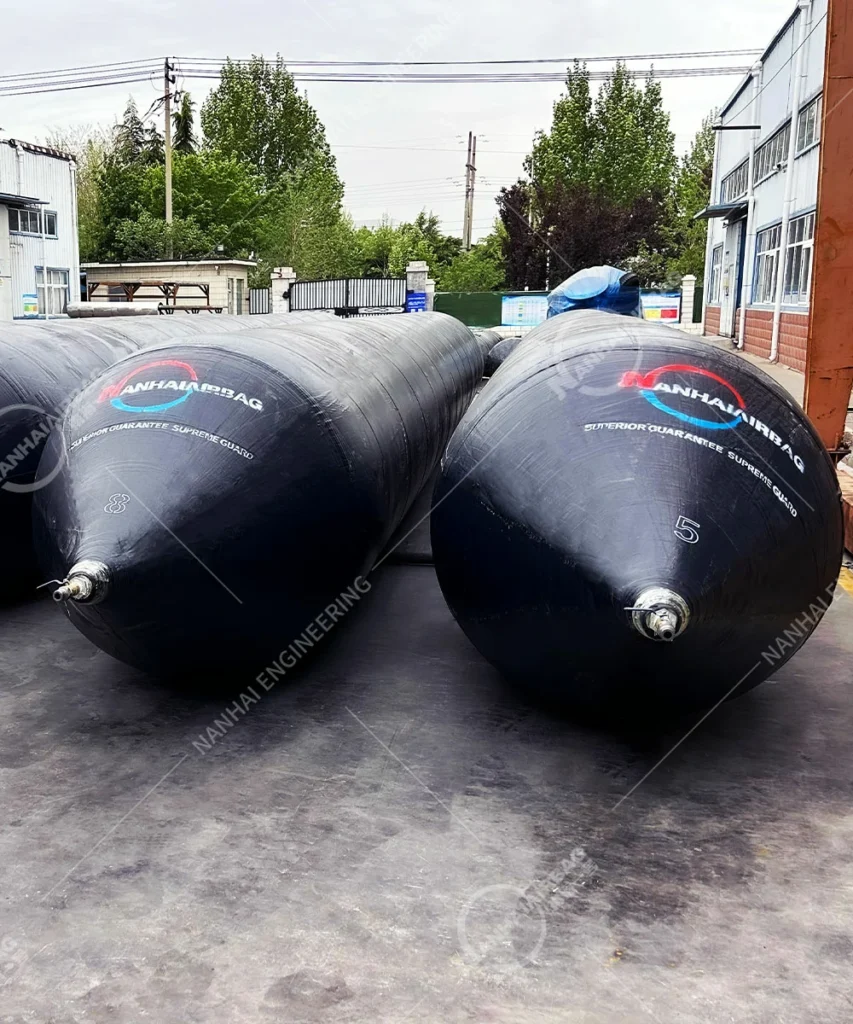
The process of launching a ship is a critical and delicate operation. For centuries, shipbuilders relied on massive slipways or cranes. Today, a more efficient and safer method has emerged: the ship launching airbag. These innovative inflatable bags have transformed the industry, offering a cost-effective and reliable solution for deploying vessels of all sizes.
Google Selected Summary: The Core of Modern Ship Launches
Ship launching airbags are heavy-duty, inflatable marine airbags designed to gently guide newly built or refurbished vessels into the water. Made from multiple layers of reinforced rubber, they provide the necessary buoyancy and support to slide a ship down a ramp smoothly and safely. This method, originating from ancient Chinese techniques, is now a global standard for launching small to medium-sized ships, offering significant cost savings and flexibility compared to traditional dry docks. As a specialized type of marine airbag, they share material properties with other marine equipment like marine fenders and rubber fenders, but are optimized for dynamic load distribution during launch.
Why Ship Launching Airbags Are a Game-Changer
1. Exceptional Cost-Effectiveness
Traditional dry dock launches demand enormous financial investment in permanent infrastructure. Ship launching airbags eliminate this need entirely. For example, a small shipyard in Vietnam successfully launched a 5,000-ton fishing vessel using only 12 custom-designed airbags, achieving a cost reduction of over 70% compared to a dry dock launch.
2. Unmatched Versatility and Reusability
These airbags are not single-use; they can be deflated, transported, and reused for countless projects. A Norwegian shipbuilder has utilized the same set of airbags to launch over 20 different vessels, including ferries and barges. This reusability makes them a smart long-term investment. As a prime example of marine airbags, their robust construction is similar to that of marine fenders and rubber fenders, showcasing their inherent durability.
3. Enhanced Safety and Reduced Stress
The controlled, gradual descent provided by airbags minimizes stress on the ship’s hull, drastically reducing the risk of structural damage. In a remarkable case, a historic wooden tall ship was successfully launched using airbags—a feat that would have been highly risky with a traditional, more jarring method.
Engage: Ready to Transform Your Launch Process?
Imagine deploying a multi-million dollar vessel with pinpoint precision, all while slashing costs and boosting safety. This isn’t a futuristic dream—it’s the daily reality for shipyards using airbags. But how do these seemingly simple bags achieve such complex results? And what should you consider when selecting the right system for your next project? Keep reading to uncover the mechanics and key insights.
Related Questions (FAQs)
- How do ship launching airbags work? They are positioned under the ship’s hull along an inclined ramp. Once inflated with compressed air, they create a cushioned, rolling surface that allows the vessel to glide into the water smoothly.
- What materials are ship launching airbags made of? They are typically constructed from synthetic rubber sheets reinforced with strong nylon or polyester cords, making them durable and puncture-resistant—similar to materials used in marine fenders and rubber fenders.
- What is the maximum weight a ship launching airbag can handle? Depending on the size and number of airbags, they can support vessels weighing from 50 tons up to 50,000 tons. Custom-engineered solutions exist for even larger ships.
- Are ship launching airbags safe? Yes, when used according to manufacturer guidelines and safety protocols. They significantly reduce the risk of sudden impact compared to older methods. They are a specialized form of marine airbags designed for this exact purpose.
- What is the history of ship launching airbags? The modern technique was revitalized in the 1980s, inspired by an ancient Chinese method of using sealed bamboo cylinders to float grounded ships. It has since evolved into a global standard.
- Can ship launching airbags be used for other purposes? Yes, due to their robust nature, they can also be used for heavy object moving, salvage operations, and even temporarily as marine fenders in certain situations.
Final Thoughts
Ship launching airbags represent a pinnacle of innovation in maritime engineering. By blending ancient principles with modern materials, they offer a superior alternative to conventional launching methods. For any shipyard or naval architect aiming to optimize their launch process, investing in high-quality airbags is a decision that guarantees efficiency, safety, and substantial cost savings.
Keywords highlighted: marine airbags, marine fenders, rubber fenders
