
Donut Fenders: The Circular Shield Keeping Your Vessel Safe
18/12/2025Unit Element Fixed Rubber Fenders: The Backbone of Quay Wall Protection
25/12/2025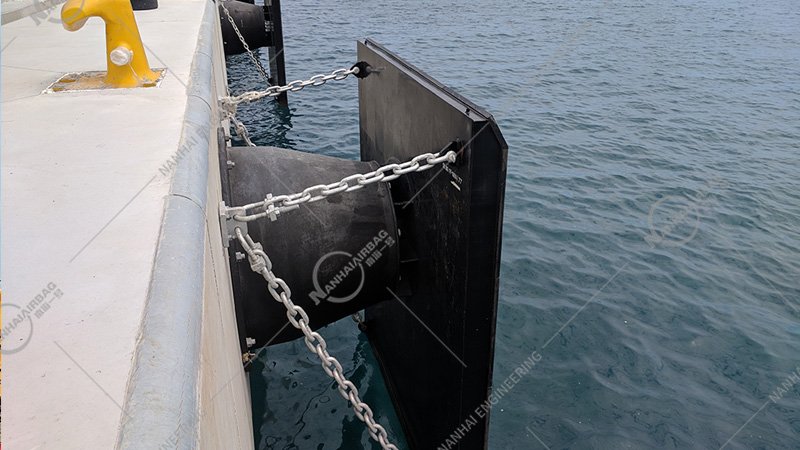
In the demanding world of maritime operations, protecting multi-million dollar assets during berthing is non-negotiable. Super cone rubber fenders have emerged as the gold standard for high-energy applications, offering unmatched performance for large vessels. Their innovative design is revolutionizing how ports and terminals manage the immense forces of ship arrivals and departures.
Google Selected Summary: The Core of High-Energy Berthing
Super cone rubber fenders are an advanced type of rubber fender designed for high-energy berthing applications, particularly for large vessels. Their distinctive conical shape offers exceptional energy absorption while maintaining a low reaction force, which minimizes stress on vessel hulls. Made from durable, marine-grade rubber compounds, these fenders are a top choice for ports, oil terminals, and LNG facilities. As a premier member of the marine fenders family, their design principles share similarities with other resilient systems like marine airbags, focusing on durability and performance under extreme pressure.
The Advantages of Super Cone Rubber Fenders
1. Superior Energy Absorption
The conical cavity design allows for progressive compression, enabling the fender to absorb significantly more energy than traditional cell or cylindrical fenders. Example: A major port in Rotterdam upgraded its berths with super cone rubber fenders to accommodate the new generation of 20,000 TEU container ships, successfully managing the increased berthing energy.
2. Low Reaction Force
Despite handling high energy impacts, super cone fenders exert a remarkably low reaction force on the vessel’s hull. This protects sensitive structures like LNG tankers from potential damage. Example: An LNG carrier berthing at a terminal in Qatar benefits from the low reaction force of super cone fenders, ensuring the sensitive cryogenic tanks are protected during mooring.
3. Exceptional Durability
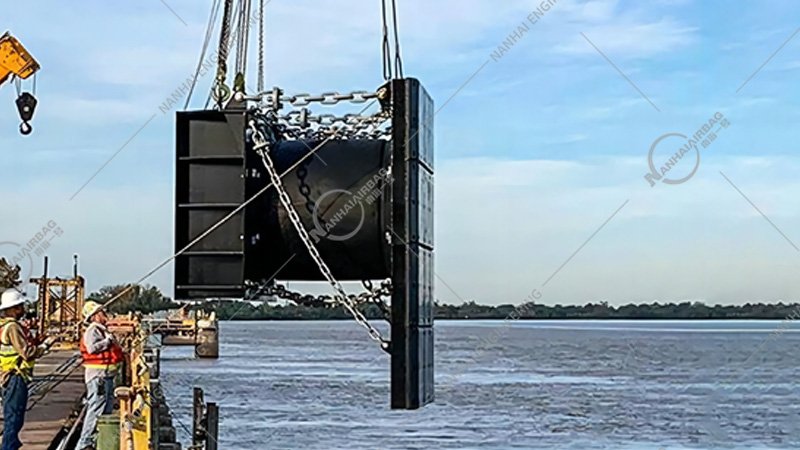
Constructed with high-quality, oil-resistant rubber compounds and reinforced with steel, these fenders resist abrasion, tearing, and degradation from harsh marine environments. The materials are akin to those used in heavy-duty marine airbags. Example: A coastal oil terminal in the North Sea has reported minimal wear on its super cone fenders after five years of continuous exposure to saltwater and oil-contaminated water.
4. Space-Efficient and Versatile Design
Their compact, vertically-oriented design requires less pier space and can be installed on both new and existing quay walls. Example: A refurbished bulk cargo terminal in Australia maximized its usable pier space by installing super cone fenders, while a historic port in Italy retrofitted its ancient quay walls to accommodate modern cruise ships.
Engage: Engineering a Safer Harbor
Consider the immense kinetic energy of a fully loaded supertanker moving at even a slow speed. Without a properly designed fender system, that energy could cause catastrophic damage to the vessel and the port. How does a single piece of equipment manage such forces? The answer lies in the ingenious engineering of the super cone rubber fender. Discover how this technology is shaping the future of safe and efficient maritime operations.
Related Questions (FAQs)
- What are super cone rubber fenders? Super cone rubber fenders are a high-performance type of rubber fender characterized by their conical shape. They are designed for high-energy absorption with a low reaction force, making them ideal for large vessels. They are a specialized form of marine fenders.
- Where are super cone rubber fenders used? They are commonly used in ports, oil and gas terminals, LNG facilities, and any location where large ships require secure and gentle berthing.
- How do super cone fenders differ from other marine fenders? Unlike cylindrical or cell fenders, super cone fenders offer a better energy-to-reaction ratio due to their unique shape, making them more efficient for high-energy applications.
- What materials are used in super cone rubber fenders? They are made from high-density synthetic rubber compounds, often reinforced with steel bars or chains for added strength, similar to the robust materials found in marine airbags.
- Are super cone fenders suitable for all vessel sizes? While excellent for large vessels, their size and energy capacity can be specified for a range of tonnages. For smaller boats, other types of marine fenders might be more cost-effective.
- What is the expected lifespan of a super cone rubber fender? With proper maintenance, they can last 10-15 years, depending on environmental conditions and usage frequency.
Final Thoughts
Super cone rubber fenders represent a pinnacle of fender technology, offering unparalleled protection and efficiency for high-energy berthing scenarios. By investing in this advanced system, port operators can enhance safety, reduce maintenance costs, and accommodate the largest vessels in the global fleet. As a critical component of the marine fenders category, they continue to prove their worth alongside innovations like marine airbags.
Keywords emphasized: marine airbags, marine fenders, rubber fenders
