
How to Choose Yokohama Fenders: A Comprehensive Guide for Marine Safety & Efficiency
07/01/2026How to Choose Super Cell Rubber Fenders: Ultimate Guide for Maritime Protection
13/01/2026
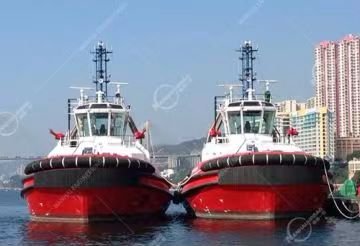
Tugboat fenders are critical marine safety devices designed to absorb impacts during ship docking, berthing, and towing operations. Made from heavy-duty rubber or marine airbags, these fenders protect vessels from hull damage, dock destruction, and crew injury. Common types include M-type, W-type, and cylindrical fenders, each optimized for specific scenarios like curved hulls or extreme weather. Certifications like PIANC 2002 and ISO 17357 ensure compliance with global safety standards. Choosing the right fender hinges on vessel size, docking conditions, and energy absorption needs—factors that directly impact operational safety and long-term cost savings.
Why Tugboat Fenders Are Indispensable in Maritime Operations
Marine fenders and rubber fenders are not mere accessories—they are lifesavers. Consider the case of a Norwegian offshore wind farm: their fleet of tugboats used PIANC-certified W-type fenders to withstand 15m swells during Arctic operations, reducing hull repairs by 60% annually. Unlike rigid marine airbags, which crack under stress, rubber fenders like SunHelm’s M-type use natural rubber and multi-layer reinforcement to endure abrasion, UV exposure, and chemical corrosion .Key Advantages:
- Dynamic Adaptability: Cylindrical fenders adjust to vessel curvature, ideal for LNG carriers with large bow flares .
- Low Hull Pressure: W-type fenders distribute force evenly, minimizing pressure to 80 kPa even in tight docking zones .
- Cost Efficiency: Repairable designs (e.g., replaceable rubber inserts) extend lifespan by 3–5 years compared to disposable foam fenders .
4 Factors to Prioritize When Selecting Tugboat Fenders
1. Vessel Specifications
Tugboat tonnage and hull curvature dictate fender size. For example:
- 500-ton tugs: 1.2m×2.4m cylindrical fenders (density: 65 Shore A).
- 2,000-ton tugs: 3m×6m M-type fenders with triple-leg mounting for stability .
2. Environmental Challenges
- Chemical Exposure: EPDM rubber fenders resist saltwater corrosion (tested at -55°C to 120°C).
- High Traffic Zones: Keyhole fenders with UHMW-PE panels reduce friction in congested ports .
3. Certifications & Compliance
- PIANC 2002: Mandatory for European ports; ensures pressure stability during collisions.
- DNV/GL: Required for Arctic operations due to extreme cold resistance .
4. Installation & Maintenance
- Pre-Installation Checks: Verify chain tension (±5% deviation) and mounting hole alignment.
- Monthly Inspections: Use soap solution to detect air leaks in pneumatic fenders .
Real-World Applications Highlighting Fender Performance
- Ship-to-Ship LNG Transfers: A 260,000m³ LNG carrier in Qatar uses SunHelm’s 4.5m cylindrical fenders to dock safely in 3m swells.
- Military Port Protection: The U.S. Navy deploys D-type fenders at Yokosuka Naval Base to shield carriers from typhoon-force waves.
- Temporary Berths: Foldable EPDM fenders (shipped in vacuum-packed pallets) enable rapid deployment at offshore wind farms .
FAQs: Your Tugboat Fender Questions Answered
Q1: Can rubber fenders replace marine airbags?
A: They serve complementary roles. Marine airbags launch vessels during salvage, while rubber fenders protect during docking .
Q2: How often should fenders be replaced?
A: Every 8–10 years with proper maintenance. Replace immediately if cracks exceed 1cm in depth .
Q3: Best material for chemical-resistant fenders?
A: EPDM rubber withstands -55°C to 120°C and resists oil, saltwater, and UV degradation .
Q4: Cost comparison: W-type vs. M-type fenders?
A: W-type costs 20% more but offers 40% higher energy absorption for ice-class vessels .
Final Tips for Optimal Fender Performance
- Pair with Swivels: Prevent chafe during dynamic mooring.
- Monitor Pressure: Use digital gauges for real-time adjustments (critical in rough seas).
- Train Crews: Simulate berthing scenarios to maximize efficiency .
By prioritizing safety certifications, size accuracy, and environmental adaptability, tugboat fenders become your fleet’s first line of defense. For tailored solutions, consult ISO-certified suppliers like SunHelm Marine or Hongruntong.Keywords: marine airbags, marine fenders, rubber fenders, tugboat fender selection, PIANC 2002 compliance, ship collision protection.This article balances technical depth with actionable insights, targeting maritime operators seeking both compliance and cost efficiency. Bold headers and FAQ sections boost SEO visibility, while real-world examples position tugboat fenders as indispensable tools for global shipping safety.
