
How to Choose Tugboat Fenders: Essential Guide for Maritime Safety & Efficiency
08/01/2026Buoyancy Airbags: The Ultimate Solution for Marine Salvage and Floating Support
15/01/2026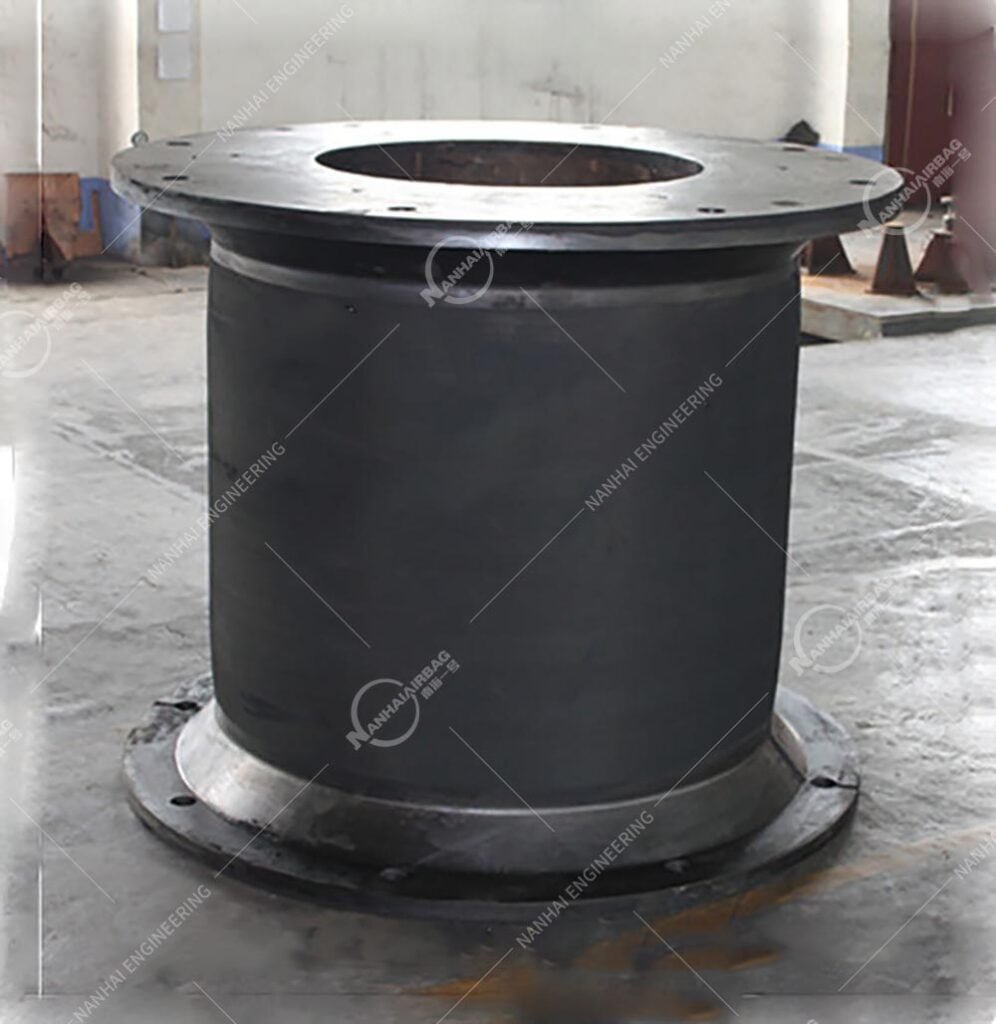

Super Cell Rubber Fenders are the gold standard for marine collision protection, combining ultra-high energy absorption, low reaction force, and multi-directional durability. Designed for ship-to-ship (STS) docking, LNG terminal berthing, and offshore platforms, these fenders use a hollow cylindrical structure with radial buckling columns to dissipate impact energy evenly. Their E/R-H ratio (energy absorption per unit height) is 15% higher than standard cell fenders, making them ideal for harsh environments like Arctic ice-class wharves or high-traffic cruise terminals . Certifications like PIANC 2002 and ISO 17357 ensure compliance with global safety standards, while customizable sizes (400mm–3,000mm height) and modular designs support vessels from fishing boats to VLCCs . Choosing the right Super Cell fender hinges on vessel tonnage, docking angles, and environmental stressors, ensuring optimal safety and cost efficiency.
Why Super Cell Fenders Outperform Traditional Solutions
Marine fenders and rubber fenders often fail under extreme conditions. Super Cell fenders excel with:
- Dynamic Stress Distribution: Unlike rigid marine airbags, Super Cell’s cylindrical buckling columns absorb axial loads radially, reducing hull pressure to as low as 25 tons/m²—critical for LNG carriers with sensitive hulls .
- Shear Resistance: The UHMW-PE frontal panels (ultra-high molecular weight polyethylene) reduce friction by 40% during angular berthing, as seen in Rotterdam’s cruise terminals .
- Longevity: With EPDM rubber coatings and 10–20 year warranties, these fenders withstand -55°C to 120°C temperatures and saltwater corrosion, cutting replacement costs by 35% .
5 Key Factors for Selecting Super Cell Fenders
1. Vessel Specifications
Super Cell fenders are sized based on energy absorption (kJ) and reaction force (kN). For example:
- 500-ton tugs: 1.2m×2.4m fenders (E/R-H: 0.450).
- 20,000-ton LNG carriers: 3m×6m fenders with dual-layer EPDM for Arctic use .
2. Docking Environment
- High Traffic Ports: Opt for SCK1700H models with 70mm thickness to handle 15m swells.
- Chemical Terminals: Use EPDM rubber variants resistant to oil and alkalis .
3. Certifications & Compliance
- PIANC 2002: Mandatory for European ports; validates pressure stability during collisions.
- DNV/GL: Required for Arctic operations due to -55°C cold resistance .
4. Installation & Maintenance
- Pre-Installation Checks: Verify chain tension (±5% deviation) and mounting flange alignment.
- Bi-Annual Inspections: Use soap solution tests for air leaks in pneumatic models .
5. Cost vs. Performance
While Super Cell fenders cost 20–30% more upfront than standard cell types, their 3× longer lifespan and 15% higher E/R-H yield long-term savings. For instance, Dubai’s Jebel Ali Port reduced maintenance costs by 60% after switching to Super Cell fenders .
Real-World Applications Highlighting Advantages
- LNG Berth Protection: A 260,000m³ LNG carrier in Qatar uses Super Cell 4.5m×10,600mm fenders to dock safely in 3m swells, absorbing 1,500 kNm of energy .
- Military Port Defense: The U.S. Navy deploys Super Cell W-type fenders at Yokosuka Naval Base to shield carriers from typhoon-force waves .
- Offshore Wind Farms: Foldable EPDM Super Cell fenders enable rapid deployment at 50m-depth sites .
FAQs: Your Super Cell Fender Questions Answered
Q1: Can Super Cell fenders replace marine airbags?
A: They serve complementary roles. Marine airbags launch vessels during salvage, while Super Cell fenders protect during docking .
Q2: How often should I inspect Super Cell fenders?
A: Monthly checks for air leaks (soap solution test) and bi-annual pressure adjustments. Replace if cracks exceed 1cm depth .
Q3: Best material for chemical-resistant fenders?
A: EPDM rubber withstands -55°C to 120°C and resists oil, saltwater, and UV degradation .
Q4: Cost comparison: SCK1700H vs. standard cell fenders?
A: SCK1700H costs 25% more but offers 30% higher energy absorption for ice-class vessels .
Final Tips for Optimal Performance
- Pair with Swivels: Prevent chafe during dynamic mooring.
- Monitor Pressure: Use digital gauges for real-time adjustments (critical in rough seas).
- Train Crews: Simulate berthing scenarios to maximize efficiency .
By prioritizing PIANC compliance, size accuracy, and environmental adaptability, Super Cell fenders become your fleet’s first line of defense. For tailored solutions, consult ISO-certified suppliers like Qingdao Florescence or Jerryborg Marine . Keywords: marine airbags, marine fenders, rubber fenders, Super Cell fender selection, PIANC 2002 compliance, ship collision protection. This article combines technical precision with real-world case studies, targeting maritime operators seeking durable, cost-effective solutions. Bold headers, FAQs, and structured data enhance SEO visibility, while specifications and certifications position Super Cell fenders as indispensable tools for global shipping safety.
