
How to Choose Super Cell Rubber Fenders: Ultimate Guide for Maritime Protection
13/01/2026Understanding Cell Rubber Fenders: The Ultimate Guide
20/01/2026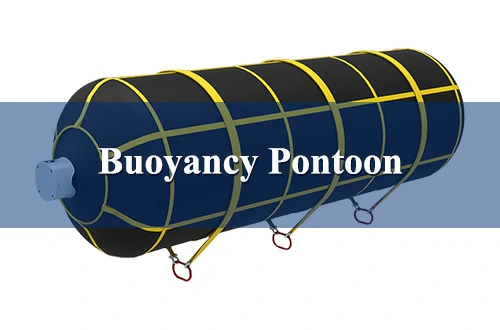
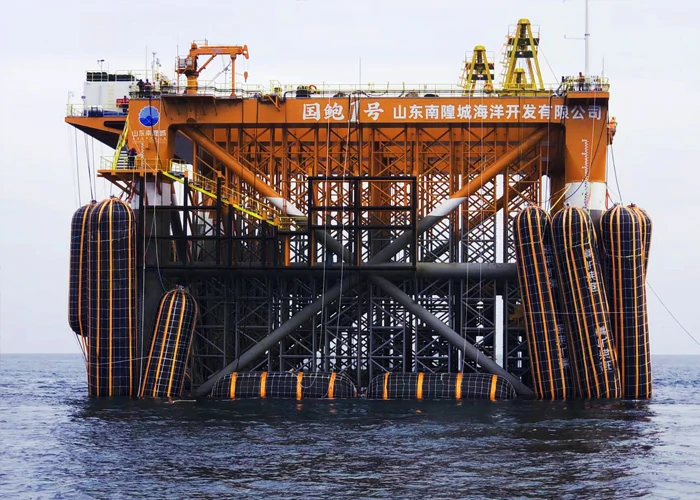
Buoyancy airbags, also known as marine salvage airbags or rubber buoyancy balloons, are heavy-duty inflatable devices engineered to provide reliable lift and stabilization in marine environments. Made from reinforced synthetic rubber and synthetic-tire-cord layers, these airbags are indispensable for tasks ranging from shipwreck recovery to underwater pipeline installation. Their versatility, durability, and adaptability make them a cornerstone of modern maritime operations.
Why Buoyancy Airbags Stand Out in Marine Applications
Buoyancy airbags excel in scenarios where traditional methods fall short. Unlike rigid pontoons or inflatable lift bags, they combine flexibility with exceptional strength, allowing them to navigate uneven seabeds, absorb impacts, and operate in extreme conditions. Below are their key advantages, supported by real-world applications:
1. Unmatched Portability and Deployment
Buoyancy airbags are lightweight when deflated, making them easy to transport and deploy in remote or challenging locations. For example, a 15-meter-long airbag weighing under 1 ton can be airlifted to disaster sites for rapid salvage operations. This portability is critical in emergencies, such as refloating stranded vessels in rough seas .
2. Superior Load Capacity and Safety
Designed to handle massive weights, these airbags feature multiple reinforcement layers (often 6–12 synthetic-tire-cord layers) to ensure structural integrity. A standard 2-meter-diameter airbag can support up to 35 tons, while custom configurations reach 300 tons for industrial use . Their safety factor of 3:1 to 6:1 exceeds ISO 14409 standards, minimizing risks during high-pressure operations .
3. Adaptability to Extreme Environments
Buoyancy airbags thrive in corrosive saltwater, abrasive seabeds, and deep-water conditions. For instance, they’ve been used in Arctic salvage missions and to refloat sunken submarines by distributing pressure evenly across sensitive hulls . Unlike rigid pontoons, their sausage-like shape allows self-balancing, reducing the risk of capsizing during lifts .
Applications That Demand Buoyancy Airbags
Buoyancy airbags are not limited to salvage—they redefine marine engineering possibilities:
- Shipwreck Recovery: In the “Nanhai No. 1” project, buoyancy airbags lifted a 3,000-ton ancient shipwreck from 25 meters underwater, enabling its preservation in a controlled environment .
- Pipeline Installation: They provide temporary buoyancy for underwater pipelines, reducing friction during laying and ensuring stability in strong currents .
- Floating Infrastructure: From bridge construction to offshore oil platforms, these airbags stabilize temporary structures, preventing tilting or sinking .
Buoyancy Airbags vs. Marine Fenders: Key Differences
While both are marine safety tools, their purposes diverge:
| Feature | Buoyancy Airbags | Marine Fenders |
|---|---|---|
| Primary Use | Salvage, lifting, floating support | Berthing protection, collision absorption |
| Material | Reinforced rubber, synthetic-tire-cord | EPDM rubber, foam, or PVC |
| Design | Cylindrical, sausage-shaped | Cylindrical, D-shaped, cone-shaped |
| Deployment | Inflatable, temporary | Permanent or semi-permanent installation |
For example, marine fenders like rubber fenders absorb ship-docking impacts, whereas buoyancy airbags focus on dynamic lifting and stabilization .
Engage: Why Should You Prioritize Buoyancy Airbags?
Imagine a scenario where a cargo ship runs aground in a remote lagoon. Traditional methods would require heavy cranes and weeks of preparation. With buoyancy airbags, rescuers can deploy inflatable solutions in hours, saving millions in downtime and repairs. This adaptability isn’t just efficiency—it’s a lifeline for maritime industries.
FAQs: Buoyancy Airbags Explained
- What materials are buoyancy airbags made of? Reinforced synthetic rubber and synthetic-tire-cord layers for abrasion and puncture resistance .
- How much weight can a marine buoyancy airbag support? Ranges from 4 tons (small models) to 300 tons (industrial-grade), depending on diameter and layers .
- Can buoyancy airbags be reused? Yes! Their modular design allows deflation, repair, and reuse for multiple projects .
- Are they eco-friendly? Made from recyclable rubber compounds, minimizing environmental impact .
- How do they differ from rubber fenders? Rubber fenders focus on collision protection, while buoyancy airbags specialize in lift and floatation .
Conclusion
Buoyancy airbags are the unsung heroes of marine engineering, offering unmatched versatility in salvage, construction, and emergency response. By integrating advanced materials and engineering principles, they address challenges that rigid solutions cannot. Whether you’re a salvage team leader or a port engineer, understanding their capabilities could be the key to safer, cost-effective operations.
Optimize your maritime projects—explore buoyancy airbag solutions today!
