
D Rubber Fenders: The Space-Saving, High-Performance Workhorse for Modern Marinas
21/04/2026How to choose ship launching airbags
28/04/2026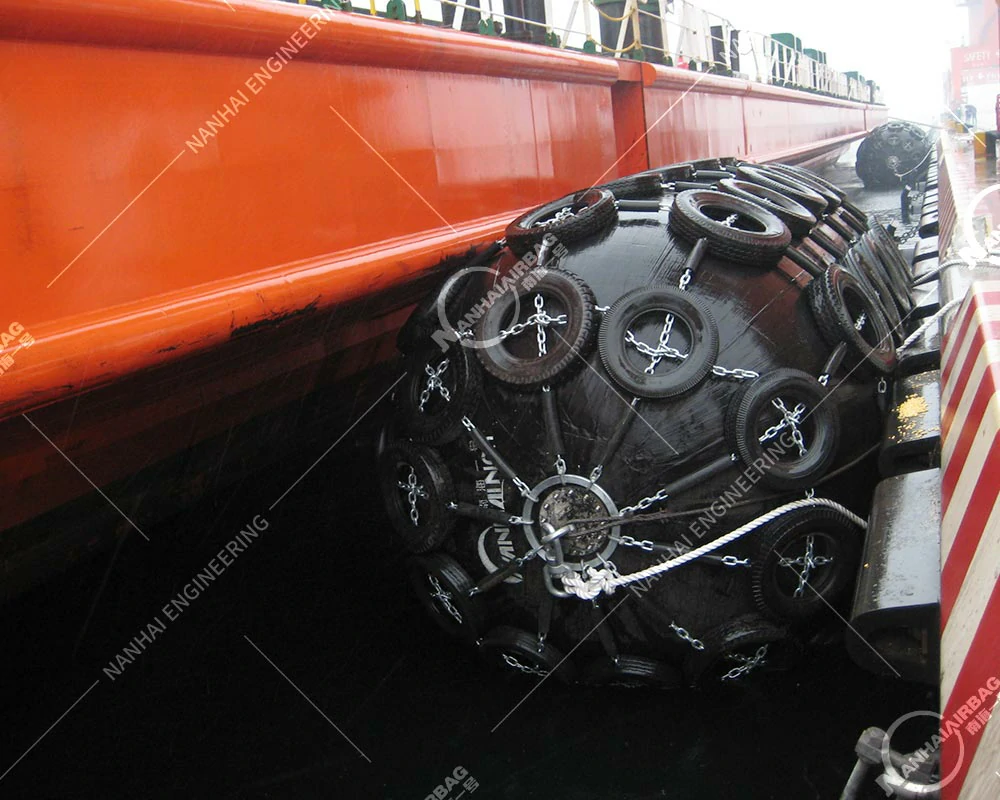
In the high-stakes world of maritime operations, where massive vessels face the relentless forces of wind, current, and tide, a simple miscalculation during berthing can lead to millions of dollars in hull and infrastructure damage. Enter YOKOHAMA Fenders—the pioneering pneumatic marine fenders that have fundamentally transformed how the global shipping industry approaches docking safety. Renowned for their superior energy absorption and gentle reaction force, these inflatable rubber fenders are the first line of defense for everything from agile tugs to massive VLCCs and LNG carriers.
The Engineering Marvel of YOKOHAMA Fenders
YOKOHAMA Fenders, also widely known as pneumatic rubber fenders, are advanced, inflatable marine protection devices that utilize compressed air to absorb kinetic energy during vessel berthing and mooring operations. Originally developed by the Yokohama Rubber Company in 1958, this innovative fender type has since become the global industry benchmark for ship-to-ship (STS) and ship-to-dock (STD) operations. Constructed with a robust multi-layer design—featuring an outer abrasion-resistant rubber layer, a reinforced synthetic tire-cord layer, and an inner air-sealing layer—these fenders offer unparalleled flexibility and resilience. Capable of compressing up to 60% of their original diameter without failing, they distribute impact forces evenly across the vessel’s hull, preventing structural damage and coating breakdown. Compliant with stringent ISO 17357-1:2014 standards, YOKOHAMA fenders are the ultimate cost-effective, high-performance solution for modern ports, offshore platforms, and naval fleets navigating today’s demanding maritime environments.
Why YOKOHAMA Fenders Outperform Traditional Marine Fendering Systems
Transitioning from traditional solid foam or cylindrical marine fenders to the pneumatic design of YOKOHAMA fenders is akin to swapping out a rigid iron bumper for a state-of-the-art, air-cushioned suspension system. The core advantage lies in the physics of compressed air. Because the internal air pressure builds up gradually during impact, the fender absorbs massive amounts of kinetic energy while exerting a remarkably low and even reaction force back onto the vessel and the dock. This prevents the dangerous “peak loading” effect that often cracks hull plating or damages dock substructures.
Let’s dive deeper into the distinct advantages that make YOKOHAMA fenders an indispensable asset for modern marinas and commercial ports, complete with real-world applications.
1. Unmatched Energy Absorption with Ultra-Low Reaction Force
Unlike solid rubber fenders, which push back almost immediately upon impact, the pneumatic design of a YOKOHAMA fender acts like a giant shock absorber. The compressed air inside dissipates the vessel’s kinetic energy smoothly and progressively.
- Example: Consider a massive 24,000-TEU container ship berthing at a busy European terminal. Due to its sheer size and momentum, traditional solid fenders would transfer devastating shockwaves directly into the dock’s pilings. However, when equipped with YOKOHAMA pneumatic fenders, the impact energy is absorbed seamlessly. In fact, real-world data from major ports shows that these fenders can reduce maximum reaction forces by up to 38% compared to traditional arch or solid fenders, effectively shielding both the massive ship and the dock from structural fatigue .
2. Perfectly Suited for Sensitive and Super-Sized Vessels
Certain vessels, such as Liquefied Natural Gas (LNG) carriers or ultra-large crude carriers (ULCCs), have highly sensitive hull coatings and thin plate structures. Excessive surface pressure during berthing can cause invisible micro-cracks or costly coating damage. YOKOHAMA fenders maintain a uniformly low surface pressure (often below 180 kN/m²) that matches the internal air pressure, ensuring absolute hull safety .
- Example: At a major LNG import terminal in Asia, operators switched to YOKOHAMA fenders after experiencing frequent minor hull abrasions with foam-filled alternatives. The result? A staggering 57% reduction in hull repair incidents and zero structural failures during typhoon-force berthing conditions, proving their mettle in protecting high-value, sensitive assets .
3. Unmatched Versatility in Extreme and Dynamic Environments
Real-world maritime conditions are rarely static. Tides fluctuate, waves crash at odd angles, and ships often approach the dock at an incline. YOKOHAMA fenders excel in these chaotic scenarios. Their floating design automatically compensates for tidal variations of up to 8 meters, and their cylindrical shape allows them to maintain structural integrity and energy absorption even when compressed at a 15 to 35-degree angle .
- Example: Imagine a tidal zone like the Bay of Fundy, where extreme tidal shifts occur daily. Previously, dockmasters had to manually adjust traditional fender heights up to 15 times a day just to maintain proper contact with berthing vessels. By deploying floating YOKOHAMA fenders, the fenders simply rise and fall with the tide, maintaining perfect contact and pressure without any manual intervention. Furthermore, offshore oil platforms use heavy-duty Chain & Tyre Net (CTN) variants of these fenders to protect supply vessels from the impact of 3-meter waves, showcasing their resilience in harsh, open-ocean environments .
4. Exceptional Durability and Cost-Effectiveness
Built from proprietary EPDM/Natural Rubber (NR) compounds reinforced with cross-hatched synthetic tire cords, YOKOHAMA fenders are virtually immune to the corrosive effects of saltwater, UV radiation, and ozone. Their seamless, all-rubber construction completely eliminates the risk of galvanic corrosion—a common and expensive failure point in steel-reinforced concrete fenders .
- Example: At Jebel Ali Port, one of the world’s busiest container hubs, YOKOHAMA fenders have remained in active service for over 12 years without requiring a single core replacement, despite enduring more than 18,000 heavy vessel berthings. A lifecycle cost analysis revealed that because there is no rust to monitor, no anodes to replace, and no recoating required, these fenders cost 62% less to maintain over a 10-year period compared to their steel-reinforced counterparts .
5. Rapid Deployability for Emergency and Versatile Marine Operations
Beyond permanent dock installations, YOKOHAMA fenders can be rapidly inflated, deflated, and transported, making them incredibly versatile. They can be utilized for mid-ocean ship-to-ship (STS) cargo transfers, temporary jetty protections, or even specialized naval operations .
- Example: Naval fleets and submarine docks often utilize a specialized “Hydropneumatic” variant of the YOKOHAMA fender. Partially filled with water and equipped with a counterweight, these fenders sit vertically underwater, providing essential cushioning for submarines surfacing or docking—a task where traditional solid fenders would simply shatter or fail to absorb the angled impact . While heavy-duty marine airbags are typically deployed for entirely different heavy-lifting tasks like ship launching or salvage, YOKOHAMA fenders are the undisputed kings of dynamic, floating impact protection.
Are You Gambling with Your Port’s Infrastructure and Vessel Safety?
Imagine a severe storm rolling into your port. The winds are howling at 50 knots, and a massive oil tanker is struggling to hold its position against the raging currents. If your dock is still relying on outdated, rigid marine fenders, that vessel is essentially crashing against your infrastructure with the force of a battering ram, risking catastrophic hull breaches, environmental disasters, and millions in structural repairs. Why take that gamble when a scientifically superior, field-proven solution exists? Discover how upgrading to YOKOHAMA Fenders can provide you with priceless peace of mind, drastically slash your long-term maintenance budgets, and effortlessly handle the increasingly massive vessels of the modern era.
Related Questions (FAQs)
Here are the answers to some of the most frequently asked questions about YOKOHAMA Fenders and how they fit into the broader marine fenders ecosystem:
- What are YOKOHAMA Fenders and why are they called “pneumatic” fenders? YOKOHAMA Fenders are a specific type of inflatable, floating rubber fenders that use compressed air as their primary energy-absorbing medium. They are called “pneumatic” because they rely on air pressure to cushion the impact between a vessel and a dock (or another vessel). The name “YOKOHAMA” originates from the Yokohama Rubber Company, which was the first to patent and standardize this highly effective fender design globally in 1958 .
- How do YOKOHAMA fenders differ from foam-filled or solid rubber fenders? The fundamental difference lies in the energy absorption mechanism. Solid and foam-filled marine fenders rely on the compression and deformation of physical materials, which often results in a sharp, high peak of reaction force pushed back onto the ship and the dock. In contrast, YOKOHAMA pneumatic fenders use trapped, pressurized air. This allows them to absorb significantly more energy while maintaining a very low, gradual, and even reaction force, drastically reducing the risk of damage to sensitive vessel hulls .
- What are the main types of YOKOHAMA fenders available? YOKOHAMA fenders are generally categorized by their installation and protection setups. The most common types include:
- Sling-Type: Lightweight, cost-effective, and lifted into position using ropes or chains; ideal for small to medium vessels and calm waters .
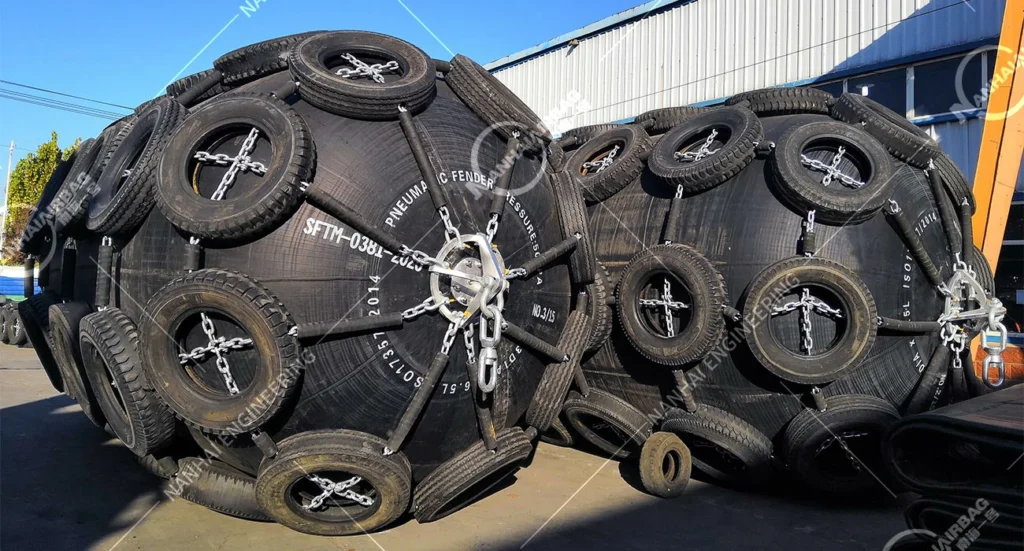
- Chain & Tyre Net (CTN) Type: Heavy-duty fenders wrapped in a protective net of chains and recycled tires. This adds an extra layer of abrasion resistance, making them perfect for large tankers, rough seas, and heavy-duty ship-to-ship transfers .
- Hydropneumatic Type: Partially filled with water and ballasted to sit vertically. These are highly specialized fenders used primarily for submarines and semi-submersible platforms .
- Are YOKOHAMA fenders difficult to install and maintain? Not at all. One of their standout advantages is how easy they are to deploy. Because they are floating fenders, they naturally rise and fall with the tide, eliminating the need for complex mechanical height-adjustment systems. Maintenance is also remarkably straightforward. Unlike steel-reinforced fenders that require constant rust checks, ultrasonic testing, and anode replacements, YOKOHAMA fenders are virtually maintenance-free. Occasional visual inspections and simple air pressure top-ups are generally all that is required to keep them performing optimally for a decade or more .
- Do YOKOHAMA fenders comply with international maritime safety standards? Yes, absolutely. High-quality YOKOHAMA fenders are manufactured in strict compliance with the international ISO 17357-1:2014 standard. This rigorous certification dictates the specific requirements for design, material quality, and mandatory performance testing to ensure maximum product reliability and safety in real-world maritime operations .
Final Thoughts
In an era where commercial vessels are growing exponentially in size and maritime weather patterns are becoming increasingly erratic, clinging to outdated dock protection technology is a recipe for financial disaster. YOKOHAMA Fenders represent the pinnacle of modern marine engineering—offering an unbeatable combination of high-capacity energy absorption, ultra-low reaction forces, and exceptional environmental resilience. While equipment like marine airbags serve a vital purpose in heavy marine lifting and salvage, YOKOHAMA fenders are unquestionably the ultimate, all-weather guardians of your berthing and mooring operations. Don’t wait for the next violent storm or a costly hull breach to expose the fatal flaws in your current setup. Invest in the global gold standard of dock defense today, and secure your valuable vessels and critical port infrastructure for decades to come.
