
Super Cell Rubber Fender
13/10/2026
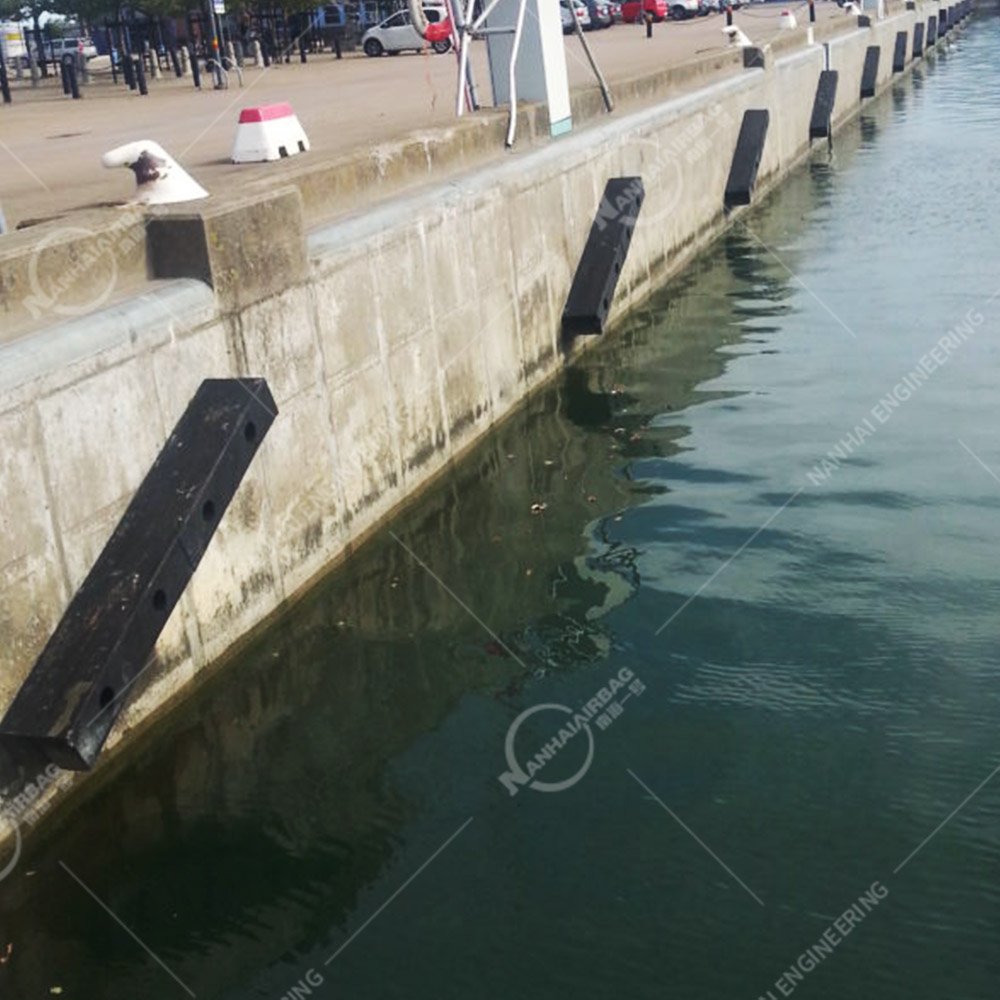
Square rubber fenders are heavy-duty marine fenders designed to absorb impact between vessels, quays, pontoons, and workboats. Their square profile creates a flat, stable contact face that spreads berthing loads across a wider area than rounded profiles, making them a cost-effective choice for small-to-medium berths, inland waterways, tug and barge operations, and vessel side protection. Unlike marine airbags, which are used for ship launching, haul-out, or floating ship-to-ship cushioning, square rubber fenders are fixed rubber fenders bolted permanently to docks or hulls for daily impact protection.
If you manage a marina, port berth, workboat fleet, or shipyard quay, the right fender choice can mean the difference between “routine maintenance” and “boat hull vs. concrete wall.” Keep reading—because most buyers overspend on complicated fender systems when a square profile would do the job better.
What Are Square Rubber Fenders?
Square rubber fenders—sometimes called square dock fenders, SC fenders, or rectangular rubber fenders—are extruded solid or hollow-core rubber profiles used in the broader family of marine fenders.
They are typically installed:
- Along quay walls and wharf faces
- On workboats, tugs, pilot boats, and barges as side belting
- At marina finger piers and pontoon edges
- On ro-ro ramps, loading bays, and inland river terminals
The profile is exactly what the name suggests: a square or rectangular cross-section, often with a round hole, square hole, D-shaped bore, or solid core depending on the required compression behavior.
Common profile types
| Profile | Best for |
|---|---|
| Solid square | Maximum stiffness, tug pushing bands, heavy abrasion zones |
| Round-hole / SC | General dock berthing, easier compression |
| D-bore / SD | Vessel sides, longer runs, steel-strip mounting |
| UHMW-PE face pad option | Sliding contact, lower friction, less rubber wear |
Why Square Rubber Fenders Outperform Fancier Shapes
A lot of buyers assume “complex shape = better protection.” In real dockside conditions, square rubber fenders win because they are simple, rigid, cheap to replace, and easy to bolt.
1. Flat mounting face = fast installation
The rear face of a square fender is flat. That means you can bolt it straight to timber, steel whalers, or concrete without custom cradles.
Compare that to cylindrical fenders, which often need half-round brackets, or W-fenders with aligned lug patterns. A maintenance crew with anchor bolts, a drill, and backing plates can replace a damaged section quickly.
Example:
A workboat slip using 200×200 mm square fenders can swap one worn section without removing the whole berth line—important when the dock stays operational.
2. Larger contact area = fewer point loads
The square face gives a consistent contact plane against the hull or wall. That reduces concentrated pressure on flat-sided barges, pontoons, and vessel corners.
This is why square fenders are common on:
- Barge terminals
- Inland waterways
- Fishing harbors
- Tug sides and stern pushing bands
Example:
A barge terminal where vessels slide along the wall during mooring puts constant shear on the fender face. A square profile takes that scuffing better than a round fender that rolls or leaves gaps.
3. Abrasion-resistant and non-pressurized
Square fenders are usually solid extruded rubber blends—natural rubber, SBR, or EPDM-type compounds. There is no air chamber to puncture and no foam core to waterlog.
That makes them ideal for:
- Tight berthing
- Repeated rubbing
- Tug pushing operations
- Low-clearance docks
They don’t “pop” like a pneumatic fender, and they don’t depend on air pressure to work.
4. Flexible mounting options
Square fenders are not limited to “bolt on the wall.”
They can be:
- Bolted vertically to a quay face
- Laid horizontally on dock edges
- Fitted to vessel sides with brackets
- Fixed with steel strip through the bore
- Pre-curved for tug bow/stern radius
Example:
A pilot boat operator may mount solid square sections closely together along the hull side so ropes don’t catch between gaps—something round fenders handle poorly.
Where Square Rubber Fenders Fit Best
Use square fenders when you need reliable, repeatable protection at moderate berthing energy.
✅ Good fit:
- Marina finger piers
- Small municipal wharves
- Fishing harbors
- Inland barge docks
- Tugboats and workboats
- Pontoon corners
- Ro-ro ramp edges
❌ Not the best fit:
- VLCC or large tanker berths
- Very high-velocity berthing
- Deep-sea container terminals needing low reaction force
- Ship-to-ship floating operations
For those, cone fenders, cell fenders, or pneumatic marine fenders are usually better.
Square Rubber Fenders vs. Marine Airbags
This is one of the most searched questions in procurement.
They are not the same product.
- Square rubber fenders → fixed berthing protection for docks and hulls
- Marine airbags → inflatable systems for ship launching, haul-out, salvage, or floating fendering
A boatyard might use both:
- Marine airbags move the vessel during launch or dry-dock
- Square rubber fenders protect it once it’s tied up
If your problem is “ship hits dock,” use rubber fenders.
If your problem is “ship needs to be moved or lifted,” look at marine airbags.
Size and Specification Basics
Standard square fender sections commonly range from:
- 100×100 mm
- 150×150 mm
- 200×200 mm
- 250×250 mm
- 300×300 mm
- 400×400 mm
- 500×500 mm
Lengths are often supplied long and cut to project requirement—common lengths include 1000–3000 mm, then cut, drilled, chamfered, or pre-curved to project needs.
What to specify when requesting a quote
- Profile type: solid / SC / SD
- Outer size: H × W
- Bore size or solid section
- Length per piece
- Hole pattern: top/bottom or side drill
- Substrate: concrete, steel, timber
- Vessel type and approximate tonnage
- UHMW-PE pad required or not
⚠️ Don’t guess energy absorption from a generic table. Reaction force and energy rating change with rubber compound, deflection, and profile.
Installation Tips That Extend Service Life
A square fender is only as good as its backing structure.
Field-tested basics:
- Confirm substrate strength before drilling
- Use galvanized or stainless fasteners
- Add backing plates on concrete
- Don’t over-tighten bolts—local compression shortens life
- Use UHMW-PE pads where vessels slide
- Inspect quarterly for small ports, monthly for busy berths
For floating docks, use oversized washers or backing plates because the structure flexes.
Maintenance: Keep It Simple
One reason buyers like square marine fenders is low maintenance.
Quick checklist:
- Rinse salt buildup with fresh water
- Check bolts for loosening
- Look for deep cracks, tearing, or permanent flattening
- Inspect UHMW pads for wear
- Replace sections showing structural damage
Typical service life depends on traffic, UV, oil exposure, and installation quality—often many years in inland service and shorter in heavy commercial berthing.
Related Questions People Ask About Square Rubber Fenders
These are the Google-search questions buyers actually type before procurement.
What are square rubber fenders used for?
They protect docks, quay walls, pontoons, tugs, barges, and workboats during berthing and mooring. The square face spreads impact load and reduces localized hull pressure.
Are square fenders better than cylindrical fenders?
Not always “better”—but they are simpler to mount and give a flatter contact face. Cylindrical fenders can suit curved hull contact; square fenders suit flat surfaces, corners, and side belting.
Do square rubber fenders have low reaction force?
Usually less low-reaction than cone, cell, or pneumatic fenders. They are stiffer and contact early. If hull pressure limits are strict, choose pneumatic or cone fenders instead.
Can square fenders be used on boats?
Yes. They are common on tug sides, pilot boats, workboats, and push bars because they resist shear and abrasion.
Solid, SC, or SD—which should I choose?
- Solid: toughest, heaviest wear
- SC / round bore: standard dock protection
- SD / D bore: better for longer runs and vessel-side mounting
Are square rubber fenders the same as marine airbags?
No. Square fenders are fixed dock/vessel protection. Marine airbags are inflatable and used for launching, haul-out, or floating fendering.
How long do square rubber fenders last?
It depends on berthing frequency, UV, salt, oil, and bolt installation. With correct mounting, they often deliver long service life in commercial and inland applications.
When should I NOT use square fenders?
For very large vessels, high approach velocity, or projects where reaction force must stay very low. Use cone, cell, or pneumatic marine fenders instead.
Bottom Line
Square rubber fenders are not the flashiest option in the marine fenders catalog—but they are one of the most practical. They give you a flat contact face, simple installation, strong abrasion resistance, and easy section replacement at a reasonable cost.
If your operation involves tugs, barges, marinas, inland terminals, or general quay protection, square fenders deserve a serious look before you jump to complex fender systems.
👉 Next step: measure your berth face or hull line, estimate vessel contact area, and request a profile drawing from a fender supplier with solid, SC, and SD options.
Want help comparing square fenders vs. D-fenders or pneumatic fenders for your exact berth? Start with your largest regular vessel and approach speed—that decides everything else.
Target keywords used
square rubber fenders · marine fenders · rubber fenders · marine airbags · square dock fender · SC fender · tug fender · quay fender · berthing protection
