
Super Cone Rubber Fender: The Engineer’s Guide to High-Efficiency Marine Berthing
09/10/2026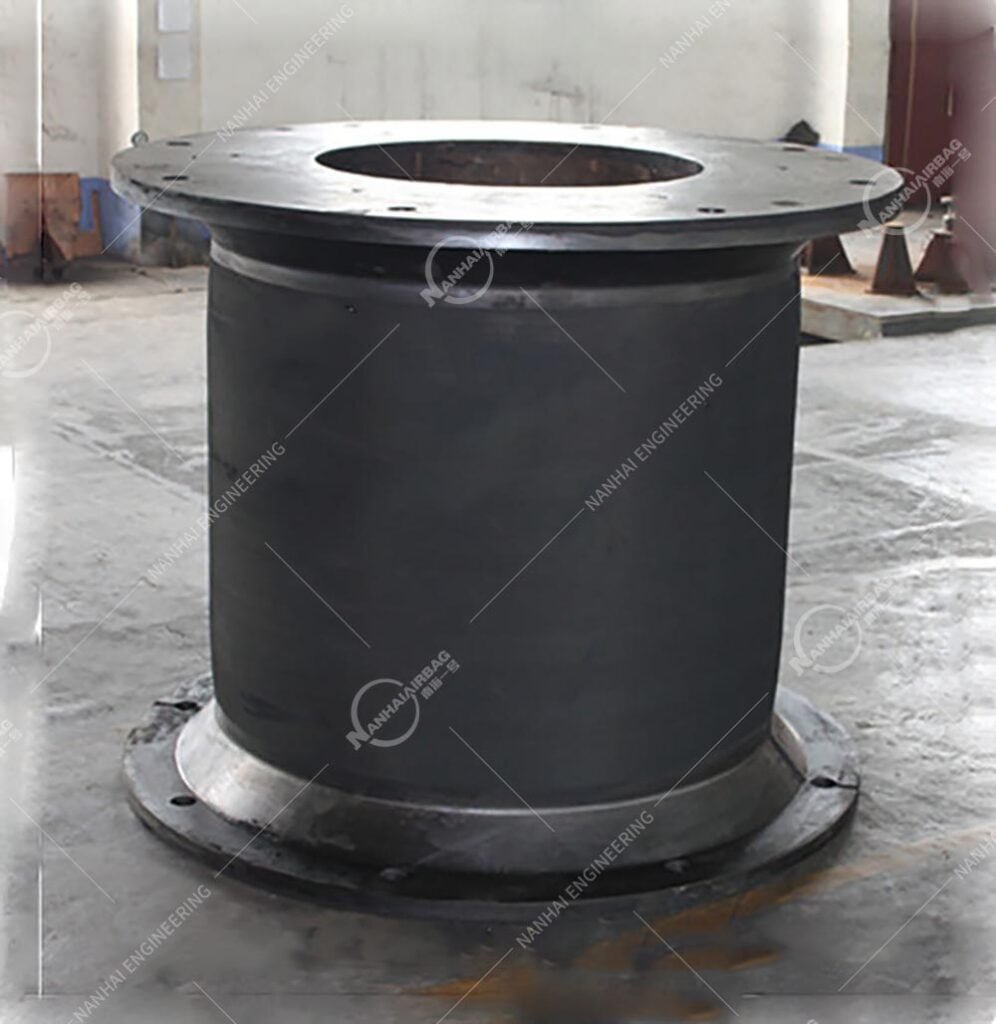
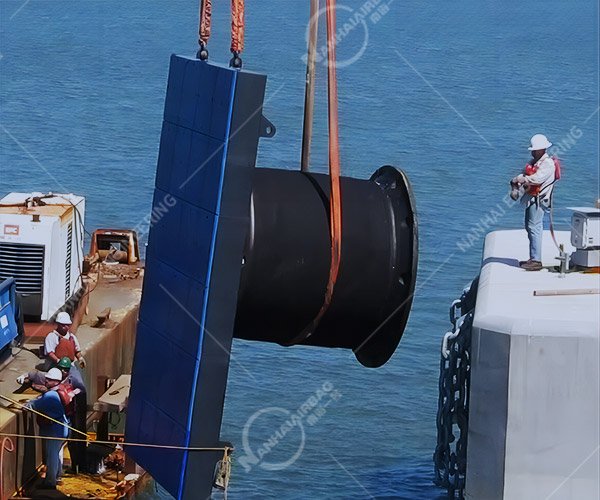
A Super Cell Rubber Fender is a heavy-duty fixed marine fender with a hollow cylindrical rubber body and steel end plates. It compresses axially and buckles radially to absorb berthing energy while keeping reaction force low. Compared with standard cell fenders, it runs to 52.5% deflection instead of 47.5%, gains about 15–17% more energy absorption at similar reaction force, and improves the E/R·H efficiency ratio from about 0.38 to 0.45. Almost always used with a steel frontal panel and UHMW-PE pads, it is a top choice among rubber fenders for container terminals, oil jetties, bulk ports, LNG berths and dolphin structures.
If your berth sees large vessels, angled approaches and high traffic, a basic solid fender can leave you with cracked concrete, dented hulls or overbuilt quay walls. Super Cell fenders are the upgrade path most busy ports specify — more energy absorbed, less pushback, better angular performance.
Why Ports Choose Super Cell Rubber Fenders
Here’s the transition from “any rubber fender will do” to “this is the right fixed system.”
1. High energy absorption, low reaction force
The hollow cell shortens under load and bulges outward in a controlled pattern. That spreads stress instead of concentrating it at the base.
Example: A 100,000 DWT bulk carrier nudging into a coal terminal in cross-currents compresses the cell smoothly to 52.5%, so the hull stops gently instead of taking a hard reactive jolt.
2. Frontal panel cuts hull pressure
A bare fender tip concentrates load. Add the frontal panel and hull face pressure can be held below 200 kN/m², and lower on request for sensitive large vessels.
Example: LNG and large crude carriers benefit most — lower local pressure protects thin or high-value hull plating.
3. UHMW-PE pads reduce friction and shear
The ship slides against the panel instead of grinding the rubber. Lower friction means lower shear force, less panel drag, and longer fender life.
4. Strong angular berthing performance
Ships rarely hit perfectly square. Super Cell’s wide circular base keeps performance stable at angled contact, which is why it suits ferries, dolphins, open-pile jetties and tidal berths.
5. Economical berth design
Because E/R·H is about 15% better, you can sometimes specify a smaller Super Cell than a standard cell for the same duty — saving panel and support-steel cost.
Super Cell vs Other Marine Fenders
| Fender | Mounting | Best use |
|---|---|---|
| Super Cell Rubber Fender | Fixed | Large terminals, tankers, bulk, container, LNG, dolphins |
| Super Cone | Fixed | High angular performance, compact height envelope |
| Pneumatic fender | Floating | Ship-to-ship, offshore, extreme tides |
| Marine airbags | Temporary | Launching, haul-out, salvage — not berthing |
Remember the lane split: rubber fenders and fixed marine fenders protect the quay. Marine airbags move a hull from land to water. Pneumatic fenders cushion floating-to-floating contact. Super Cell is for the permanent wall.
Quick Specs Buyers Ask For
- Height range: 400–3000 mm
- Rated deflection: 52.5%; max about 55%
- Reaction classes: low to super-high, matched to quay and hull limits
- Frontal panel: recommended for large vessels
- Face pads: UHMW-PE for low friction
- Standards: PIANC-tested reporting; request ISO/batch test and BV/ABS/DNV/LR/CCS as required
- Life: typically 10+ years with inspection and panel/pad maintenance
People Also Ask
What is a Super Cell Rubber Fender?
A fixed, compression-type marine fender with a hollow cylindrical rubber body. It absorbs berthing energy by axial compression and radial buckling while keeping reaction force low.
Super Cell vs standard cell fender — what’s the difference?
Super Cell reaches 52.5% deflection vs 47.5%, adds about 15–17% energy absorption at similar reaction force, and improves E/R·H efficiency by about 15%. It is usually a retrofit-friendly upgrade because the footprint/concept is similar.
Do I need the frontal panel?
For large vessels, yes. The panel spreads load, lowers hull pressure, carries the UHMW-PE pad, and protects the rubber tip from direct abrasion.
What hull pressure can it achieve?
Typically below 200 kN/m² with a proper frontal panel; lower face pressures are possible with larger panels and correct layout.
Is Super Cell better than Super Cone?
Not universally. Super Cell is a proven heavy-duty choice with excellent shear/angular behavior. Super Cone can be better when height is tight or very high angular deflection is required. Choose by berthing energy, reaction limit, quay geometry and panel design.
Can Super Cell replace pneumatic fenders or marine airbags?
No. Super Cell is a fixed berthing fender. Pneumatic fenders float for STS and tidal use. Marine airbags launch and move vessels. Different jobs, different standards.
How do I size a Super Cell fender?
Calculate berthing energy from displacement and normal approach velocity using PIANC method, then select GEA at 52.5% deflection with margin. Check allowable reaction force on hull and quay, add frontal-panel pressure check, and verify certified performance curves — not catalog averages.
Bottom Line
Specify Super Cell Rubber Fenders when the berth is permanent, the vessels are large, and reaction force matters as much as energy absorption. Pair them with the right frontal panel and UHMW-PE pads, keep pneumatic marine fenders for floating operations, and keep marine airbags for launch and salvage — a complete marine fender plan, each tool in its lane.
Sizing a Super Cell system? Send vessel DWT, approach velocity, berthing angle, quay reaction limit and panel size — I’ll narrow the SC height, reaction class and energy rating.
