
Beenest Ship Launching Airbags: The Puncture-Resistant Way to Launch Ships Without a Million-Dollar Slipway
10/09/2026Pneumatic Rubber Fenders: The Complete Guide to Floating, Low-Reaction Marine Protection
17/09/2026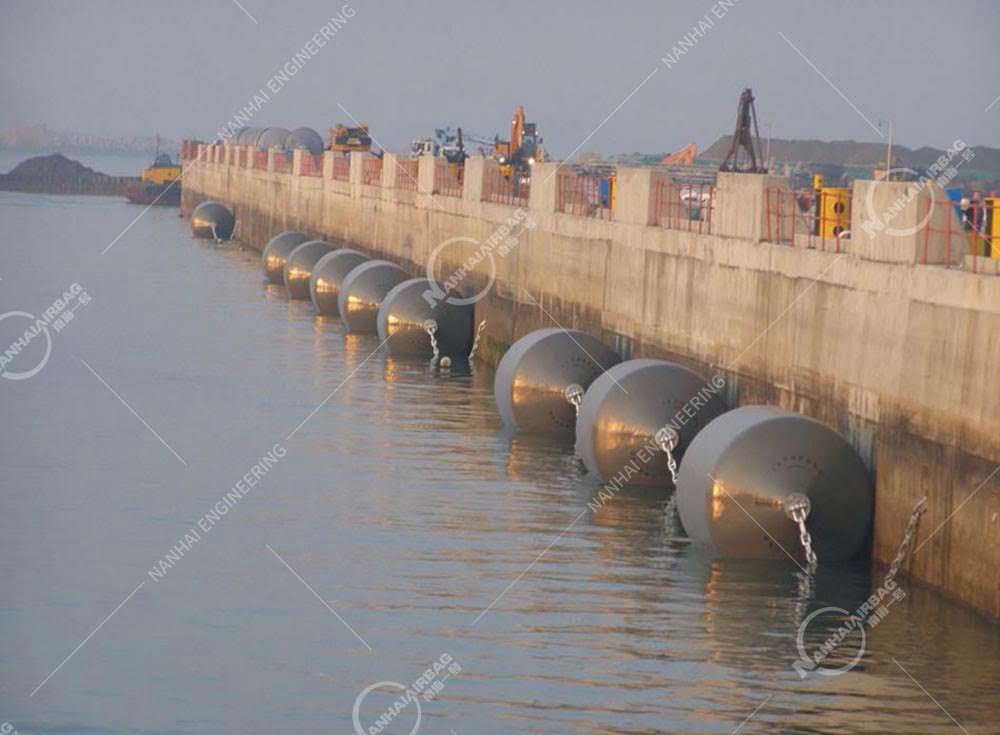
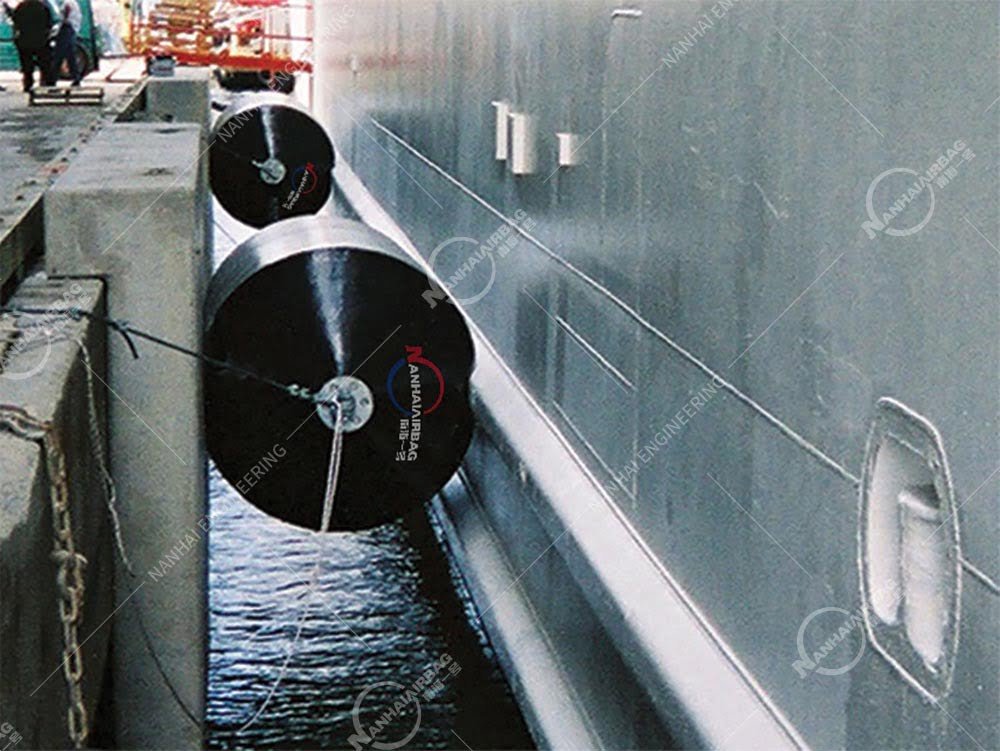
You’re watching a 180-meter product tanker come alongside in a 2.5-meter swell. The pneumatic fender on the seaward side takes a bad angle, the skin nicks on a hull bracket, and suddenly you’ve got a half-deflated bag doing more wobbling than cushioning. Nobody wants that at 3 a.m. on a live berth.
That’s the exact nightmare marine foam fenders were built to kill.
They look like oversized floating sausages, but underneath the bright polyurea skin is a closed-cell foam core that cannot deflate, cannot sink, and doesn’t care if you forgot the pressure gauge. For busy terminals, offshore platforms, STS transfers, and even fussy yacht docks, foam-filled fenders are quietly becoming the “fit-and-forget” standard in the world of marine fenders.
🎯 Featured Snippet (Google-Selectable Summary)
Marine foam fenders—also called foam-filled fenders—are floating marine fenders built from a closed-cell EVA or polyethylene (PE) foam core, wrapped in a reinforced nylon/filament layer and sealed with a tough polyurethane or polyurea elastomer skin. Because there’s no compressed air inside, they absorb berthing energy through foam compression instead of air pressure: they won’t burst, they stay buoyant even if the outer skin is cut, and they need no inflation checks, valves, or relief systems. Unlike pneumatic rubber fenders (which tune performance with air pressure) or solid rubber fenders (which can be rigid and rebound sharply), foam fenders deliver progressive, predictable energy absorption with very low maintenance—ideal for ship-to-ship transfers, offshore platforms, ferry terminals, cruise berths, and remote or unattended docks. They’re part of the broader marine fenders family, while marine airbags remain the separate tool for ship launching, lifting, and salvage.
⚠️ Why This Isn’t Just a “Nice Upgrade”—It’s Urgent
Docking accidents don’t wait for calm weather or a free maintenance window. A few real-world patterns:
- A Mediterranean ferry terminal was spending ~10 hours a week inflating, pressure-checking, and patching pneumatic fenders across a high-frequency berth. One slow leak during peak season meant a fender out of service exactly when the 4 p.m. boat arrived. After switching to foam-filled units, that inspection time dropped to near zero—the fenders just hang there and work.
- A North Sea oil platform lost a pneumatic fender to a storm tear during tanker offload. Pneumatic = instant vulnerability. Foam-filled fenders on the same landing kept taking 4-meter swell impacts with no pressure-related drama, because the buoyant medium is the foam itself, not trapped air.
- A remote Alaskan barge berth had no staff to do weekly pressure logs. Pneumatic fenders slowly drifted out of spec; foam fenders didn’t care. For unmanned or hard-to-access sites, “no inflation” isn’t a convenience—it’s the whole point.
- A yacht marina with $3M sailing cats didn’t want black rubber marks on white gelcoat. Foam fenders with non-marking polyurea skins solved the hull-staining complaint that traditional rubber fenders couldn’t.
The urgency is simple: every berthing cycle on a pressurized fender is a small bet that the valve, seam, and air pressure all hold. Foam fenders remove that bet.
💡 Rule of thumb we tell port buyers: If a fender is hard to reach, frequently hit, or failure would shut down an operation—specify foam. If you need tunable softness for occasional, variable-angle visits, pneumatic still earns its place.
🔑 What Makes Foam Fenders Different (And Why Crews Love Them)
1. Closed-Cell Foam = Unsinkable by Design
The core is made of independent sealed cells (cross-linked PE or EVA, typically ~30–100 kg/m³ density depending on grade). Water can’t migrate into the core. Even if the skin is slashed by a sharp hull fitting, the fender keeps floating and cushioning until you patch it.
That’s why naval bases, coast guards, LNG terminals, and FPSO boat landings lean on foam—a sunk fender isn’t just lost equipment, it’s a propeller-fouling navigation hazard.
2. No Air = No Maintenance Theater
Pneumatic fenders need:
- initial pressure checks
- temperature compensation (sun can swing pressure 10–15%)
- valve service
- leak hunts
- relief-valve checks
Foam fenders need a rinse and a visual look. No gauges, no compressors, no “is it soft?” debates at shift change.
3. Progressive, Predictable Compression
As a hull pushes in, the foam compresses—often rated up to ~60% deflection—and the reaction force rises smoothlyinstead of spiking. That matters for:
- thin aluminum hulls
- older wharf structures
- cruise ships and patrol craft that can’t take a hard snap-back
- angled or off-center berthing
Solid rubber fenders (arch, square, D-type) can rebound sharply; foam spreads the load more gently.
4. Tough Skin That Takes Abuse
The outer layer is sprayed seamless polyurethane/polyurea (Shore A ~75–95 in many specs), often with a helical nylon or Kevlar filament reinforcement underneath. It shrugs off:
- UV and ozone
- barnacle-scraped hulls
- concrete quay edges
- diesel and hydraulic oil splash
- −40 °C to +60 °C temperature swings (compound-dependent)
Add an optional tire-net or chain-net jacket for container-terminal brutality.
5. They Don’t Drift With Temperature
A pneumatic fender’s performance literally follows the gas law—hot afternoon = higher pressure = different reaction force. Foam performance is driven by foam modulus and geometry, so it stays steadier across a tidal + temperature cycle. For engineers running PIANC berthing-energy calcs, that consistency is gold.
🆚 Foam Fenders vs. Pneumatic vs. Solid Rubber vs. Marine Airbags
This is where procurement teams get confused—so here’s the clean version.
| Tool | Core mechanism | Biggest strength | Biggest weakness | Best for |
|---|---|---|---|---|
| Foam-filled fender | Closed-cell foam compression | Unsinkable, zero inflation, stable | Higher upfront cost | Permanent berths, offshore, STS, unattended sites |
| Pneumatic rubber fender (Yokohama-type) | Compressed air | Tunable softness, lighter feel | Punctures, pressure maintenance | Temporary STS, variable hull curves |
| Solid rubber fender (D, W, cone, cell) | Rubber deflection | Cheap, fixed, no moving parts | Rigid rebound, needs mounting structure | Quay faces, tugs, heavy fixed berths |
| Marine airbags | Air + tire-cord, load-carrying | Launch/lift/salvage, portable | Not for berthing impact | Ship launching, refloat, caisson moves |
The key distinction: Foam fenders, pneumatic fenders, and solid rubber fenders all live in the berthing/protection world. Marine airbags live in the lift-and-move world. Don’t ask a foam fender to launch a ship, and don’t ask an airbag to replace your dock fenders.
📦 Where You’ll Actually See Them Working
- Ship-to-ship transfer — LNG, crude, product tankers side-by-side
- Offshore platforms & FPSO boat landings — where a deflated fender = danger
- Ro-Ro ferry terminals — high-frequency, same-spot impacts every day
- Cruise & yacht berths — non-marking skins, low hull pressure
- Donut foam fenders on monopiles — bridge piles, turning dolphins, tidal zones
- Naval & coast-guard ops — unsinkable, low-maintenance, foul-free
- Salvage support — paired with marine airbags: airbags do the lifting, foam fenders stop the hull from banging the dock during tow
📏 Sizing & Spec Cheat Sheet (No Engineer Jargon Overload)
Common commercial sizes from manufacturers:
- Diameter: ~300 mm up to 4,200–4,500 mm
- Length: ~1,000 mm up to 9,000 mm (longer custom builds exist)
- Core: closed-cell PE or EVA foam, density tuned to energy grade
- Skin: PU/polyurea, optional non-marking, optional tire/chain net
- Internal load path: central chain or steel rod + swivel end fittings
- Grades: low-reaction (LR) → standard → high-capacity → super-high-capacity, depending on energy/reaction targets
Don’t size by diameter alone. Run the PIANC berthing-energy method:
E = ½ × Mₑ × V² × Cₑ × C_m × C_s × C_c
(vessel effective mass × approach speed × eccentricity, virtual mass, softness, berth coefficients)
Then match the fender’s guaranteed energy absorption at rated deflectionand confirm reaction force + hull pressure stay under the limits for your vessel and quay.
⚠️ Classic mistake: “We used 2-meter pneumatic elsewhere, so 2-meter foam must work.” Foam and pneumatic fenders have different compression curves—always compare the performance sheet, not just the outer dimensions.
🛠️ Installation & Care (The “Set It and Forget It” Part)
Install
- Hang from approved swivel eyes, chain slings, or brackets—never tie off on the bare skin alone
- For fixed quays: space fenders to cover the vessel’s contact band across tide
- For STS: use netted/cushion grade on the seaward side, netless guard grade for clean hulls
- Donut foam fenders: ride free on the pile, align with tidal movement
Maintain (Minimal)
- ✅ Rinse with fresh water after heavy fouling
- ✅ Visual check for deep cuts, exposed foam, net wear
- ✅ Patch skin nicks early with manufacturer-approved PU repair kit
- ✅ Inspect swivel/shackle/chain annually
- ❌ Don’t drag on asphalt or sharp rebar
- ❌ Don’t store folded under heavy weight for long periods
Done right, quality foam fenders run 10–25 years depending on grade and site abuse.
❓ People Also Ask (Real Google PAAs for “Marine Foam Fenders”)
Q: What are marine foam fenders filled with?
A: They’re filled with a closed-cell EVA or polyethylene (PE) foam core—not air. The foam is sealed inside a reinforced layer and a tough polyurethane/polyurea skin. Because the cells are closed, water can’t get in, so the fender stays buoyant even if the skin is damaged.
Q: Can foam fenders puncture or sink?
A: The skin canbe scraped or cut, but the fender won’t sink. Closed-cell foam traps buoyancy in millions of independent cells—even a slashed unit keeps floating and absorbing impact until you repair the skin. That’s why they’re called “unsinkable” in marine specs.
Q: Are foam fenders better than pneumatic (Yokohama) fenders?
A: Neither is universally “better”—they solve different problems. Foam fenders win on zero maintenance, puncture tolerance, and stable performance for permanent/heavy-use berths. Pneumatic fenders are often cheaper upfront and easier to tune for occasional, variable-angle berthing. Busy terminals and offshore sites usually prefer foam; flexible temporary STS often sticks with pneumatic.
Q: Do foam fenders need inflation or pressure checks?
A: No. There’s no air chamber, valve, or relief system. You inspect the skin and hardware, but you never pump them up or log pressure. That’s the #1 reason unmanned sites switch to foam.
Q: How long do marine foam fenders last?
A: Typically 10–25 years depending on grade, skin type, net protection, and impact frequency. Harsh offshore use with tire-net jackets tends toward the longer end; lightweight yacht fenders still outlast most pneumatic units if you keep them out of sharp abuse.
Q: Are foam fenders the same as marine airbags?
A: No. Foam fenders absorb berthing impact on docks and between vessels. Marine airbags are inflatable load carriers used for ship launching, lifting, hauling, and salvage. Both are marine equipment, but airbags are not a substitute for a berthing fender.
Q: Will foam fenders mark my hull?
A: Standard dark skins can transfer residue on light gelcoat. For yachts and cruise ships, specify non-marking polyurea skin—it’s a common option exactly for that reason.
Q: What size foam fender do I need?
A: Don’t guess by boat length. Calculate berthing energy (PIANC method), then match diameter, length, foam density, and grade so energy absorption fits your worst-case approach speed—while reaction force and hull pressure stay inside class/structure limits. A fender engineer will return a calc sheet, not just a part number.
Q: Can I use foam fenders in cold weather?
A: Yes. Most marine-grade foam cores and PU/polyurea skins are formulated for extended temperature ranges (commonly cited around −40 °C to +60 °C, compound-dependent). Always confirm the cold-rating with your supplier for Arctic or ice-edge ops.
Q: Are foam fenders worth the higher upfront cost?
A: For high-frequency, remote, offshore, or safety-critical berths—almost always yes. You trade a higher purchase price for eliminated pressure maintenance, fewer failures, less downtime, and a 10–25 year service life. Pneumatic may still win for low-frequency, budget-sensitive, or highly variable berthing.
🌟 Bottom Line: Stop Betting on Air Pressure
Marine foam fenders aren’t a gimmick—they’re the “grown-up” option for any berth where failure isn’t an option and nobody has time to babysit a pressure gauge. They pair the gentle, progressive cushioning of foam with a skin tough enough for offshore abuse, and they sit neatly inside your wider marine fenders strategy alongside pneumatic units, solid rubber fenders, and—on launch day—marine airbags.
Use foam where you want “always ready.” Use pneumatic where you want “tunable and temporary.” Use solid rubber where you want “bolt it and forget it.” And keep airbags for the day you actually have to move a hull.
👉 Sizing one for your berth? Pull these five numbers first: largest vessel displacement, typical approach velocity, berthing angle, tidal range, and allowable hull pressure. Hand that to a fender engineer and you’ll get a foam grade + diameter + length that actually matches your real-world hits—not a catalog guess.
Running a ferry terminal, LNG jetty, or remote barge berth and tired of punctured pneumatics? Drop your vessel size and berthing frequency below—let’s spec the right foam fender instead of repeating last year’s repair bill.
Keywords: marine foam fenders · foam-filled fenders · marine fenders · rubber fenders · marine airbags · pneumatic fenders · STS fenders · offshore fenders · PIANC · closed-cell foam · polyurea fender
