
Marine Foam Fenders: The “Unsinkable” Upgrade Ports and Boat Owners Are Switching To
15/09/2026Yokohama Fender: The Complete Guide to Pneumatic Rubber Fenders for Safe Berthing
22/09/2026
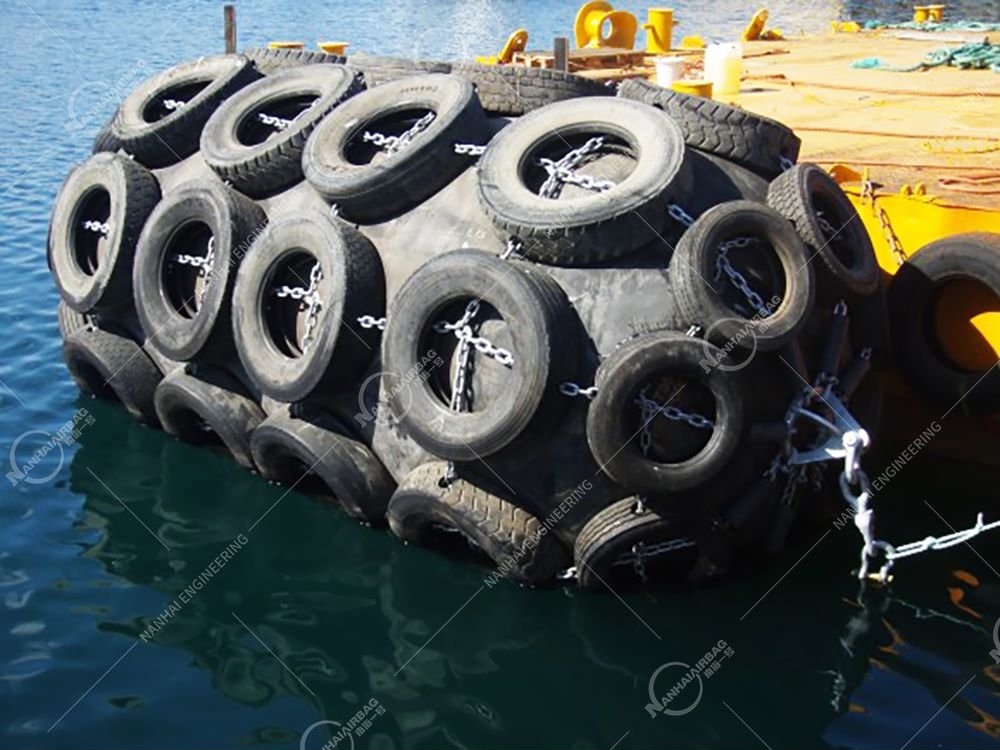
Pneumatic Rubber Fenders are air-filled, synthetic-cord-reinforced floating buffers that absorb berthing energy by compressing trapped air inside a reinforced rubber cylinder. Unlike solid rubber fenders or foam-filled fenders, they deliver very high energy absorption with exceptionally low reaction force—which is why they are the global standard for ship-to-ship (STS) transfer, tanker and LNG berthing, offshore supply operations, and tide-exposed terminals. Compliant with ISO 17357-1:2014 and available in P50 (50 kPa) and P80 (80 kPa) pressure classes, pneumatic fenders float at the waterline, track tidal movement, conform to curved hulls, and deflate for low-cost shipping and storage. Alongside marine airbags, cone fenders, arch fenders, and other fixed marine fenders, they form a critical layer of the modern marine fenders ecosystem.
If you’re specifying fenders for STS cargo transfer, protecting an LNG carrier or VLCC against hull damage, retrofitting a tidal terminal where fixed fenders won’t work, or simply trying to decide between pneumatic, foam-filled, and solid rubber fenders, this guide gives you the engineering principles, real-world deployment examples, selection math, and procurement checklist you need.
What Are Pneumatic Rubber Fenders?
Pneumatic rubber fenders—often called Yokohama fenders or floating pneumatic fenders—are hollow, cylindrical marine buffers with hemispherical ends. They’re built from:
- Outer rubber layer – abrasion-, UV-, ozone-, and seawater-resistant synthetic compound
- Synthetic tyre-cord reinforcement – crossed nylon/polyester layers that hold internal pressure (the “skeleton,” same principle as a truck tyre)
- Inner rubber liner – airtight membrane that seals the compressed air
- End flanges + safety relief valve – inflation, pressure monitoring, and automatic over-pressure release (mandatory for fenders ≥ Ø2,500 mm under ISO 17357-1:2014)
When a vessel makes contact, the fender compresses—up to 60% of its diameter at the ISO test point—converting the ship’s kinetic energy into compressed air pressure plus elastic deformation of the cord-reinforced rubber. The reaction force rises progressively rather than abruptly, so the hull experiences a soft, controlled deceleration instead of a hard impact spike.
💡 Because the energy-absorbing medium is air, not solid rubber, pneumatic fenders can be tuned simply by changing inflation pressure—no change in physical size required.
Why Pneumatic Rubber Fenders Dominate STS and Tidal Operations
Solid rubber fenders fight a hull with material stiffness. Pneumatic fenders fight with gas compressibility. That single physics difference unlocks a set of advantages that fixed marine fenders simply can’t match in floating or high-energy scenarios.
Advantage 1: High Energy Absorption, Very Low Reaction Force
The force-deflection curve of a pneumatic fender rises gently at first contact, then steepens toward 60% deflection. This “soft entry” means:
- Large berthing energy is absorbed without transferring damaging reaction force to the hull
- Thin-shell, aluminium, or coated hulls are protected from point-loading
- Mooring line loads stay manageable in rough weather
Example: A 3300 × 6500 mm fender at P50 absorbs 1,814 kJ at 60% deflection while returning only 3,015 kN reaction force. The same size at P80 jumps to 2,532 kJ / 3,961 kN—letting you trade a little extra push-back for significantly more capacity without changing the fender’s footprint.
Advantage 2: Self-Floating and Tide-Adaptive
Pneumatic fenders float at the waterline and rise/fall with tide, swell, and vessel draft. There are no fixed brackets, no adjustable tracks, and no need for multiple vertical rows of fenders at different heights.
Example: A terminal in a 12-metre tidal range that would need three tiers of fixed cone or arch fenders can instead deploy a single line of floating pneumatic fenders that automatically reposition as the vessel rises and falls—maintaining contact at the bilge radius, the strongest part of the hull.
Advantage 3: Conforms to Curved and Angled Hulls
During STS transfer or inclined berthing, contact rarely happens in perfect parallel compression. The flexible air body wraps around curved hull forms and maintains contact even as vessels roll, pitch, and surge.
Example: Two Aframax tankers conducting an offshore STS fuel transfer in a beam sea maintain continuous fender contact despite 4–6° relative roll. A rigid cylindrical fender would lose contact at the edges; the pneumatic body deforms locally and stays seated.
Advantage 4: Deploy Anywhere—Rapid and Portable
Deflated pneumatic fenders pack down for cheap ocean freight, store in a warehouse, and inflate on-site with compressed air or nitrogen. That makes them ideal for:
- 🚢 Emergency berthing after collision or storm damage
- 🚢 Temporary terminals and disaster-relief ports
- 🚢 Charter operations where fenders move between vessels
- 🚢 Ship-to-ship transfer at anchor or in open water
Example: A salvage operator towing a disabled cargo ship into a sheltered bay can deploy pre-positioned pneumatic fenders from a tug in under an hour—something impossible with bolted fixed fenders.
Advantage 5: Tunable Performance via P50 / P80
You don’t need a different fender size to change performance—you change the initial inflation pressure:
| Pressure Class | Initial Pressure | Energy Absorption | Reaction Force | Best For |
|---|---|---|---|---|
| P50 | 50 kPa | Baseline (GEA) | Lowest | LNG, aluminium hulls, yachts, naval, sensitive coatings |
| P80 | 80 kPa | ~30–40% higher | Higher | VLCC/ULCC STS, high approach velocity, limited fender count |
⚠️ Never inflate a P50-rated fender to 80 kPa. The cord angle, ply schedule, and safety factors are engineered for the rated class. Over-inflation voids certification and creates a burst risk.
Advantage 6: Repairable and Reusable
Unlike foam-filled fenders, a punctured pneumatic fender can often be patched in the field using marine-grade rubber repair compounds and cold-vulcanising techniques, then re-certified. With proper pressure maintenance and net inspection, quality net-type units routinely deliver 10+ years of service; sling-type units typically run shorter but are faster to redeploy.
Net Type vs. Sling Type vs. Hydro-Pneumatic
Choosing the right configuration matters as much as choosing the right size.
🔗 Type I – Chain-Tyre Net (CTN)
A galvanised chain net interwoven with used truck/aircraft tyres and rubber sleeves wraps the fender body.
- ✅ Maximum abrasion resistance in heavy STS and rough terminals
- ✅ Distributes impact and protects the rubber skin
- ❌ Tyres can scuff delicate hull paint
- Best for: VLCC/LNGC berthing, permanent oil-terminal dolphins, heavy STS
🪢 Type II – Sling Type
No hard net. Heavy-duty synthetic slings pass through integral lifting eyes; the fender hangs from chains or wire rope.
- ✅ Gentle on hull coatings—preferred for yachts, cruise ships, naval vessels
- ✅ Lighter, faster to deploy, easier to handle
- ❌ Less protection against sharp edges, abrasion, or debris
- Best for: Fast ferries, aluminium hulls, naval, low-marking applications
🌊 Hydro-Pneumatic (Specialised Subclass)
Partially filled with water and air (typically ~60–70% water ballast) for submerged, low-freeboard contact.
- Best for: Submarine berthing, very low-freeboard vessels, specialised naval ops
- Note: outside the standard ISO 17357-1 scope; specified separately
Standard Sizes & ISO 17357-1 Performance
Pneumatic fenders are catalogued by diameter × length. Common ISO ranges run from Ø500 × L1000 mm up to Ø4500 × L12000 mm, with bespoke sizes available.
Reference Performance Table (at 60% deflection, ISO 17357-1:2014)
| Nominal Size (Ø × L) | P50 GEA (kJ) | P50 Reaction (kN) | P80 GEA (kJ) | P80 Reaction (kN) |
|---|---|---|---|---|
| 500 × 1000 mm | 6 | 64 | 8 | 85 |
| 1000 × 1500 mm | 32 | 182 | 45 | 239 |
| 2000 × 3500 mm | 308 | 875 | 430 | 1,150 |
| 2500 × 4000 mm | 663 | 1,381 | 925 | 1,815 |
| 3300 × 6500 mm | 1,814 | 3,015 | 2,532 | 3,961 |
GEA = Guaranteed Energy Absorption. Values are indicative; always use the certified performance curve from your chosen manufacturer and confirm ±10% reaction-force tolerance per ISO 17357-1.
Quick Sizing Rules of Thumb
- 10,000–50,000 DWT STS → Ø2000–2500 mm × 4000–5000 mm, 50–60 kPa
- 50,000–150,000 DWT (Aframax/Suezmax) → Ø2500–3300 mm × 5000–6000 mm, 60–70 kPa
- 150,000–300,000+ DWT (VLCC/ULCC/LNGC) → Ø3300–4500 mm × 6000–8000 mm, 70–80 kPa
- Quay-side general cargo / ferries → Ø1000–2000 mm depending on displacement and approach speed
How to Calculate the Right Pneumatic Fender
Use the PIANC berthing-energy method:
E = ½ × Cₘ × Cₑ × Cₛ × C_c × M × V²
Where:
- M = vessel displacement (or effective mass)
- V = normal berthing velocity
- Cₘ = hydrodynamic mass coefficient
- Cₑ = eccentricity coefficient
- Cₛ = softness coefficient
- C_c = configuration/dock coefficient
Then match your calculated energy (E) against the fender’s GEA at 60% deflection, with margin for angle, temperature, and simultaneous-vessel effects. Finally, verify:
- ✅ Reaction force ≤ allowable hull pressure × contact area
- ✅ P50 vs. P80 aligned with hull sensitivity
- ✅ Net type vs. sling type matched to abrasion/marking risk
- ✅ ISO 17357-1:2014 certificate + classification society approval (BV, ABS, DNV, LR, CCS)
- ✅ Safety relief valve present for Ø ≥ 2500 mm
📌 Most reputable manufacturers offer free berth-modelling support—send them your vessel data and they’ll return a performance-matched specification.
Pneumatic Fenders vs. Other Marine Fenders
| Feature | Pneumatic Rubber Fender | Foam-Filled Fender | Solid Rubber Fender | Marine Airbags |
|---|---|---|---|---|
| Energy medium | Compressed air | Closed-cell foam | Rubber compression | Compressed air |
| Reaction force | Very low | Moderate–higher | Progressive/stiffer | Very low |
| Floating? | Yes | Yes | No | Yes (buoyant) |
| Tide-adaptive? | Yes | Partial | No | Yes |
| Puncture risk | Yes (repairable) | None | N/A | Yes (repairable) |
| Primary use | STS, tidal berths, offshore | Unmanned/fixed floats | Fixed quays, dolphins | Ship launching, STS, salvage |
| Shipping/storage | Deflatable | Bulky | Fixed | Deflatable |
Synthesis from ISO 17357 guidance and manufacturer engineering notes.
The key distinction: Pneumatic rubber fenders and marine airbags both use compressed air, but marine airbags are broader inflatable cylinders used for ship launching, heavy lifting, and floating buffers, while pneumatic fenders are purpose-engineered, ISO-rated berthing devices with certified energy-absorption curves. A complete marine fenders strategy often uses both—pneumatic fenders for berthing, marine airbags for launch/salvage/STS support.
Installation & Deployment Best Practices
- Inflate with dry air or nitrogen to the rated pressure at ambient temperature. Never mix pressure classes.
- Test the safety relief valve before deployment—especially on Ø ≥ 2500 mm units.
- Rig correctly:
- CTN type → attach guy chains/ropes to end rings, never lift by the tyre net alone
- Sling type → use certified chain/wire rope through both lifting eyes, balanced
- Position at the bilge radius where possible—the strongest part of the hull and the natural floating line.
- Allow swing room so fenders track vessel motion without chafing on hawse pipes, anodes, or hull appendages.
- Monitor pressure monthly—ambient temperature can shift readings by 10–15%.
Maintenance Checklist
- ⚓ Check internal pressure monthly; top up with dry air/nitrogen
- ⚓ Inspect outer rubber for cuts >10 mm, exposed cord, or blistering
- ⚓ Check chain/net for corrosion, stretched links, missing tyres or rubber sleeves
- ⚓ Verify end flanges, shackles, and swivel joints are secure and corrosion-treated
- ⚓ Exercise the relief valve periodically
- ⚓ Store deflated, shaded, away from ozone sources (generators, electrical equipment)
- ⚓ Repair minor punctures promptly with certified cold-vulcanising patch kits
⚠️ If you see exposed tyre-cord layers, bulging, or a valve that won’t hold pressure—remove the fender from service immediately. A failed pneumatic fender at high energy is a serious safety hazard.
Related Questions People Ask About Pneumatic Rubber Fenders
❓ What is the difference between pneumatic fenders and Yokohama fenders?
They’re the same product family. “Yokohama fender” refers to the original floating pneumatic rubber fender developed by The Yokohama Rubber Co. in 1958. Today, “pneumatic rubber fender” is the generic, ISO 17357-1:2014 term, while “Yokohama-type” is still used interchangeably across the marine fenders industry.
❓ What does P50 and P80 mean?
P50 fenders operate at 50 kPa initial internal pressure and give the lowest reaction force. P80 fenders operate at 80 kPa and deliver roughly 30–40% more energy absorption at the cost of higher reaction force. The right choice depends on hull sensitivity vs. available fender count.
❓ Are pneumatic rubber fenders better than foam-filled fenders?
For STS transfer, tidal terminals, and vessels with sensitive hulls, pneumatic fenders usually win: lower reaction force, deflatable shipping, and repairable. Foam-filled fenders win where puncture resistance and zero-maintenance operation matter more than minimising hull pressure—e.g., unmanned dolphins or debris-heavy environments.
❓ How long do pneumatic rubber fenders last?
Service life varies by type and conditions: net-type fenders in moderate commercial service often exceed 10 years; sling-type units typically run shorter due to higher direct hull contact. Proper pressure maintenance, net inspection, and prompt repairs are the biggest drivers of longevity.
❓ Can pneumatic fenders be used for ship-to-dock berthing?
Yes. While they’re the global standard for ship-to-ship transfer, they’re also widely used for ship-to-dock (STD) berthing at tidal terminals, oil jetties, LNG plants, and floating pontoons where fixed rubber fenders can’t track water-level changes.
❓ What size pneumatic fender do I need?
Start with vessel displacement and berthing velocity, calculate energy using the PIANC formula, then match GEA at 60% deflection with margin. As a rule of thumb: 1000–2000 mm diameter for small vessels/ferries, 2000–2500 mm for 10k–50k DWT, 2500–3300 mm for Aframax/Suezmax, and 3300–4500 mm for VLCC/LNGC-class vessels.
❓ Are pneumatic fenders the same as marine airbags?
No—they’re related but distinct. Both use compressed air and reinforced rubber, but pneumatic fenders are ISO-rated berthing devices with certified energy-absorption curves, while marine airbags are used for ship launching, heavy lifting, salvage, and supplementary floating protection. Many operators use both as part of one marine fenders program.
❓ Do pneumatic fenders need certification?
Always specify ISO 17357-1:2014 compliance and request the manufacturer’s test report, Certificate of Conformance, and classification society approvals (BV, ABS, DNV, LR, CCS). If a supplier can’t provide these, treat the product as non-compliant.
❓ How do I stop pneumatic fenders from scuffing hull paint?
Use sling-type fenders (no tyre net), request non-marking grey/cream outer rubber, or fit anti-scratch matting inside CTN tyre centres. For yachts, cruise ships, and naval vessels, sling type with a non-marking compound is the standard solution.
❓ What happens if a pneumatic fender is over-inflated?
Over-inflation—especially running a P50 body at 80 kPa—exceeds the cord-layer safety factor, risks bursting under impact, and invalidates ISO certification. Always inflate to the rated pressure class marked on the fender’s nameplate.
The Bottom Line
Pneumatic rubber fenders solve the three hardest problems in marine berthing: high energy, low hull pressure, and moving waterlines. Their air-spring principle delivers a soft, progressive reaction force that solid rubber fenders can’t replicate, while their self-floating design makes them indispensable for STS transfer, tidal terminals, LNG/VLCC operations, offshore supply, and emergency mooring.
For fixed quay walls with stable water levels, solid marine fenders—arch, cone, cell, or square—remain the cost-effective default. But the moment your operation involves two moving vessels, a large tidal range, or a high-value hull that can’t tolerate point loading, pneumatic fenders become the obvious choice. Paired strategically with marine airbags and other rubber fenders, they give port operators, ship owners, and offshore contractors a resilient, tunable, and globally standardised protection system.
📌 Ready to specify pneumatic fenders? Pull together your largest vessel’s displacement, normal berthing velocity, tidal range, and hull-pressure limit—then work with an ISO 17357-1-compliant manufacturer to model the berth and recommend the exact diameter, length, pressure class, and net configuration. The right pneumatic fender, correctly inflated and maintained, will protect your assets for a decade or more.
Keywords: Pneumatic Rubber Fenders, marine fenders, rubber fenders, marine airbags, Yokohama fenders, floating pneumatic fenders, ISO 17357-1:2014 fenders, P50 pneumatic fender, P80 pneumatic fender, chain-tyre-net fender, sling-type pneumatic fender, ship-to-ship fender, STS transfer fender, LNG berthing fender, VLCC fender, low reaction force marine fender, tidal terminal fender.
