
W Rubber Fenders: The “W”-Shaped Workhorse That Keeps Tugs, Barges, and Docks Alive
13/08/2026Arch Rubber Fenders: The Definitive Guide for Marine Engineers and Port Operators
20/08/2026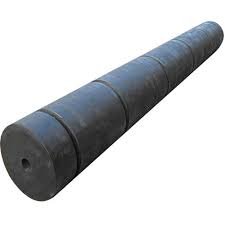
You’re on the bow of an 80-ton harbor tug, pinned against the flank of a 300-meter container ship in a 30-knot gust. The ship is swinging, your bow is taking the full lateral load, and the only thing converting that chaos into a controlled cushion is a row of rubber profiles bolted to your hull. Misspecify that rubber, and you’re not just looking at a dent—you’re looking at a hull-plate replacement, a dock-damage claim, and a tug out of service during peak season.
Tug boat fenders—also called boat bumpers, rubber fenders, or marine fenders—are high-abrasion-resistant rubber fenders designed to protect both the tug and the vessel it’s assisting during pushing, towing, escorting, and berthing operations. They’re not “boat bumpers” you hang over the side—they’re engineered, mounted, and tuned to the exact contact patterns of tug work: repeated lateral pushes, angled escort contacts, and occasional hard berthing. Get the type right, and your tug stays in service for 15+ years. Get it wrong, and you’re replacing fenders every season while your hull picks up the damage.
🎯 Featured Snippet (Google-Selectable Summary)
Tug boat fenders are heavy-duty rubber fenders—including cylindrical, W-type, M-type, block, keyhole, and D-type profiles—mounted on the bow, stern, and sides of tugs to absorb kinetic energy during ship-assist operations such as pushing, towing, and escorting. Tug fenders are built from high wear-resistant natural rubber, SBR, or EPDM compounds with a progressive load-deflection curve, giving them high energy absorption while keeping hull pressure low. Unlike marine airbags—which are inflatable devices used for ship launching, lifting, and salvage—tug boat fenders are permanently mounted marine fenders that resist abrasion, UV, saltwater, and extreme temperatures. The right tug fender system reduces hull damage, lowers dock-repair claims, and extends the working life of the vessel.
⚠️ Why This Is Urgent (Not “Someday” Planning)
Most tug operators don’t think about fenders until something goes wrong. But here’s the reality of tug work:
- A harbor tug pushing a 50,000 DWT bulker onto its berth in a crosswind. The bulker’s hull flare is radical, the contact angle changes every second, and a rigid fender would either skip off the hull or crush. Cylindrical fenders with a central support chain flex to follow that flare—but only if they’re sized for the energy involved.
- An ASD escort tug in a congested port generates berthing-energy spikes far beyond what a standard D-fender can handle. Undersize it, and the fender bottoms out—transferring the full impact to your hull plate.
- A tug working ice-strengthened duties in sub-zero temps. Standard rubber goes brittle and cracks on first contact; a proper rubber compound rated to -40°C holds its elasticity and keeps absorbing.
- A barge-handling tug in a high-traffic river terminal where every docking is a hard, repetitive contact. Within 12 months, a cheap imported fender shows permanent compression set, loses 40% of its energy absorption, and starts transferring damage to the hull.
The math is brutal: a single hull-plate repair runs $8k–$40k depending on access and coating. A proper W or M fender system for a mid-size tug costs a fraction of that and lasts 10–15 years. The urgency isn’t hypothetical—it’s in every docking cycle your tug runs today.
💡 One tug operator in Miami calculated that switching to tugboat-specific rubber fenders cut his annual repair budget by $18,000. An Alaska-based tug company saved $50k/year after upgrading from generic fenders that were failing monthly.
🔑 Why Tug Boat Fenders Are a Different Animal
Tug work isn’t like a container ship gliding into a berth. Your tug is activelypushing, pulling, and holding against another vessel. That means:
- Multi-directional, repeated impact — not a single gentle kiss at the dock. Your fenders need to absorb from every angle, hundreds of times per shift.
- High contact energy in a compact envelope — tugs are small vessels with enormous jobs. The fender has to pack serious energy absorption into a low-profile package that won’t interfere with deck operations or thruster flow.
- Hull-conformant geometry — the fender has to follow the curve of your bow or stern, not fight it.
- Abrasion resistance — every push grinds the fender against another hull. Cheap rubber dies in 12 months; marine-grade rubber compounds last a decade.
That’s why tug boat fenders aren’t a “one size fits all” product. The six main families each solve a specific problem.
🛠️ The Five Fender Types Every Tug Operator Should Know
1. Cylindrical Fenders — The Versatile Workhorse
Mounted longitudinally along the bow or stern with a central support chain, cylindrical fenders are the most common choice for general harbor tugs. Their round profile:
- Handles multi-directional impacts (effective from various angles)
- Provides progressive, even energy absorption
- Can be rotated periodically to even out wear
- Fits flared hulls during ship-to-ship operations
Best for: General harbor tugs, STS operations, contact with flared hulls.
2. W-Type Fenders — The Extreme-Duty Champion
W fenders are the go-to for ocean-going tugs and large harbor tugs working in the harshest conditions. The double-arch “W” profile:
- Distributes stress across two flexible legs
- Delivers high energy absorption with low reaction force (as low as 80 kPa in tight docking zones)
- Fits around most hull curvatures
- Is considered the most robust for extreme-duty applications
- Maintains elasticity down to -40°C, ideal for Arctic/Antarctic ops
Best for: Ocean-going tugs, large harbor tugs, icebreakers, workboats.
3. M-Type Fenders — The Pushing Specialist
M fenders mount on the bow and aft of tugs, designed specifically for push-pull operations:
- Triple-leg design provides strong attachment to the tug’s structure
- Large flexible surface area minimizes pressure on the assisted vessel
- Grooved surface adds grip during pushing operations
- Relatively low weight contributes to better tug stability
Best for: Harbor tugs doing intensive push-pull work, tugs needing strong fender-to-hull attachment.
4. Block Fenders — The Heavy-Swell Specialist
Block fenders (also called cube bumpers) provide a large, balanced contact surface:
- Great grip from grooved surfaces
- Low hull pressures thanks to large contact area
- Optional UHMW-PE face for extreme-duty applications
- Preferred by tugs operating in heavy swell and storm conditions
Best for: Tugs in exposed locations, heavy-weather operations.
5. D-Type Fenders — The Compact, Economical Choice
D fenders are extruded in continuous lengths, cut to fit, and bolt onto the hull with a flat back:
- Compact and lightweight — ideal for smaller tugs
- Cost-effective and easy to replace
- Can be mounted straight or curved to follow hull lines
- Available in D, DO, and solid variants (DO-type offers higher energy absorption for larger vessels)
Best for: Small-to-medium harbor tugs, workboats, pilot boats, and side protection.
🆚 Quick Selection Matrix
| Your Operation | Fender Type | Why |
|---|---|---|
| General harbor towing | Cylindrical | Versatile, multi-directional, cost-effective |
| Heavy-duty escort (ocean-going) | W-Type | Extreme energy absorption, hull-conformant, -40°C rated |
| Intensive push-pull work | M-Type | Triple-leg attachment, low hull pressure |
| Heavy swell / storm conditions | Block | Large contact surface, maximum grip |
| Small/medium harbor tug | D-Type | Compact, economical, easy to replace |
Many tug operators combine types — for example, cylindrical fenders on the bow for pushing against flared hulls, with D or square fenders along the sides for escort duty. This layered approach delivers full coverage across every contact scenario.
🌊 Tug Boat Fenders vs. Marine Airbags — The Critical Distinction
This is the #1 confusion in marine procurement, so let’s settle it clearly:
| Tug Boat Fenders (Rubber Fenders) | Marine Airbags | |
|---|---|---|
| Primary job | Absorb kinetic energy during berthing/docking | Lift, float, launch, and stabilize |
| Shape | D, W, M, cylindrical, block, keyhole | Long cylinder with tapered ends |
| Installation | Permanently mounted on hull or dock | Temporary, under keel or beside hull |
| Core mechanism | Rubber compression & progressive deflection | Compressed air + tire-cord displacement |
| Standards | PIANC 2002, ISO 17357 | ISO 14409, ISO 17682 |
| Example use | Tug pushes a bulker onto its berth | Refloat a grounded vessel, launch a ship |
You don’t use a marine airbag instead of a fender — they solve completely different problems. A modern shipyard uses marine airbags on launch day to get the vessel into the water, and rubber marine fenders on the berth to protect it every time it docks thereafter. Both are essential marine fenders ecosystem products—but for tug boat operations, properly specified rubber fenders are non-negotiable.
As the Shibata fender engineering manual states bluntly: “It is a common misconception in the maritime industry that launching airbags are similar to pneumatic fenders. In fact, the two marine products serve entirely different purposes.”
📋 How to Choose the Right Tug Fender (No Guesswork)
Based on industry selection guides, here’s the framework:
Step 1: Identify Contact Type
Are you primarily pushing (bow/stern fenders like W or M), side-by-side escorting (cylindrical along the hull), or stern pulling? Each demands a different profile.
Step 2: Match Fender to Vessel Size
- 500-ton tugs: 1.2m × 2.4m cylindrical fenders (65 Shore A)
- 2,000-ton tugs: 3m × 6m M-type fenders with triple-leg mounting
- Ocean-going / ice-class tugs: W-type fenders, EPDM compound for -55°C to 120°C range
Step 3: Pick the Right Hardness & Compound
- Natural rubber (NR): Excellent resilience, high energy absorption
- NR/SBR blend: Balanced impact + abrasion resistance for high-frequency contact
- EPDM: Extreme temp range (-55°C to 120°C), chemical resistance for Arctic/saline-heavy ops
- Shore hardness: 55–85 A, customizable per application
Step 4: Verify Certifications
Look for compliance with:
- PIANC 2002 — pressure stability during collisions (mandatory for European ports)
- ISO 17357 — pneumatic fenders
- DNV/GL — required for Arctic operations
- Class society approvals — ABS, BV, LR, CCS, NK
Step 5: Plan Installation & Maintenance
- Pre-drilled holes or backing plates for mounting
- Chain tension within ±5% deviation
- Regular inspection for cuts, compression set, and hardness changes
- Quality rubber fenders last 10–15 years with basic care
⚠️ Warning signs you need replacement: cracks deeper than ¼-inch, permanent sagging, or loss of elasticity.
❓ People Also Ask (Real Google PAAs for “Tug Boat Fenders”)
Q: How are tug boat fenders different from regular marine fenders?
A: Tug fenders are thicker, reinforced, and built for heavy impacts. Regular marine fenders are for light use (yachts, small docks)—they’ll fail under a tug’s workload. Tug-specific fenders use high-density natural rubber with steel or polyester reinforcement and are tailored to hull shape, docking style, and operating conditions.
Q: What’s the best material for tug boat fenders?
A: High-density natural rubber with steel or polyester reinforcement resists tearing, UV rays, and saltwater. For extreme conditions, EPDM compounds handle -55°C to 120°C. NR/SBR blends offer the best balance of impact and abrasion resistance for high-frequency tug operations.
Q: Do tug fenders work with marine airbags?
A: Yes—but for different jobs. Marine airbags launch or lift ships; tug fenders protect tugs from daily impacts (towing, docking). You need both for a busy port. Airbags generate lift via displaced water; fenders absorb kinetic energy. They solve completely different problems and cannot substitute for each other.
Q: Which tug boat fender is the most durable?
A: There’s no single “most durable” type for all situations—it depends on operating conditions. However, W-type fenders are often considered the most robust for extreme-duty applications due to their arch design, which distributes stress effectively and handles high-energy impacts. For ocean-going tugs in harsh conditions, W fenders are the industry standard.
Q: How long do tug boat fenders last?
A: With basic care, quality rubber fenders last 10–15 years. EPDM compound fenders in extreme conditions can exceed this range. The key is regular inspection, prompt replacement of damaged sections, and using marine-grade rubber compounds from reputable manufacturers.
Q: How do I choose the right size tugboat fender?
A: Match the fender to your tug’s DWT and typical contact energy. A 500-ton tug typically needs 1.2m × 2.4m cylindrical fenders; a 2,000-ton tug requires 3m × 6m M-type fenders with triple-leg mounting. For precise sizing, measure your hull width (beam) and typical docking speed/angle, then consult a marine fender engineer.
Q: Can I use marine airbags instead of rubber fenders on my tug?
A: No. Marine airbags are designed for ship launching, lifting, and salvage operations—they generate lift via displaced water. Rubber fenders absorb kinetic energy during berthing. They solve completely different problems and cannot substitute for each other. Your tug needs properly mounted rubber fenders for daily operations.
Q: Are tug fenders worth the upfront cost over generic rubber fenders?
A: 100%. A tugboat-specific fender might cost 5× more than a generic one, but it’ll last 3–4× longer and prevent $10k+ in repairs. One Alaska-based tug company saved $50k/year after upgrading. A good tug fender might cost 2× more than generic—but saves $10k+ in repairs over its lifespan.
Q: Can W-fenders be used in cold climates?
A: Yes. W-fenders’ rubber composition maintains elasticity down to -40°C, making them ideal for Arctic and Antarctic operations. For even more extreme conditions, specify EPDM compound fenders rated to -55°C.
🌟 Bottom Line: Don’t Let Your Tug Run Naked
Your tug is a workhorse that earns its living by bumping against things. The only thing between that daily punishment and a $40k hull-plate repair is a row of properly specified rubber fenders. Whether you need the extreme-duty endurance of W-type, the push-pull specialization of M-type, the versatility of cylindrical, or the compact economy of D-type, the right choice is dictated by your operation—not by what’s cheapest on the shelf.
And remember: tug boat fenders and marine airbags are partners, not substitutes. Use marine airbags for launch and salvage day; use marine fenders every single day your tug is on the water. Together with rubber fenders across your dock infrastructure, you’ve got a complete protection ecosystem.
👉 Sizing a fender system for your tug? Grab these numbers first: your tug’s DWT, the largest assisted vessel’s scale, your typical contact angle, and your operating temperature range. Send those to a marine fender engineer, and you’ll get a spec that protects your hull for the next 15 years.
Got a specific tug configuration you’re trying to protect? Drop the details below—let’s spec it out together.
Keywords: tug boat fenders · marine fenders · rubber fenders · marine airbags · W-type fenders · M-type fenders · cylindrical fenders · D-type fenders · block fenders · ship-assist fenders · tugboat rubber bumpers
