
The Ultimate Guide to W Rubber Fenders: Protecting Vessels and Berths with Precision
12/06/2026Buoyancy Airbags: The Complete Guide to Marine Lifting, Salvage & Flotation Solutions
18/06/2026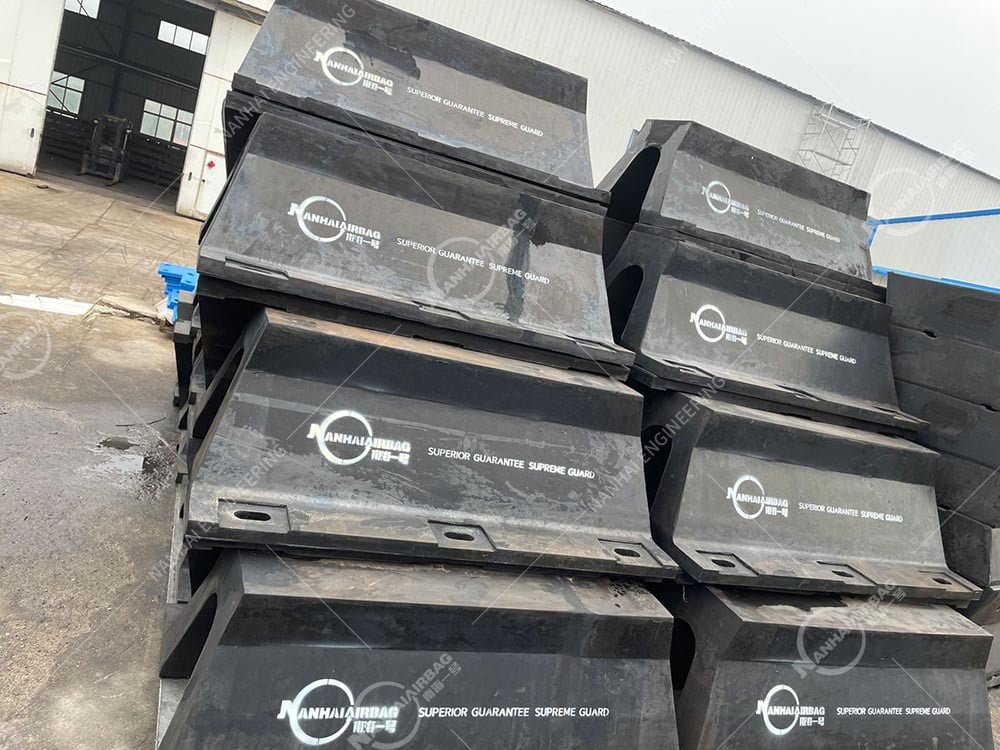
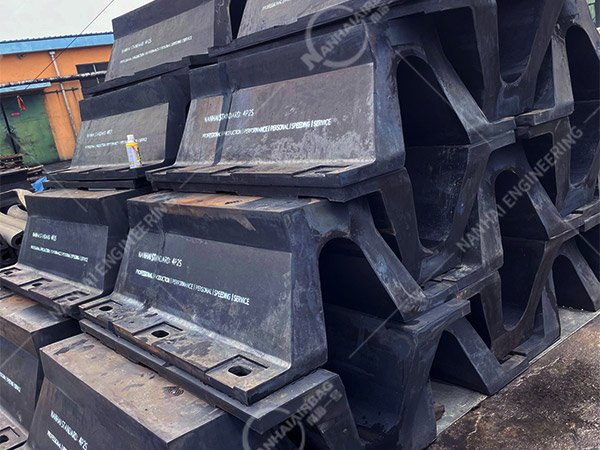
Arch Rubber Fenders are engineered with a distinctive arched profile that delivers exceptional energy absorption while maintaining low reaction force—making them one of the most reliable and cost-effective solutions among marine fenders. Their unique design protects both vessels and berthing structures, offering superior performance in ports, terminals, and offshore platforms worldwide.
When selecting the right marine fenders, operators often face a trade-off: high energy absorption usually means higher impact force on the vessel, while low reaction force often sacrifices protection capacity. Arch Rubber Fenders solve this problem with their curved, load-distributing structure. By compressing under impact and rebounding without deformation, they absorb massive amounts of kinetic energy while keeping hull stress within safe limits.
This advantage becomes clear in real-world applications. At a busy container terminal in Singapore, switching from cylindrical fenders to arch rubber fenders reduced dock damage incidents by 40% in just one year. In another case, a ferry operator in Northern Europe equipped its harbor with arch fenders to handle frequent, high-speed berthing. Even in freezing winter conditions, the fenders performed reliably—proof of their resilience in extreme environments.
Durability is another strong suit. Made from premium natural rubber or EPDM blends, arch fenders resist abrasion, UV radiation, ozone, and seawater corrosion. Unlike some foam-core fenders, they won’t absorb water or lose shape over time. When paired with marine airbags for vessel launching or heavy-load positioning, arch fenders form a complete marine protection system that safeguards assets from construction to operation.
Wondering whether Arch Rubber Fenders are suitable for your port layout or vessel type? Curious how they compare to W or D-shaped fenders in terms of cost and performance? Read on—we’ll cover specifications, installation methods, and selection tips to help you make the smartest investment for your marine infrastructure.
Related Questions About Arch Rubber Fenders
- What is the difference between Arch Rubber Fenders and W Rubber Fenders? Arch fenders provide stable performance with moderate energy absorption and low reaction force, ideal for general cargo and medium-sized vessels. W fenders handle higher energy impacts, making them better suited for large tankers and bulk carriers.
- Where are Arch Rubber Fenders most commonly used? They are widely used in container terminals, ro-ro berths, fishing harbors, and offshore platforms due to their balanced protection and compact footprint.
- How long is the service life of Arch Rubber Fenders? With proper inspection and maintenance, arch fenders typically last 10–15 years, even in harsh marine environments.
- Can Arch Rubber Fenders be installed on existing quay walls? Yes. They can be bolted directly onto concrete or steel structures, or mounted with chains and brackets for floating docks and tidal berths.
- Are Arch Rubber Fenders compatible with marine airbags? Absolutely. Marine airbags are often used together with arch fenders during ship launching, dry docking, or emergency berthing operations.
From small harbors to mega ports, Arch Rubber Fenders deliver consistent, long-term protection. Want to know which size or specification fits your project best? Let’s explore further so you can choose with confidence.
