
Ship Launching Airbags: The Complete Guide to Cost-Effective, Safe Vessel Launching
02/06/2026Super Cell Rubber Fenders: The Heavy-Duty Gold Standard for Fixed Dock Protection
09/06/2026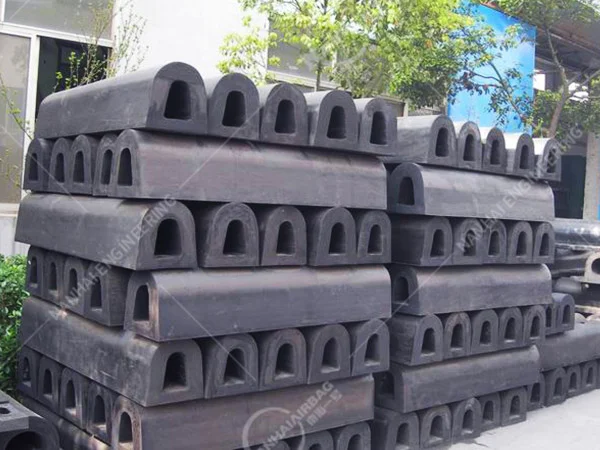
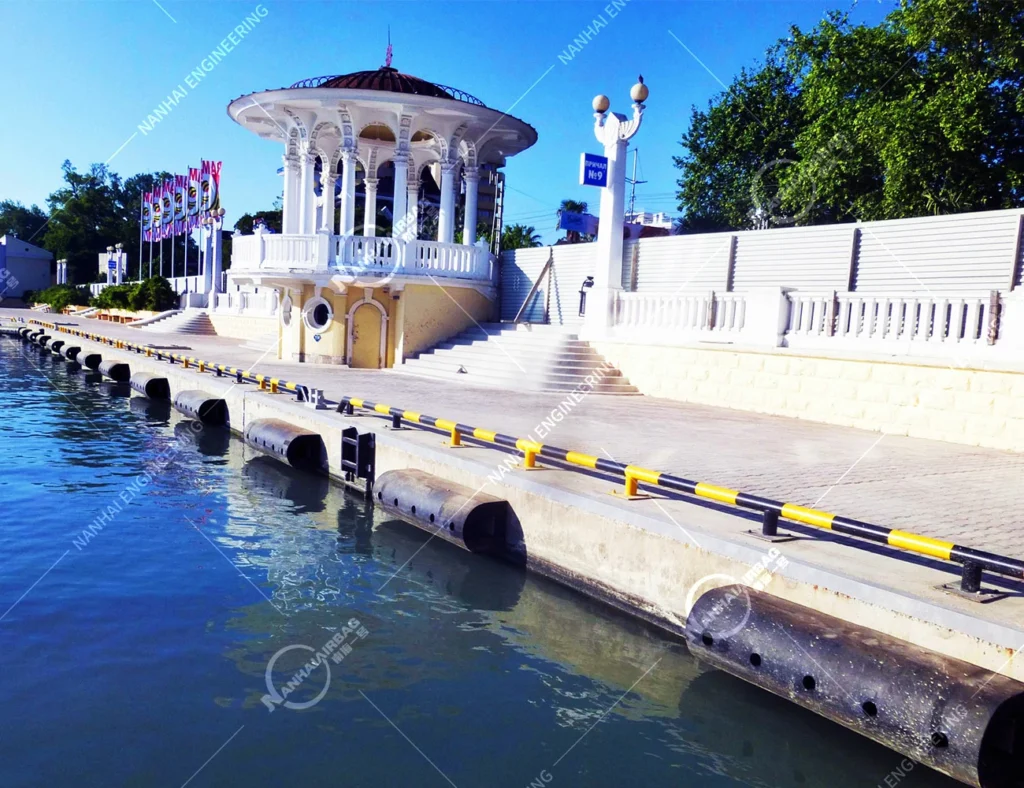
D shaped rubber fenders are essential marine equipment designed to absorb kinetic energy during vessel berthing, protecting both the ship’s hull and the terminal structure. Featuring a distinct “D” cross-section, these fenders offer high energy absorption and low reaction force, making them the preferred choice for tugboats, workboats, and narrow wharf edges where space is limited.
Why Choose D Shaped Rubber Fenders?
The D-type design is engineered for versatility and high-performance in demanding marine environments. Because of their flat rear surface, they can be easily installed against flat steel or concrete structures using anchor bolts.
Beyond their simple installation, their structural integrity provides several key advantages:
- Superior Durability: Manufactured from high-quality, weather-resistant rubber compounds, these fenders withstand extreme UV exposure, saltwater corrosion, and high-impact cycles.
- Optimal Energy Absorption: The specific geometry of the D-shape allows for controlled deformation upon impact, effectively dampening the energy of a berthing vessel.
- Versatile Applications: While often utilized as primary rubber fenders for smaller vessels, they are frequently used as secondary protection on larger docks or along the sides of workboats to prevent hull abrasions.
For example, in busy harbor operations where tugboats are frequently maneuvering, using a robust D-shaped profile ensures that the repetitive contact with the quay wall does not compromise the vessel’s hull integrity. When paired with high-performance marine airbags for launching or heavy-duty marine fenders at primary berthing points, D-shaped profiles create a comprehensive safety barrier for any port facility.
Are You Optimizing Your Port’s Safety Infrastructure?
Selecting the right fender profile is not just about equipment; it is about extending the operational lifespan of your infrastructure and reducing maintenance costs significantly.
But how do you determine the specific size and rubber compound required for your unique tidal conditions and vessel types? Continue reading as we dive deeper into the technical specifications and installation best practices for maximizing the ROI of your maritime protection systems.
Frequently Asked Questions
- What are the primary differences between D-shaped rubber fenders and cylindrical fenders?
- How do I choose the correct size of D-fender for my tugboat?
- Can D-shaped rubber fenders be installed on curved wharf walls?
- How often should marine fenders be inspected for wear and tear?
- What environmental factors impact the longevity of rubber fenders?
