
D Shaped Rubber Fender: The Ultimate Guide to Port and Vessel Protection
04/06/2026The Ultimate Guide to W Rubber Fenders: Protecting Vessels and Berths with Precision
12/06/2026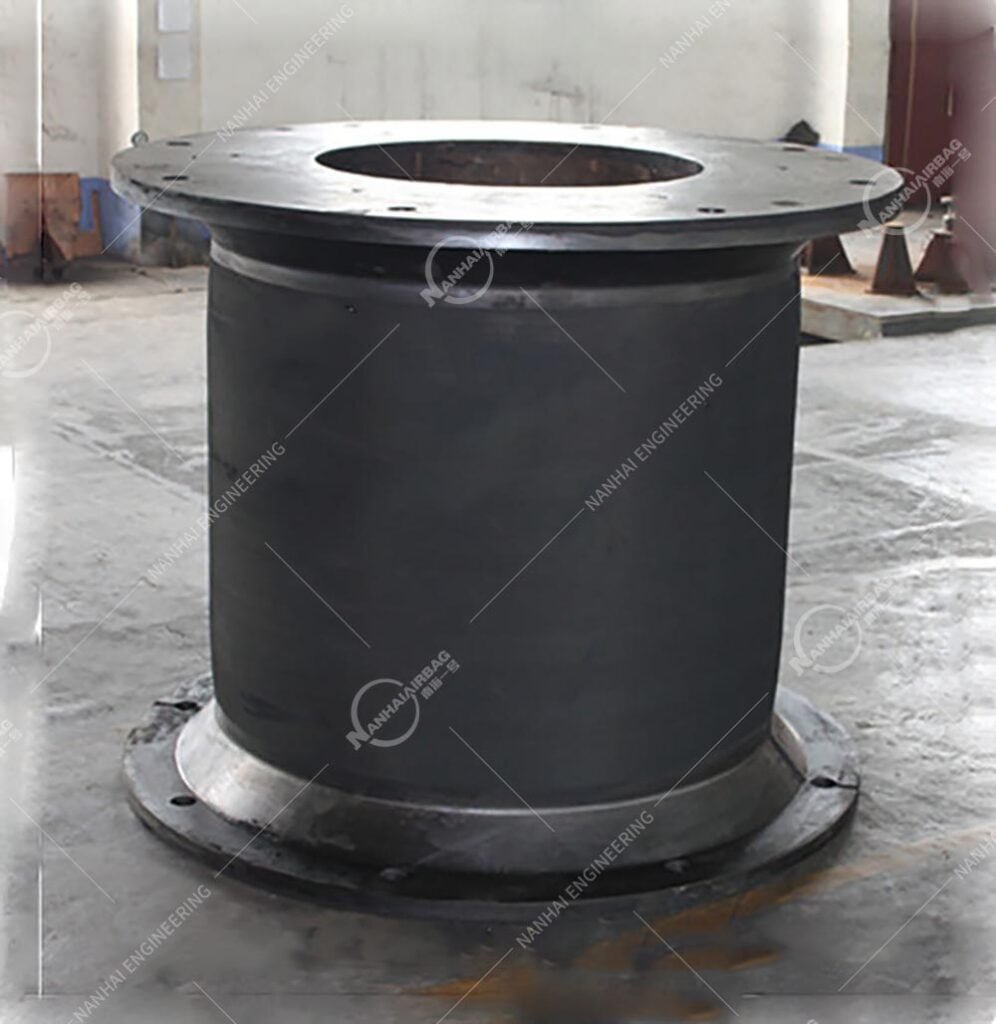
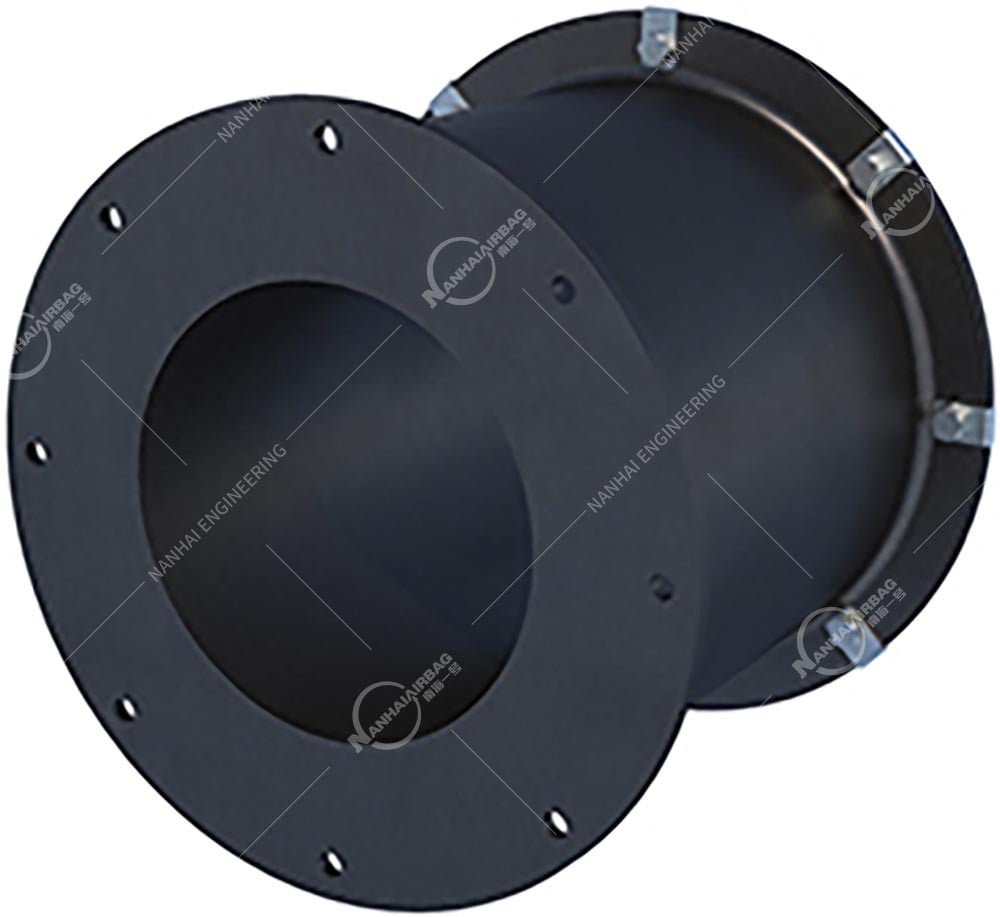
Walk along any major container terminal handling Post-Panamax vessels — Rotterdam, Singapore, Busan — and look at what’s bolted to the concrete dolphins and wharf faces. You won’t see pneumatic fenders floating on the water here. Instead, you’ll see rows of massive, hollow cylindrical rubber fenders in a distinctive cross-section profile, each one anchored with heavy galvanized steel bolts, topped with a steel frontal panel and a slick white UHMW-PE face pad. These are Super Cell Rubber Fenders — and they’re quietly absorbing millions of kilojoules of berthing energy, 24/7/365, in every major commercial port on Earth.
If your project involves a permanent berth, a fixed quay wall, and vessels above roughly 10,000–20,000 DWT, the conversation eventually leads here. Not because Super Cells are the only option — but because among all marine fenders designed for fixed installation, they deliver the single best combination of energy absorption, low reaction force, angular performance, and lifecycle cost.
Below is the complete picture: how they work, why the “Super” matters compared to standard cell fenders, where they dominate, and how to know if they belong on your berth.
📌 Google-Selected Summary (Key Takeaway)
Super Cell Rubber Fenders are heavy-duty, fixed-mounted marine fenders built around a hollow cylindrical (cell) rubber body with an optimized geometric profile that was engineered to outperform the original “standard cell” design. The defining improvement: a smoother, radiused transition between the buckling column and the steel mounting flange that eliminates the stress concentration point of older designs — allowing safe compression deflection to increase from 47.5% to 52.5%, and boosting the critical E/R·H ratio (Energy Absorption ÷ Reaction Force × Height) by approximately 15% without increasing reaction force back onto the hull or the dock. They mount permanently to the quay face via the same bolt-hole pattern as standard cell fenders (making retrofits straightforward), and are almost always deployed as a complete system with a steel frontal panel + UHMW-PE low-friction face pad that spreads hull load over a wider area and lets the ship slide smoothly during angular berthing. Available in standard heights from SC 400 mm up through SC 3000 mm, Super Cell fenders are the go-to fixed fendering choice for container terminals, bulk/ore/coal docks, oil & gas jetties, RoRo and ferry terminals, and any berth handling everything from handy-size bulk carriers up to VLCCs (500,000+ DWT) where predictable performance and minimal downtime matter more than anything else.
Why “Super Cell” — And Why Ports Specify Them Over Standard Cell Fenders
To understand Super Cells, you need the lineage. The original Cell Fender was already one of the most efficient fixed fender profiles ever invented — a hollow, short cylindrical rubber block that buckles radially under axial compression, giving it an excellent energy-to-reaction ratio and outstanding shear resistance in a compact footprint. It became the workhorse of large commercial ports worldwide.
But engineers identified a specific structural weakness: stress concentration at the junction where the rubber cylinder meets the steel end flange. Under repeated heavy compression, that sharp corner transition was where cracking and fatigue damage initiated. The rubber wanted to bulge smoothly — and the geometry wouldn’t let it.
The Super Cell redesign solved exactly that:
| Feature | Standard Cell Fender | Super Cell Fender | Why It Matters |
|---|---|---|---|
| Max rated deflection | ~47.5% | 52.5% | 5 percentage points more travel = more energy absorbed before bottoming out |
| E/R·H ratio | ~0.375–0.385 | ~0.43–0.44 | ~15% more energy absorption per unit reaction force × height |
| Cylinder-to-flange transition | Sharper corner | Rounded, smooth radius | Eliminates the stress concentration zone → longer service life, fewer cracks |
| Bolt-hole pattern | Proprietary spacing | Identical to standard cell | Direct retrofit — no new drill patterns in your existing quay |
| Angular berthing tolerance | Good | Excellent (minimal performance drop at tilt) | Ships don’t dock perfectly parallel; this matters |
That last row is bigger than it looks on paper. Being able to drop a Super Cell into an existing cell-fender berth without re-coring the concrete is a massive cost saver during upgrades.
The Core Advantages — With Operational Context
1. Best Energy-to-Reaction Ratio of Any Fixed Fender Family
Among fixed (non-floating) fender types — arch, V, W, keyhole, cone, and standard cell — the cell-family profile consistently delivers the lowest reaction force per kilojoule absorbed. The Super Cell takes that inherited advantage and stretches it further: the rubber column buckles radially outward as it compresses, so the energy dissipation stays smooth and progressive rather than ramping violently.
- What this means practically: The dock’s concrete structure sees lower peak loads. The vessel’s hull plating sees lower local pressure (especially when you add the frontal panel). For terminals with older or marginal quay wall ratings, that reduced reaction force can be the difference between “we can handle these ships” and “we need a $40M wharf rebuild.”
- Example context: A coal export terminal with a 1960s-era reinforced-concrete pier was originally specified for 60,000 DWT handysize vessels. When the commodity mix shifted and they needed to accommodate 120,000 DWT Panamax bulker charters, a berthing-energy recalculation showed the old w-beam fenders would overstress the pier. The solution wasn’t a rebuild — it was upgrading to properly sized Super Cell units (with frontal panels) that cut reaction force enough to keep the existing structure within code. That’s the Super Cell’s real-world value proposition: more protection, less punishment to the dock.
2. Angular Berthing Performance — Ships Don’t Dock Like CAD Drawings
In theory, a vessel touches the fender perfectly parallel. In reality: crosswinds, tidal current, thruster lag, and pilot judgment mean the hull hits at an angle — often 3°, 5°, sometimes 10° off-parallel — and it doesn’t hit at one exact elevation either.
The Super Cell’s wide circular base and symmetrical cylindrical body distribute that off-axis load evenly. The FEM (Finite Element Method) analyses manufacturers run show stress dispersing smoothly across the base rather than spiking at a corner. When paired with a steel frontal panel (the standard configuration), the panel bridges minor misalignment and presents a continuous face to the hull even as the ship rocks or surges.
- Example context: Ferry terminals and RoRo docks live in this world constantly. High-turnover operations, tight schedules, variable tidal set — vessels come in briskly and slightly skewed as a matter of routine. A Super Cell system with UHMW-PE face pads lets the hull scrub smoothly along the panel surface without tearing at the rubber itself or shearing the mounting bolts. The fender takes the impact; the low-friction pad handles the sliding.
3. Frontal Panel + UHMW-PE = Lower Hull Pressure & Longer Life
A bare rubber cell has a relatively small contact patch. Add the frontal panel (a steel plate or frame mounted slightly forward of the fender face on standoff studs), and you get two things immediately:
- Hull pressure drops — because the same reaction force is spread over a much larger area (the full panel face), not concentrated at the rubber tip. Surface pressure can be controlled to levels well below what sensitive hulls tolerate.
- Friction drops — because the panel gets fitted with UHMW-PE (Ultra-High Molecular Weight Polyethylene) face pads that have a coefficient of friction roughly a quarter of bare rubber-on-paint. The ship slides; the rubber doesn’t scrape.
This combo is so standard that in practice, when someone says “Super Cell fender,” they almost always mean Super Cell + frontal system + UHMW-PE pads. Specifying the rubber cell alone without the panel is like buying a shock absorber but no spring — it’ll work, but you’re leaving half the system performance on the table.
4. Permanent, Zero-Maintenance-in-Operation Philosophy
Unlike marine airbags (which are inflatable, handled per event, and stowed ashore) or pneumatic fenders (which need periodic pressure checks and have valves/air to manage), a Super Cell is a solid vulcanized rubber block bolted to the structure. Once installed and torqued correctly:
- No inflation. No pressure gauges. No air leaks.
- Inspection is visual + bolt-torque-check (typically annual or semi-annual depending on traffic).
- Service life in the 10–15+ year range is normal for quality units in saltwater environments.
- Storm? Surge? No need to retrieve or deflate anything — they’re part of the structure.
This is exactly why fixed ports choose them: the total cost of ownership math favors a once-and-done installation that just works every single docking, in every tide condition, for a decade or more.
Where Super Cells Fit in the Broader Marine Fendering Toolkit
| Scenario | Best Fender Type | Why |
|---|---|---|
| Permanent quay, stable water level, 10,000–500,000+ DWT | ✅ Super Cell (with frontal panel) | Maximum energy absorption, lowest R, angular-tolerant, permanent |
| Permanent quay but very limited quay-face load capacity | Cone fender (also excellent E/R, different envelope) | Cone can be better when height is constrained |
| Large tidal range (>3–4 m), water level swings wildly | ❌ Fixed fenders struggle → Pneumatic (floating) fenders | Floating fenders rise/fall with tide; fixed ones sit at one elevation |
| Ship-to-ship transfer (no quay at all) | ❌ → Pneumatic Yokohama fenders | Nothing to bolt to; need a free-floating cushion |
| Launching hauling-out vessels, salvage buoyancy | → Marine airbags | Airbags are rollers/lift aids, not berthing protection |
| Small craft marina, light fendering, low energy | W fender, D fender, strip fender | Overkill to put a 1-ton SC1000 on a pleasure-craft dock |
The point: Super Cell Rubber Fenders are a fixed-infrastructuresolution. They dominate where the berth itself is permanent, the water level variation is manageable, and the vessels are big enough that energy absorption really matters.
Anatomy: What’s Inside (and Outside) a Super Cell Unit
| Component | What It Does |
|---|---|
| Hollow cylindrical rubber body | The energy-absorbing core. High-grade natural/synthetic rubber blend, engineered hardness (typically ~Shore A 60±5), formulated for UV, ozone, salt, and dynamic-fatigue resistance. The “cell” buckles radially as it compresses axially. |
| Radiused column-to-flange transition | The Superdifferentiator — smooth curve replaces the old sharp corner, spreading stress and enabling 52.5% safe deflection. |
| Steel end flange (top, integral/vulcanized or bonded) | Distributes bolt loads into the rubber. Top flange carries the anchor bolts; bottom transfers load to the frontal panel system. |
| Frontal panel (steel) | Mounts on standoff studs ahead of the fender. Provides the large, flat contact face that lowers hull pressure. |
| UHMW-PE face pads | Bolted to the frontal panel. Low-friction interface between steel panel and ship’s hull paint. Replaceable when worn. |
| Anchor bolts / pre-installed inserts | Galvanized high-strength bolts (specified per model — M36 through M76 depending on size) torque down into the embedded concrete embed plates or cast-in channels. |
Quick Reference: Common Super Cell Sizes & Performance Range
| Model | Height H (mm) | Typical Reaction Force @ 52.5% Defl.* | Approx. Energy Absorbed (kN·m / kJ) | Common Application |
|---|---|---|---|---|
| SC 630 | 630 | ~175 kN | ~48 kNm | Medium docks, river terminals |
| SC 800 | 800 | ~280 kN | ~98 kNm | Small cargo terminals |
| SC 1000 | 1000 | ~445 kN | ~195 kNm | General cargo, medium tankers |
| SC 1250 | 1250 | ~696 kN | ~382 kNm | Bulk terminals, medium-large docks |
| SC 1600 | 1600 | ~1140 kN | ~801 kNm | Large container/bulk terminals |
| SC 2000 | 2000 | ~1781 kN | ~1564 kNm | Major terminals, VLCC-capable jetties |
| SC 2500 / SC 3000 | 2500–3000 | 3088–3750 kN | 3390–4300+ kNm | Export terminals, cape-size ore, VLCC berths |
*Values vary by manufacturer formulation and whether “standard,” “high,” or “super-high” reaction force grade rubber compound is selected. Always use the certified performance curve from the supplier you’re buying from — not a generic table. Tolerance band is typically ±10% per industry practice.
Specification & Installation: The 5 Things That Actually Matter
① Run the Berthing Energy Calculation First — Always
Fender selection starts with Eberth= ½ × CB× ρwater× displacement × Vn2 (adjusted by eccentricity, softness, and site-specific safety factors). PIANC 2002 / 2021 methodology is the industry reference frame. Your fender’s Guaranteed Energy Absorption (GEA) at 52.5% deflection must exceed the calculated energy — with margin.
② Don’t Skip the Frontal Panel
A Super Cell without its frontal panel is underutilizing the fender. The panel isn’t optional dressing — it’s structural to the system. It controls hull pressure, enables UHMW-PE integration, and prevents the rubber tip from being abraded directly by the hull.
③ Embed Plates or Cast-In Channels — Not Surface Bolting
Super Cells carry serious pull-out and shear loads. The anchor bolts go into embedded steel plates (typically ≥300–400 MPa yield) cast into the concrete coping or dolphin head. Surface-bolted into old concrete without proper embeds is a common failure mode you want no part of.
④ Allow the Buckling Space
The rubber column bulges outward as it compresses. The installation must provide clearance radially (roughly 1.5–1.6 × H standoff from the quay face / from adjacent structures) so the cell can expand without binding. Bind it, and reaction force spikes unpredictably.
⑤ Specify the Right Rubber Grade for Your Environment
Standard marine-grade natural rubber blends handle most ports. For chemical terminals, oil exposure zones, or extreme climates, discuss compound options (EPDM-blend resistant variants, low-temperature grades) with the manufacturer — and get the material certs (tensile, elongation, hardness, aging) in the mill test report.
FAQ — The Questions People Actually Search About Super Cell Rubber Fenders
❓ What is a Super Cell Rubber Fender?
A Super Cell Rubber Fender is a heavy-duty, fixed-mounted marine fender with a hollow cylindrical (“cell”) rubber body whose geometry has been optimized over the original standard cell fender. The key upgrade is a smoother radiused transition between the rubber column and the steel flange that allows safe compression to 52.5% deflection (vs. 47.5% on older cells) and delivers about 15% more energy absorption at the same reaction force. It bolts permanently to a dock, wharf, or dolphin — almost always as part of a system that includes a steel frontal panel with UHMW-PE low-friction face pads — and is the dominant fixed fender choice for large commercial terminals.
❓ What’s the difference between a Cell Fender and a Super Cell Fender?
They share the same bolt-hole pattern and basic hollow-cylinder concept, but the Super Cell is a structural refinement:
- Safer deflection: 52.5% vs. 47.5% → more travel before bottoming out.
- Higher efficiency: E/R·H improves ~15% (from ~0.38 to ~0.44).
- Longer life: Rounded stress-distribution profile means fewer fatigue cracks at the base.
- Direct retrofit: Because the bolt pattern is identical, you can upgrade an existing cell-fendered berth to Super Cells without re-drilling the concrete.
You’d choose Super Cell when you want the extra safety margin and efficiency of the modern profile — which today is essentially the default for new builds anyway.
❓ What are Super Cell fenders used for? (Applications)
- Container terminals — Post-Panamax and mega-container ship berths
- Bulk / coal / iron ore export terminals — Cape-size and Panamax bulk carriers
- Oil & gas jetties / product terminals — tankers up to VLCC
- RoRo and ferry terminals — high-frequency docking with angular approach
- Cruise terminals — large hulls, sensitive topside structures, passenger safety priorities
- Naval / military docks — where controlled reaction force protects both specialized hulls and the pier
Basically: anywhere a large vessel docks against a permanent structure and the energy numbers are too high for smaller-profile fenders.
❓ How do Super Cell fenders compare to Cone fenders?
Both are premium fixed fender types with excellent E/R ratios. Quick comparison:
| Factor | Super Cell | Cone Fender |
|---|---|---|
| E/R efficiency | Exceptional | Exceptional (sometimes slightly better E/R in compact height) |
| — | — | — |
| Angular performance | Excellent | Excellent |
| Shear resistance | Very high (wide base) | Very high |
| Height envelope | Taller profile | Can be shorter for same energy — better when height is constrained |
| Cost | Generally competitive | Often similar or slightly higher for equivalent rating |
| Frontal panel | Standard config | Also uses frontal panel + UHMW-PE |
Many ports standardize on one or the other for procurement simplicity. The choice usually comes down to envelope constraints, quay wall load path, and which performance curve fits your berthing calc with the least over-spec.
❓ Do Super Cell fenders need maintenance?
Very little — and that’s the point. The maintenance rhythm is:
- Visual inspection (1–2×/year): check rubber for deep cuts, ozone cracking, abrasion-through-to-reinforcement, and panel alignment.
- Bolt torque check: galvanized anchor bolts can relax after initial settlement — re-torque per spec.
- UHMW-PE pad wear: pads are consumable. When they thin below minimum, unbolt and replace them — the rubber cell itself is undisturbed.
- Rubber replacement: after 10–15+ years (depending on traffic and environment), the cell itself eventually needs replacement. The good news: the embed plates stay; you unbolt the old unit and bolt in the new.
❓ Are Super Cell fenders ISO certified?
Reputable suppliers manufacture and document performance per ISO 17357 methodology (the international standard covering high-performance rubber fender testing and performance reporting), and can provide:
- Dimensional inspection records
- Material test reports (hardness, tensile, elongation, aging)
- Compression-test curves (deflection % → R and E)
- Classification society certificates (BV, ABS, DNV, LR, CCS, etc.) on request
Always ask for the compression performance table tied to your specific production batch, not just a catalog average.
❓ Can I use marine airbags instead of Super Cell fenders?
They serve different purposes — not substitutes. Marine airbags are inflatable fabric-reinforced cylinders used for ship launching, dry-dock hauling, heavy-load relocation, and salvage buoyancy— intermittent, handled operations. Super Cell Rubber Fenders are permanent dock-side infrastructure that protects the berth on every single docking, automatically, with zero preparation time. A professional port runs both in different roles: Super Cells (or other fixed rubber fenders) on the berth face for daily protection, and airbags in the boatyard/launchway for the occasional launch or haul-out.
The Bottom Line
Super Cell Rubber Fenders earned their place on the world’s busiest quays not through marketing, but through a simple equation: they absorb more energy, push back less, survive angular approaches, and keep working for a decade or more with almost boring reliability. The “Super” isn’t hype — it’s a measurable ~15% efficiency gain and a smarter stress distribution profile over the already-excellent standard cell design.
But like any engineered system, the fender is only as good as the calculation behind it. Get the berthing energy right. Size the cell. Specify the frontal panel. Torque the embeds. Do those four things, and a Super Cell installation becomes one of the quietest, most trouble-free pieces of infrastructure your port will ever own.
Next step: Pull your design vessel’s displacement, approach velocity range, tidal envelope, and berth configuration — then run a PIANC-method berthing energy calculation (or have your fender supplier run it with their software). The correct SC model number isn’t a guess — it’s the output of that physics. Everything else flows from there.
Keywords naturally covered: Super Cell Rubber Fenders, marine fenders, rubber fenders, marine airbags, cell fender, fixed fender, ISO 17357, frontal panel, UHMW-PE face pad, berthing energy, PIANC methodology, container terminals, bulk terminals, oil & gas jetties, VLCC berthing, ship-to-dock operations.
