
W Rubber Fenders: The Versatile & High-Performance Solution for Modern Maritime Berthing
26/05/2026Ship Launching Airbags: The Complete Guide to Cost-Effective, Safe Vessel Launching
02/06/2026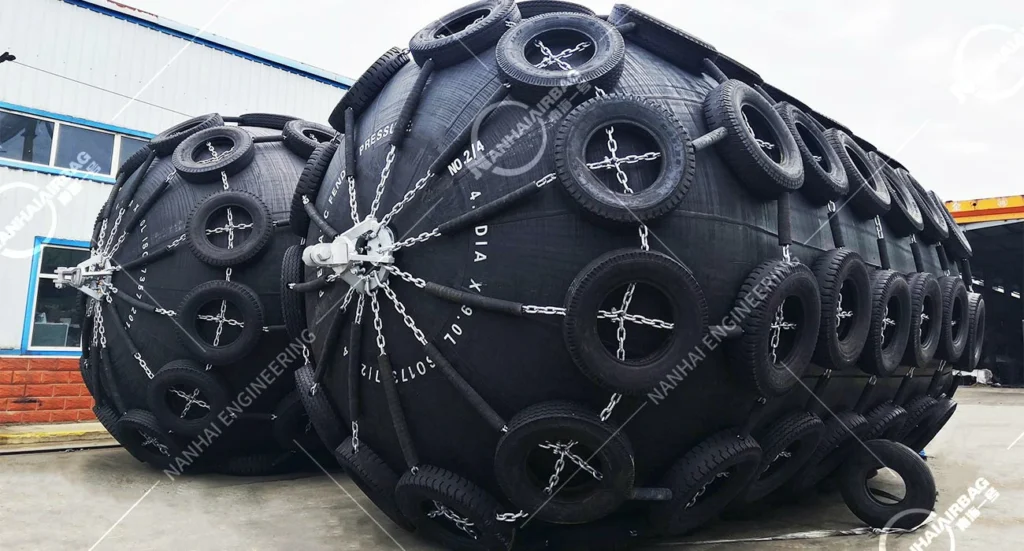
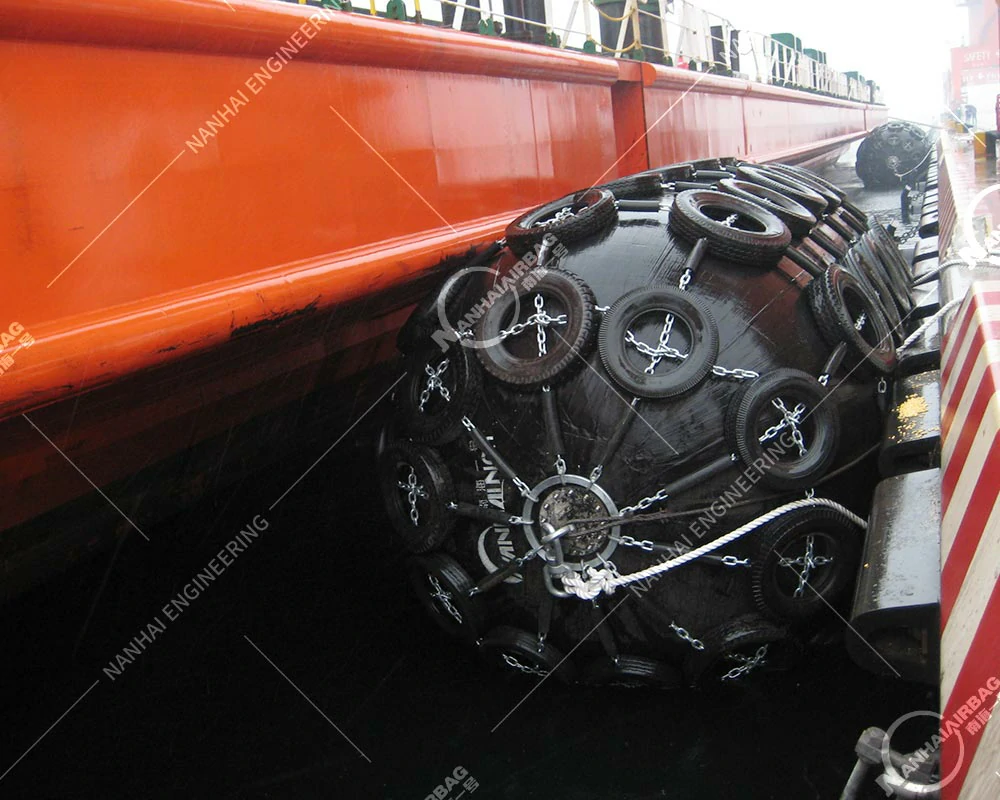
Pneumatic Rubber Fenders, often referred to as Yokohama fenders, are floating, inflatable marine buffers designed to protect vessels and docks during berthing. Filled with compressed air, these fenders utilize a unique air-spring effect to absorb massive impact energy while exerting very low reaction force on the ship’s hull, making them the gold standard for ship-to-ship (STS) transfers and tidal port operations.
Constructed with reinforced synthetic-tire-cord layers and durable outer rubber, pneumatic fenders comply with international standards like ISO 17357. Their ability to float and adjust to tidal changes sets them apart from fixed marine fenders, offering unparalleled flexibility in maritime safety.
Why Choose Pneumatic Rubber Fenders? (Key Advantages)
Transitioning from traditional solid rubber fenders to pneumatic ones offers distinct operational benefits. Here is why they dominate the market:
- Low Hull Pressure: Unlike solid marine fenders that can dent thinner hulls, pneumatic fenders distribute pressure evenly. For example, a 3.3m x 6.5m fender keeps hull pressure below 25 t/m², safe even for fragile LNG carriers.
- Adaptability to Tides: Because they float, these fenders automatically rise and fall with the tide. A port in Southeast Asia reported zero berthing incidents after switching to pneumatic fenders, solving their previous issues with a 4-meter tidal range.
- High Energy Absorption: They absorb significantly more energy than conventional cell or cone fenders of similar size, reducing the number of units needed on a pier.
While marine airbags are excellent for launchingships, pneumatic fenders are specialized for protectingthem during docking.
Engage: Is Your Port Truly Safe?
Imagine a massive tanker berthing in rough seas. Without the right cushion, the impact could damage the dock infrastructure costing millions in repairs. Pneumatic rubber fenders act as a giant shock absorber, turning a potential disaster into a routine docking procedure. Want to know how to select the perfect size for your specific vessel?
Related Questions (People Also Ask)
Here are the most common questions users search for regarding Pneumatic Rubber Fenders:
- What is the difference between a pneumatic fender and a Yokohama fender?
- Answer:They are the same. “Yokohama” is the generic industry term named after the company that pioneered the technology.
- How do you inflate a pneumatic rubber fender?
- Answer:Using a standard air compressor and a high-pressure hose connected to the fender’s valve, typically to 50 kPa (initial pressure).
- What is the lifespan of a pneumatic fender?
- Answer:With proper maintenance and storage, a high-quality fender lasts 10–15 years.
- Can pneumatic fenders be used for ship launching?
- Answer:While physically possible, marine airbags are specifically designed for the rolling and launching process and are more cost-effective for that specific task.
- What does ISO 17357 certification mean?
- Answer:It is the international quality standard ensuring the fender meets specific energy absorption (GEA) and reaction force criteria.
Optimized Keywords: marine airbags, marine fenders, rubber fenders, Yokohama fenders, floating fenders, ship berthing, ISO 17357.
