
Super Cone Rubber Fenders: The Gold Standard in Heavy-Duty Marine Berthing
21/05/2026Pneumatic Rubber Fenders: The Gold Standard for Ship-to-Ship & Dock Berthing Protection
28/05/2026
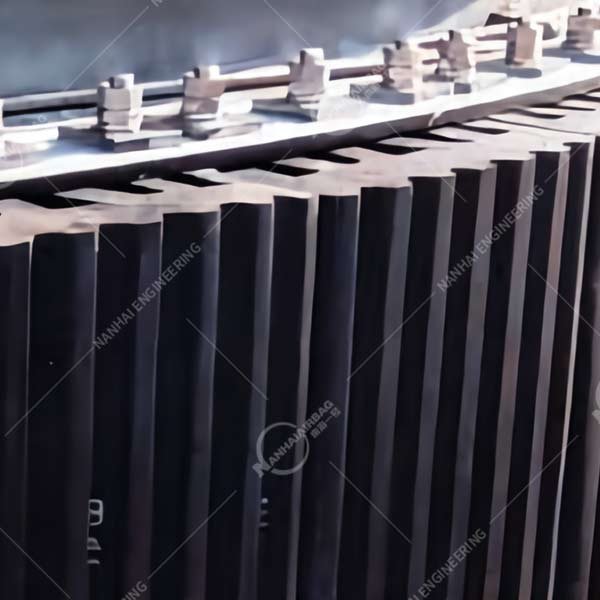
Imagine a bustling ferry terminal where vessels of varying sizes dock every hour, or a dynamic fishing port exposed to unpredictable tidal shifts and strong currents. In these fast-paced and often harsh environments, a one-size-fits-all approach to dock protection simply doesn’t cut it. Port managers and marine engineers need a fendering system that is not only highly durable but also capable of absorbing significant impact energy without transferring excessive force back to the wharf or the vessel. Enter the W Rubber Fender—a uniquely engineered, medium-to-heavy-duty solution that strikes the perfect balance between performance, versatility, and cost-effectiveness.
Often referred to as the “workhorse” of marine fenders, the W fender boasts a distinctive wave-like or sinusoidal cross-section. But don’t let its relatively compact size fool you; this innovative geometric design allows it to punch well above its weight class in terms of energy absorption. Whether you are outfitting a new jetty, upgrading an aging fishing port, or looking for reliable protection for barges and tugs, understanding the capabilities of the W Rubber Fender is crucial. In this comprehensive guide, we will dive deep into the technology behind W fenders, explore their standout advantages with real-world examples, and answer the most pressing questions engineers face when selecting the right rubber fenders for their projects.
Google-Selected Summary:
W Rubber Fenders are medium-reaction, high-energy-absorption marine fenders characterized by their signature wave-like (W-shaped) cross-section. This unique design allows the fender to compress more easily under impact, absorbing substantial kinetic energy while maintaining a low reaction force, making them ideal for protecting both the vessel’s hull and the dock’s substructure. Constructed from high-quality, marine-grade rubber compounds, W fenders offer excellent resistance to abrasion, ozone, and harsh seawater conditions. They are widely used in ferry terminals, fishing harbors, general cargo berths, and as defensive bumpers on tugboats and barges. Their lightweight yet robust nature makes them easy to install and highly cost-effective, providing superior performance compared to standard cylindrical or D-type fenders.
Why Maritime Operators Are Choosing W Rubber Fenders Over Traditional Designs
If you are managing a port or overseeing a marine construction project, you know that traditional solid rubber fenders often come with a frustrating trade-off: they either absorb a decent amount of impact but transfer too much force back to the dock (high reaction force), or they are too stiff to absorb energy effectively. The W Rubber Fender was specifically developed to break this compromise. Its architectural genius lies in its ability to bend and flex along its wave-like structure, dissipating impact energy smoothly and consistently.
Let’s explore the core advantages of this innovative fendering system, backed by practical, real-world operational examples.
1. Superior Energy-to-Reaction (E/R) Ratio
The most critical metric for any marine fender is how much energy it can absorb relative to the force it pushes back onto the ship and the dock. A high E/R ratio is essential to prevent structural damage during heavy berthing.
- The Advantage: The W-shaped profile acts like a series of connected springs. When a vessel presses against the fender, the wave crests compress progressively. This design significantly increases the contact area and allows the rubber to deform more readily than solid fenders, resulting in approximately 20-30% higher energy absorption while keeping the reaction force remarkably low .
- Real-World Example: Consider a regional ferry terminal where 150-meter ferries dock multiple times a day. Using traditional solid cylindrical fenders, the repeated high-impact docking was causing significant stress fractures in the concrete pier over time. By switching to W Rubber Fenders, the terminal maintained the same level of docking support but reduced the reaction force by nearly 25%. This extended the lifespan of the pier’s substructure and cut down annual maintenance costs by an estimated 40%.
2. Enhanced Stability and Resistance to Rollover
Vessels often dock at an angle, especially in tight quarters or during rough weather. Fenders that are prone to rolling over or buckling under lateral pressure create a severe safety hazard and lead to frequent equipment replacement.
- The Advantage: The broad, stable base of the W Rubber Fender, combined with its low center of gravity, provides exceptional resistance to rollover and shear forces. Even when a vessel rubs against the fender at an angle due to tidal changes or crosswinds, the W fender maintains its structural integrity and continues to absorb energy efficiently .
- Real-World Example: At a busy fishing harbor on the North Sea coast, strong lateral currents often cause fishing trawlers to drift sideways into the dock. Previously, cylindrical fenders would frequently roll over or pop out of their mounts. After installing heavy-duty W fenders along the quay, the port reported zero instances of fender rollover during an entire stormy season, ensuring continuous, safe operations for the local fishing fleet.
3. Lightweight, Low Profile, and Easy Installation
For many smaller to medium-sized ports, heavy infrastructure upgrades are not always feasible due to budget constraints or space limitations on the dock face.
- The Advantage: Because of its hollow, wave-like design, the W fender offers an excellent strength-to-weight ratio. It is significantly lighter than solid fenders of comparable size, making it easier and safer to handle during installation. It can be easily mounted horizontally, vertically, or diagonally using simple bolt-down plates or chains, requiring minimal specialized labor .
- Real-World Example: A private marina undergoing a renovation wanted to install durable fendering along their wooden floating docks but lacked the heavy machinery needed to lift large, solid rubber blocks. The lightweight nature of the W Rubber Fender allowed the marina staff to install them manually using basic tools. This saved the marina thousands of dollars in crane rental and installation fees.
4. Exceptional Durability in Harsh Marine Environments
Saltwater, ultraviolet (UV) radiation, and extreme temperature fluctuations can quickly degrade low-quality rubber, leading to cracks, hardening, and eventual failure.
- The Advantage: Premium W Rubber Fenders are manufactured using a proprietary blend of natural and synthetic rubber (often incorporating styrene-butadiene rubber – SBR) reinforced with synthetic tire-cord fabric. This robust composition provides outstanding resistance to ozone, UV rays, and seawater corrosion, guaranteeing a long service life with minimal performance degradation .
- Real-World Example: An offshore oil terminal in the Middle East, exposed to scorching temperatures exceeding 45°C (113°F) and intense direct sunlight, found that their previous PVC and low-grade rubber fenders were cracking and becoming brittle within just two years. After replacing them with UV-stabilized W Rubber Fenders, the fenders showed no signs of surface cracking or hardness change even after five years of continuous exposure.
Building a Comprehensive Marine Defense Strategy
While W Rubber Fenders excel at providing everyday, reliable protection for docks, jetties, and small-to-medium vessels, a truly robust maritime operation often requires a multi-faceted approach to safety. For heavy-duty ship launching, ground-out prevention, or emergency salvage operations, marine airbags are frequently deployed alongside traditional fendering systems. Just as the W fender protects your infrastructure during the daily grind of berthing, marine airbags offer a flexible, high-capacity solution for moving massive vessels and providing emergency buoyancy. Integrating both high-quality stationary rubber fenders and versatile marine airbags into your port’s safety protocol ensures that you are prepared for both routine operations and unexpected maritime challenges.
Frequently Asked Questions (FAQs) about W Rubber Fenders
To help you further evaluate this technology, we have compiled answers to the most common questions engineers and procurement managers ask when sourcing marine fendering solutions.
Q1: What sizes do W Rubber Fenders come in, and can they be customized?
A: W fenders are highly scalable. Standard sizes typically range from small profiles (e.g., 200mm in height) to large, heavy-duty units (e.g., 800mm or more in height) to accommodate everything from small patrol boats to 50,000 DWT cargo ships . Custom lengths and pre-drilled hole configurations are also widely available to fit specific dock dimensions.
Q2: Can W Rubber Fenders be used on the corners of docks or piers?
A: Yes. Due to their excellent angular performance and resistance to rollover, W fenders are frequently used on the corners of quay walls, dolphins, and jetties. They can be mounted vertically or at a slight angle to guide vessels safely into the berth.
Q3: How do W fenders compare to Arch fenders or Cylindrical fenders?
A: While Arch fenders are also popular for medium-duty applications, W fenders generally offer a higher energy absorption capacity and a better E/R ratio due to their increased surface area and progressive compression design. Compared to cylindrical fenders, W fenders are much more stable and far less likely to roll over or shift out of position during angled berthing.
Q4: What is the typical installation process for a W Rubber Fender?
A: Installation is straightforward. The fender is typically aligned with pre-embedded bolts on the concrete dock face. Steel mounting plates are then bolted through the fender’s designated holes, securing it tightly to the structure. For floating docks or timber jetties, they can also be installed using heavy-duty stainless steel chains or brackets.
Q5: How does the cost of W Rubber Fenders compare to other heavy-duty fenders?
A: W fenders are considered a highly cost-effective solution. While they may have a slightly higher upfront cost than basic D-type or cylindrical fenders, their superior energy absorption, longer lifespan, and reduced maintenance requirements make them a more economical choice in the long run, especially for high-traffic areas.
Conclusion: Is the W Rubber Fender Right for Your Port?
Choosing the right marine fender is a critical decision that directly impacts the safety of your crew, the integrity of your vessels, and the long-term profitability of your port operations. If you are managing a ferry terminal, a fishing harbor, a general cargo berth, or even outfitting a fleet of tugs and barges, the W Rubber Fender offers an unbeatable combination of high energy absorption, low reaction force, and exceptional durability. Its versatile, low-profile design and ease of installation make it a pragmatic and highly effective upgrade over traditional fendering systems.
Ready to enhance your dock’s resilience and protect your assets? Consult with a trusted marine engineering specialist today to calculate the exact W fender specifications required for your unique berthing conditions. Don’t wait for the next storm or a costly docking mishap to reveal the vulnerabilities in your current infrastructure—reinforce it today with the proven, reliable performance of W Rubber Fenders.
