
Super Cell Rubber Fenders: The Ultimate Shield for High-Impact Marine Berthing
19/05/2026W Rubber Fenders: The Versatile & High-Performance Solution for Modern Maritime Berthing
26/05/2026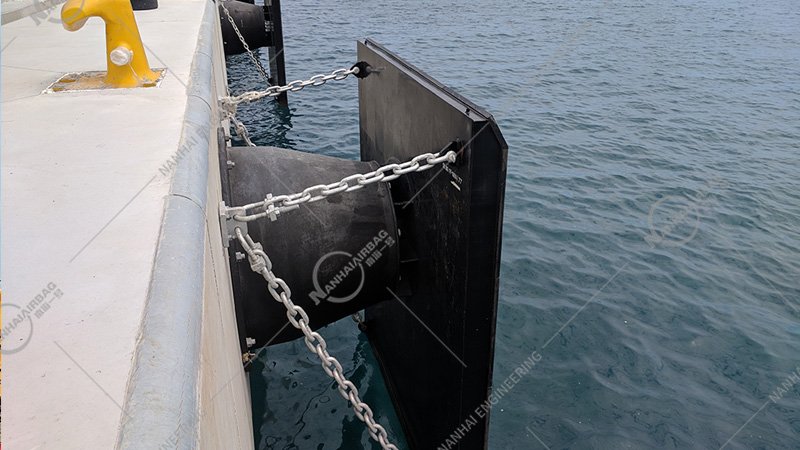
Picture a 300-meter container ship, weighing over 100,000 tons, approaching a bustling port terminal. The slightest miscalculation during docking can result in millions of dollars in structural damage to both the vessel and the wharf. In the high-stakes world of marine engineering, there is no room for error. This is precisely why port authorities and marine engineers are increasingly turning to advanced marine fenders to safeguard their infrastructure. Among the various types of rubber fenders available, one design stands head and shoulders above the rest: the Super Cone Rubber Fender.
But what makes this specific fender so revolutionary? How does its unique geometry translate into real-world savings and unprecedented safety? In this comprehensive guide, we will unpack the engineering brilliance behind Super Cone Rubber Fenders, explore their distinct advantages over traditional models, and help you determine if they are the right investment for your marine operations.
Google-Selected Summary:
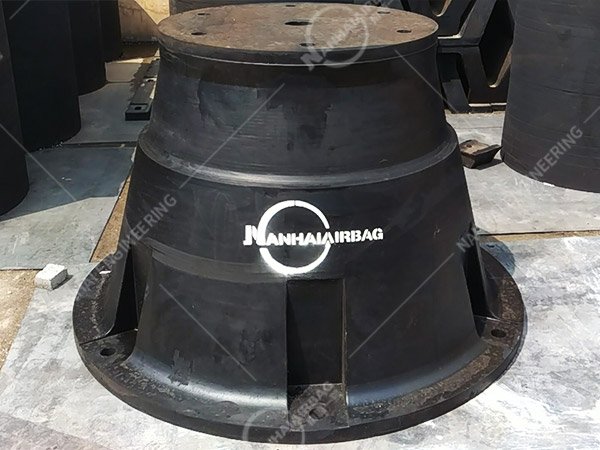
Super Cone Rubber Fenders are advanced, conical-shaped marine docking systems engineered to provide maximum energy absorption with minimal reaction force. Representing the cutting edge of berthing technology, these fenders feature a distinctive conical design that ensures exceptional stability, even under severe compression angles. Compared to traditional cylindrical or cell fenders, Super Cone fenders offer a significantly higher energy-to-reaction force ratio, allowing them to absorb massive impacts without transferring excessive stress to the dock or the vessel’s hull. Constructed from high-abrasion, marine-grade rubber and often paired with UHMW-PE frontal panels, they are the preferred choice for high-traffic container terminals, oil and gas jetties, and RoRo ports handling the world’s largest vessels.
The Evolution of Marine Fendering: Why Settle for “Good Enough”?
For decades, traditional cylindrical and cell-type rubber fenders have been the standard for port protection. While functional, they come with inherent limitations. As vessels grow larger and docking speeds increase to meet tight global shipping schedules, the kinetic energy these ships carry has skyrocketed. Traditional fenders often struggle to absorb these massive forces efficiently. When they compress, they tend to push back hard against the ship (high reaction force) or suffer from structural instability during angled berthing.
This is the exact problem the Super Cone Rubber Fender was designed to solve. By completely rethinking the fender’s geometry, engineers created a system that doesn’t just withstand impact—it masterfully dissipates it.
Let’s dive into the distinct advantages of this innovative design and look at some real-world scenarios where Super Cone fenders are making a massive difference.
1. Unmatched Energy Absorption with Low Reaction Force
The ultimate metric of a great marine fender is its Energy-to-Reaction (E/R) ratio. You want a fender that absorbs as much kinetic energy as possible (preventing hull damage) while exerting the least amount of push-back force onto the dock’s substructure.
- The Advantage: The conical shape of the Super Cone fender allows it to compress progressively. As the vessel presses against it, the fender’s unique geometry distributes the stress evenly throughout its entire body, rather than concentrating it at the base or center. This allows for a much higher compression deflection—often up to 70%—compared to the 50-52% limit of standard cell fenders.
- Real-World Example: Consider a busy container terminal in Southeast Asia handling Post-Panamax vessels. By upgrading to Super Cone fenders, the terminal was able to increase its energy absorption capacity by nearly 40% without needing to reinforce the existing concrete dolphin structures. The low reaction force protected the aging wharf from cracking, saving the port an estimated $2.5 million in potential civil engineering repairs.
2. Superior Performance Under Angular Berthing
Ships rarely dock perfectly parallel to the pier. Crosswinds, strong currents, and human error mean that vessels often hit the fenders at awkward angles. Traditional fenders can buckle, roll over, or suffer catastrophic damage when subjected to these shear forces.
- The Advantage: The wide, stable base and conical geometry of the Super Cone fender make it highly resistant to rollover and deformation, even under extreme angular compression (up to 10-15 degrees). The load is distributed evenly across the base, maintaining structural integrity where other fenders would fail.
- Real-World Example: At an open-pile RoRo (Roll-on/Roll-off) terminal exposed to unpredictable tidal shifts and strong lateral currents, traditional cylindrical fenders were frequently crushed or ripped from their mountings. After switching to Super Cone fenders, the port reported zero instances of fender collapse over a three-year period, drastically reducing equipment downtime and maintenance crews’ overtime costs.
3. Optimized Hull Protection with UHMW-PE Panels
Modern Super Cone fenders are almost always installed as a complete system featuring a large steel frontal frame equipped with UHMW-PE (Ultra-High Molecular Weight Polyethylene) face pads.
- The Advantage: When a ship docks, the friction between the rubber and the steel hull generates destructive shear forces. The UHMW-PE pads act as a low-friction interface, allowing the ship to slide smoothly against the fender as the tide rises and falls. This not only protects the ship’s hull coating but also extends the lifespan of the rubber fender itself by preventing abrasive wear.
- Real-World Example: An LNG (Liquefied Natural Gas) import terminal requires incredibly low hull pressure to avoid damaging the sensitive, thin-walled hulls of its carriers. By pairing Super Cone fenders with oversized UHMW-PE frontal panels, the terminal successfully reduced the surface pressure to below 25 t/m², ensuring the safe and gentle berthing of vessels carrying billions of dollars’ worth of cargo.
Integrating a Complete Marine Safety Ecosystem
While Super Cone Rubber Fenders are the undisputed kings of dock-side impact protection, a truly resilient port requires a holistic approach to marine safety. For instance, marine airbags serve as a crucial complementary technology. While fenders are permanently installed to protect the dock during berthing, marine airbags are the go-to solution for heavy-duty ship launching, salvage operations, and emergency buoyancy.
By equipping your fleet and dockside crew with both high-performance rubber fenders for daily docking and durable marine airbags for contingency and launching operations, you create an impenetrable shield against the unpredictable challenges of the ocean. This integrated strategy not only maximizes operational uptime but also provides unparalleled peace of mind for port management and shipowners alike.
Frequently Asked Questions (FAQs) about Super Cone Rubber Fenders
To further assist engineers and procurement managers, we have answered some of the most frequently asked questions regarding Super Cone Rubber Fenders.
Q1: How do Super Cone Rubber Fenders compare to Super Cell Fenders?
A: While both are considered heavy-duty, high-performance fenders, the Super Cone offers better angular performance and a higher compression deflection (up to 70% compared to the Super Cell’s 52.5%). The conical design also provides a larger mounting base, which offers superior stability on softer substructures like open-pile jetties.
Q2: What is the typical lifespan of a Super Cone Rubber Fender?
A: Constructed from premium, ozone-resistant natural and synthetic rubber compounds, a well-maintained Super Cone fender typically boasts a service life of 15 to 20 years. Factors such as tidal exposure, frequency of use, and the presence of protective UHMW-PE panels can extend this lifespan even further.
Q3: Can Super Cone fenders be retrofitted to replace old, damaged fenders?
A: Yes, in most cases. Super Cone fenders are designed with versatile mounting options. If the existing foundation and embedded bolts are still structurally sound, the Super Cone can often be bolted directly into place. If the foundation is damaged, the fender can be adapted to suit the new civil works.
Q4: Are Super Cone Rubber Fenders suitable for small ports and minor vessels?
A: While they are engineered for heavy-duty applications (vessels ranging from 50,000 to 500,000 DWT), Super Cone fenders are scalable. They are most cost-effective in medium-to-large commercial ports. For smaller jetties or private marinas, lighter-duty fenders like cylindrical or D-type fenders are usually more economically practical.
Q5: How does the UHMW-PE frontal panel affect the overall cost?
A: Adding a steel frame and UHMW-PE panels will increase the initial upfront cost of the fendering system. However, because the panels drastically reduce friction and spread the load more evenly, they prevent premature wear and tear on the rubber. This results in a much lower Total Cost of Ownership (TCO) over the life of the fender.
Conclusion: Future-Proofing Your Marine Infrastructure
The shift toward Super Cone Rubber Fenders isn’t just a trend—it’s a necessary evolution driven by the realities of modern global shipping. Their ability to absorb colossal amounts of energy, withstand harsh angular impacts, and protect both vessel and dock with minimal maintenance makes them a clear winner over traditional fendering systems.
If your port is looking to enhance safety, reduce long-term maintenance costs, and accommodate the next generation of mega-vessels, investing in Super Cone technology is a strategic decision you won’t regret.
Ready to upgrade your dock’s defense system?
Consult with a certified marine engineering specialist today to calculate the precise Super Cone fender specifications tailored to your unique berthing conditions. Don’t let an outdated fendering system be the weakest link in your maritime operation—reinforce it with the unmatched power and reliability of Super Cone Rubber Fenders.
