
How to Choose D Rubber Fenders
14/05/2026Super Cone Rubber Fenders: The Gold Standard in Heavy-Duty Marine Berthing
21/05/2026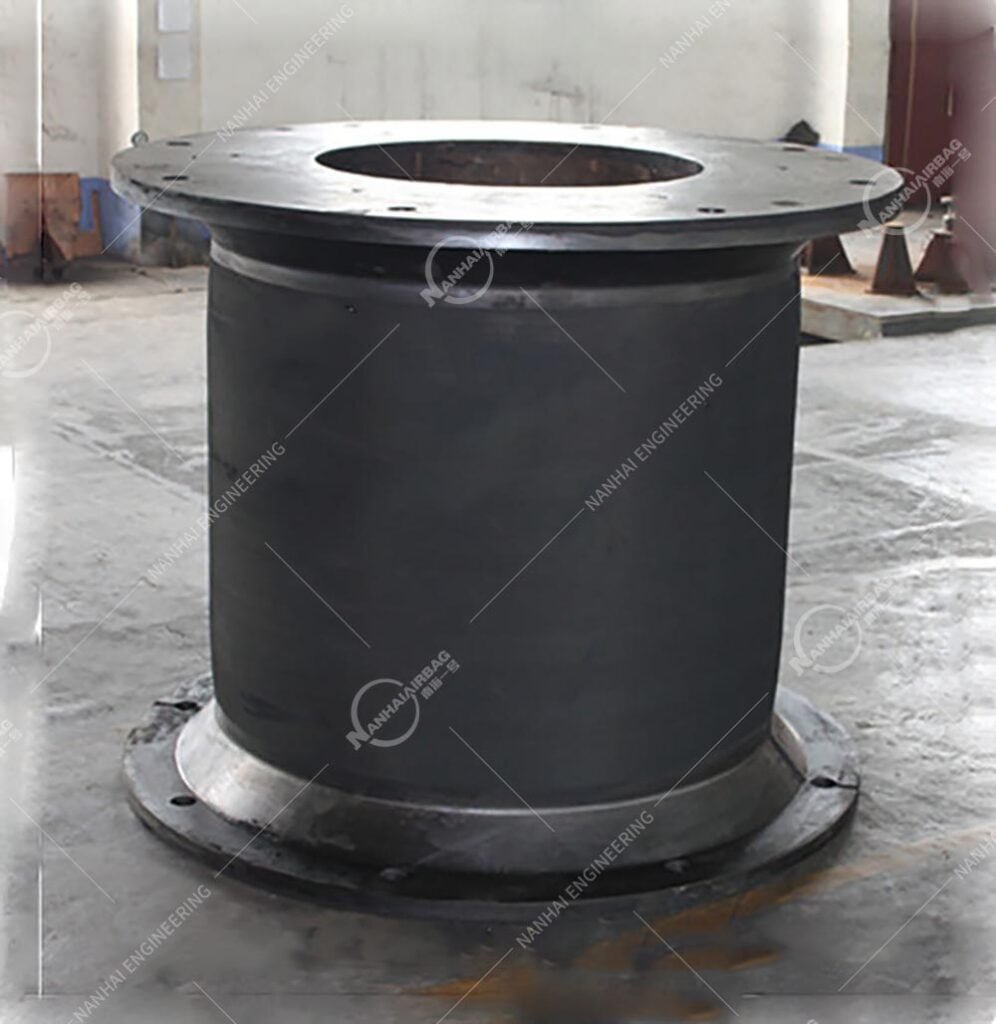

Every day, massive vessels weighing tens of thousands of tons dock at ports around the world. Without a highly efficient buffering system, the sheer kinetic energy of these ships could easily crush dock structures or severely damage the vessel’s hull. This is where high-performance marine fenders become the unsung heroes of port infrastructure. Among the various rubber fenders available today, the Super Cell Rubber Fender stands out as a heavy-duty, highly engineered solution trusted by major international ports.
But what exactly makes the Super Cell design so special? How does it outperform traditional fendering systems, and is it the right choice for your specific docking needs? In this comprehensive guide, we will dive deep into the technical advantages, real-world applications, and key considerations of Super Cell Rubber Fenders, helping you make an informed decision for your marine operations.
Google-Selected Summary:
Super Cell Rubber Fenders are heavy-duty, hollow, cylindrical marine fenders designed to absorb massive amounts of berthing energy while exerting minimal reaction force back onto the vessel or the dock structure. Compared to standard cell fenders, the advanced geometric design of Super Cell fenders increases energy absorption by approximately 15% without increasing the reaction force. Constructed from high-grade natural and synthetic rubber, and often paired with UHMW-PE (Ultra-High Molecular Weight Polyethylene) frontal panels, these fenders offer exceptional resistance to shear forces, low friction, and superior performance during angular berthing. They are the gold standard for large-scale commercial ports, oil and gas terminals, and container docks handling vessels from 50,000 to 500,000 DWT.
Why Ports Worldwide Are Upgrading to Super Cell Rubber Fenders
If you are managing a busy port or planning a new jetty, you know that downtime caused by dock damage is incredibly costly. Traditional solid rubber fenders often harden over time, crack under extreme pressure, or simply fail to absorb enough energy, leading to expensive repairs. The Super Cell Rubber Fender was engineered specifically to solve these pain points.
Let’s explore the core advantages of this innovative fendering system, backed by real-world operational examples.
1. Unmatched Energy Absorption with Low Reaction Force
The hallmark of an excellent marine fender is its ability to absorb a high amount of impact energy (E) while keeping the reaction force (R) low to prevent structural damage to both the ship and the dock.
- The Advantage: Thanks to its optimized hollow-cell structure, the Super Cell fender dramatically improves the E/R ratio (Energy-to-Reaction force). It achieves about 15% higher energy absorption compared to conventional cell fenders while maintaining the same reaction force . The design allows for a safe compression deflection of up to 52.5% (compared to 47.5% in standard models), meaning it can compress further to absorb bigger shocks without pushing back too hard .
- Real-World Example: Consider a 100,000 DWT bulk carrier docking at a coal terminal in rough seas. A standard rubber fender might absorb the initial impact but transfer too much residual force back to the ship’s hull, risking structural denting. A Super Cell fender, however, compresses smoothly to 52.5% of its height, absorbing the erratic kinetic energy and ensuring the vessel comes to a gentle, controlled stop.
2. Exceptional Angular Berthing Performance
Ships rarely dock perfectly parallel to the pier. Factors like strong crosswinds, tricky currents, or pilot error often result in vessels hitting the dock at an angle.
- The Advantage: The Super Cell design features a wide, circular large-diameter base and a robust central body that distributes stress evenly, even when compressed at an angle . This wide dispersion of stress, validated by Finite Element Method (FEM) analysis, prevents the “stress concentration” that causes ordinary fenders to buckle or tear at the base .
- Real-World Example: Imagine a ferry terminal where fast ferries and catamarans must dock quickly during changing tides. Even if a vessel hits the fender at a 5 to 10-degree angle due to rushing, the Super Cell fender maintains its structural integrity and energy-absorbing capabilities, protecting the monopile dolphin structures from shearing off.
3. Drastically Reduced Shear Force and Hull Pressure
When a ship rubs against a fender during berthing, friction generates dangerous shear forces that can rip fenders from their mounts or scrape the vessel’s hull.
- The Advantage: Super Cell fenders are almost always installed as part of a complete system that includes a large frontal panel. This panel is equipped with UHMW-PE face pads. The UHMW-PE material has an incredibly low coefficient of friction, which allows the ship to slide smoothly against the fender without generating destructive shear forces . Furthermore, the large frontal panel spreads the impact load over a wider area, significantly reducing the pressure (P) exerted on the ship’s hull .
- Real-World Example: At an LNG (Liquefied Natural Gas) facility, the vessels have highly sensitive, thin-walled hulls that cannot withstand high localized pressure. By using Super Cell fenders paired with oversized UHMW-PE frontal panels, the terminal ensures that even the largest LNG carriers are protected from hull damage during the delicate berthing process.
4. Long-Term Durability and Cost-Effectiveness
While the initial investment in a Super Cell system might be slightly higher than basic cylindrical fenders, the long-term ROI is undeniable.
- The Advantage: Built with high-tensile synthetic tire-cord fabric and premium grade rubber, these fenders resist ozone, UV rays, seawater corrosion, and extreme temperature fluctuations . Their modular design also means that if one unit is damaged, it can be replaced individually without overhauling the entire dock face .
- Real-World Example: The Port of Savannah, one of the busiest container ports in the U.S., switched to Super Cell fenders for their ability to handle 14,000 TEU (Twenty-foot Equivalent Unit) container ships. Within a year, they reported a 60% reduction in fender-related repairs and saved an estimated $200,000 in downtime costs .
Complementary Marine Protection: The Bigger Picture
While Super Cell Rubber Fenders are the ultimate choice for dock-side impact protection, a comprehensive marine safety strategy often requires additional equipment. For instance, marine airbags are frequently used in conjunction with fendering systems; while the fenders protect the dock during daily berthing, marine airbags are utilized for heavy-duty ship launching, salvage operations, and emergency floating. By integrating both high-quality rubber fenders and marine airbags into your maritime infrastructure plan, you ensure complete protection for your vessels, your docks, and your bottom line .
Frequently Asked Questions (FAQs) about Super Cell Rubber Fenders
To help you further evaluate this technology, we have compiled answers to the most common questions engineers and port managers ask when searching for marine fendering solutions.
Q1: How do Super Cell Rubber Fenders differ from standard Cell Fenders?
A: The primary difference lies in the advanced geometric design and material composition. Super Cell fenders feature a modified buckling point and smoother transitions between the body and the flange. This allows them to achieve a 52.5% compression deflection (compared to 47.5% in standard cells) and increases energy absorption by roughly 15% without increasing the reaction force .
Q2: What sizes do Super Cell Rubber Fenders come in?
A: They are highly scalable. Standard sizes typically range from SC400H (400mm in height) up to massive SC3000H (3000mm in height) to accommodate everything from small tugboats to 500,000 DWT supertankers . Custom sizes and pre-compressed versions (like SC1000H, SC1150H, etc.) are also available to fit specific dock dimensions.
Q3: Can Super Cell Fenders be retrofitted to replace older, damaged fenders?
A: Yes, in most cases. One of the key design features of the Super Cell series is that they share the exact same bolt-hole dimensions and center distances as many traditional cell fenders . This means you can often upgrade to the superior Super Cell performance without having to redrill or modify the existing concrete substructure of your pier.
Q4: Are Super Cell Rubber Fenders suitable for locations with extreme tidal ranges?
A: Absolutely. Because they can be mounted vertically on tall piles or dolphins, and they maintain consistent performance even under severe angular compression, they are ideally suited for open-pile jetties and locations with tidal variations exceeding 10 meters .
Q5: How does the UHMW-PE panel affect the fender’s lifespan?
A: The UHMW-PE (Ultra-High Molecular Weight Polyethylene) panel acts as a sacrificial, low-friction interface between the hard rubber fender and the steel hull of the ship. By reducing friction, it eliminates the abrasive wear and tear on the rubber body caused by the ship “scrubbing” against it during tidal rises and falls. This can effectively double the operational lifespan of the rubber fender core .
Conclusion: Is the Super Cell Rubber Fender Right for Your Port?
Choosing the right marine fender is not just a matter of checking a box; it is a critical engineering decision that impacts the safety of your crew, the integrity of your vessels, and the profitability of your port operations. If you are operating a high-traffic terminal, handling large tonnage vessels, or dealing with harsh environmental conditions, the Super Cell Rubber Fender is undoubtedly one of the best investments you can make. Its superior energy absorption, low reaction force, and incredible durability provide a level of protection that standard rubber fenders simply cannot match.
Ready to upgrade your dock’s defense system? Consult with a trusted marine engineering specialist today to calculate the exact fender specifications required for your unique berthing conditions. Don’t wait for the next storm or a docking mishap to expose the weaknesses in your current infrastructure—reinforce it with the proven power of Super Cell technology.
