
Cylindrical Rubber Fender (GD Fender): The Hanging Workhorse for Wharves, Pontoons & Barge Lines
16/07/2026Pneumatic Rubber Fenders: The Complete Guide to Floating Marine Berthing Protection
23/07/2026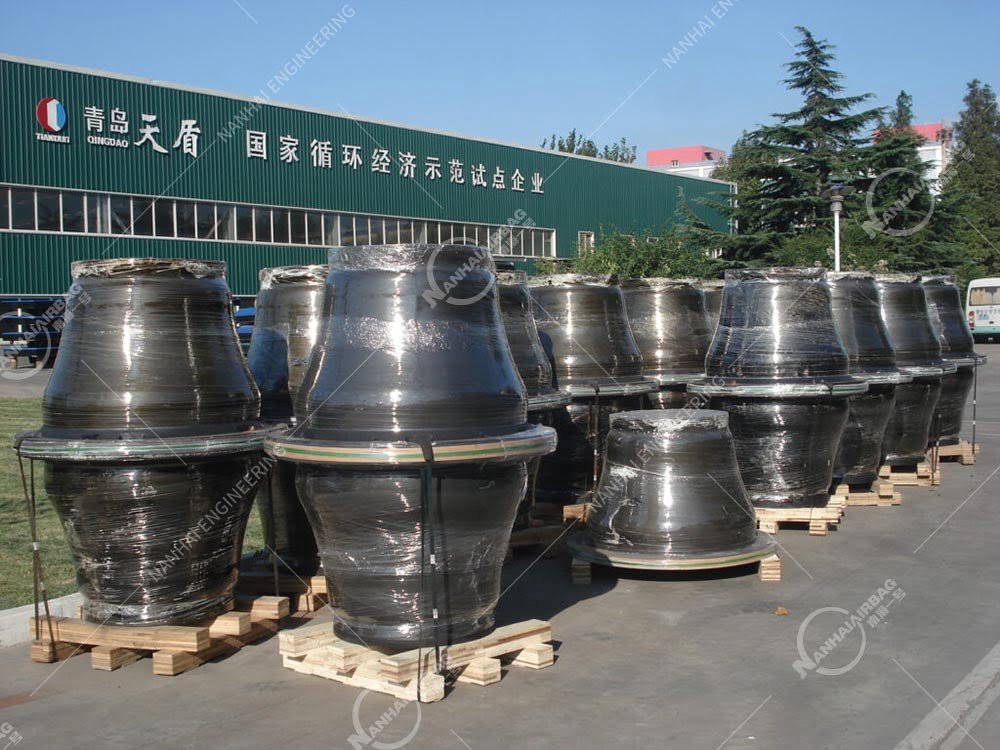
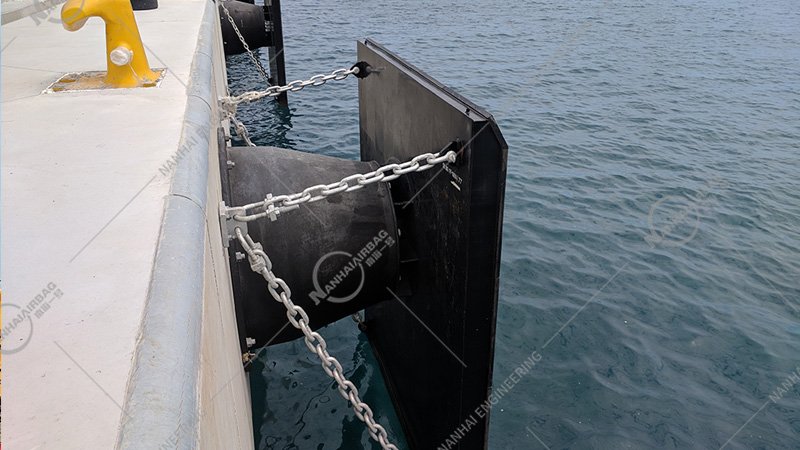
Super Cone Rubber Fenders are high-performance marine fenders designed with a conical geometry that delivers up to 70% higher energy absorption than cylindrical fenders of the same size. Their unique shape allows them to deflect in multiple directions while maintaining low reaction force, making them the go-to choice for high-traffic ports, oil terminals, and naval docks worldwide.
If you’ve ever watched a massive cargo ship — weighing tens of thousands of tons — glide into a dock without so much as scratching the wharf, you’ve witnessed marine fendering at work. Among all the options available today, Super Cone Rubber Fenders have quietly become the industry favorite. But what makes them “super”? And how do they compare to other solutions like marine airbags or standard rubber fenders?
Let’s break it down.
What Are Super Cone Rubber Fenders?
Super Cone Rubber Fenders (sometimes called Cone Fenders) are a type of marine fender characterized by their truncated-cone profile. First developed to solve the limitations of cylindrical and cell fenders, they use a smart geometric trick: when a vessel presses against the fender, the cone compresses axially and flexes radially, distributing stress across a much larger volume of rubber.
The result? Higher energy absorption, lower hull pressure, and better performance per dollar spent.
🔑 Key Advantages (With Real-World Examples)
Here’s where the product really shines — and why port engineers keep specifying it.
1. Superior Energy Absorption (Up to 70% More)
Compared to a cylindrical fender of the same height, a Super Cone delivers significantly more absorption capacity. For example, a SC1000 cone fender can absorb over 3,500 kJ of berthing energy, whereas a comparable cylindrical unit might tap out near 2,000 kJ.
Use case: At a busy container terminal in Southeast Asia, switching from cylindrical to Super Cone fenders allowed Panamax-class vessels to dock without upgrading the berth structure — saving the port an estimated $2M in civil works.
2. Low Reaction Force = Safer for Ships
Reaction force is the “push back” the fender exerts on the ship’s hull. Super Cones keep this low even under heavy compression, which means less risk of hull damage — especially important for LNG carriers and naval vessels with sensitive coatings.
3. Multi-Directional Deflection
Ships don’t always hit the dock straight-on. Super Cones handle angular berthing (up to 10–15° off-axis) far better than cell fenders, which tend to buckle or deliver uneven performance when the angle shifts.
4. Durability in Harsh Environments
Made from high-abrasion, UV-resistant rubber compounds (often meeting PIANC 2002 / 2018 guidelines), these fenders shrug off saltwater, oil, and extreme temperature swings. Service life typically exceeds 15–20 years.
5. Easy Retrofitting
Because the mounting pattern is compact, Super Cones can replace older cell or V-type fenders without re-pouring the concrete dock face — a huge plus for retrofit projects.
Super Cone vs. Other Marine Fenders & Marine Airbags
It helps to see where Super Cones sit in the bigger picture:
| Fender Type | Best For | Limitation |
|---|---|---|
| Super Cone Rubber Fender | Medium-to-large berths, high-energy docking | Higher upfront cost than cylindrical |
| Cell Fender | Very high energy, large tankers | Poor angular performance |
| Cylindrical Fender | Small jetties, low-energy berths | Lower absorption per size |
| Arch Fender | Barge docks, corner protection | Not for large vessels |
| Marine Airbags | Ship launching, salvage, temporary cushioning | Not a permanent berthing solution |
💡 Pro tip: Many ports use marine airbags for ship launching and heavy lifting, then install Super Cone Rubber Fenders as the permanent berthing system. They’re complementary technologies, not competitors.
Where You’ll See Them
- Oil & gas terminals (high-tonnage tankers)
- Naval and coast guard docks
- Container terminals (Post-Panamax berths)
- Ro-Ro ferry terminals
- Offshore platform approach jetties
💬 People Also Ask (FAQ)
These are the questions popping up in Google Search alongside “Super Cone Rubber Fenders”:
Q: What’s the difference between a Cone Fender and a Super Cone Fender?
A: “Cone Fender” is the generic category; “Super Cone” typically refers to第二代 designs with optimized flange geometry, higher compression ratios (up to 72% deflection), and improved performance per PIANC 2018 standards.
Q: How long do Super Cone Rubber Fenders last?
A: With proper installation and occasional inspection, 15–20 years is standard. Rubber hardness is usually specified at 60–65 Shore A for the optimal balance of absorption and recoil.
Q: Can Super Cone Fenders be used with a front panel?
A: Yes — adding a steel or UHMW-PE front panel lowers hull pressure further and spreads the load, which is common practice for large crude carriers.
Q: Are Super Cone Fenders better than marine airbags for docking?
A: They serve different purposes. Marine airbags are inflatable, portable, and used mainly for ship launching or temporary protection. Super Cone Rubber Fenders are fixed, permanent dock infrastructure. For a working berth, you want cones (or another rigid fender), not airbags.
Q: What standards should I check when buying?
A: Look for compliance with PIANC 2002 / PIANC 2018, ISO 9001 manufacturing certification, and third-party compression-test reports.
Choosing the Right Spec for Your Project
When sourcing Super Cone Rubber Fenders, pay attention to:
- Cone size (SC600, SC800, SC1000, SC1250, SC1600, etc.)
- Rubber compound (natural NR/SBR blend is standard; neoprene or EPDM for aggressive chemical exposure)
- Mounting style — single-bolt, twin-bolt, or embedded anchor cage
- Front panel option — recommended for vessels >50,000 DWT
And don’t forget: pair your fender spec with a proper marine fender layout drawing that accounts for tidal range, dolphin placement, and maximum expected berthing energy. A well-designed fender system is only as good as its installation.
Final Thought
In the world of marine fenders, there’s no one-size-fits-all — but if you’re running a medium-to-large berth and want the best bang for your buck, Super Cone Rubber Fenders are hard to beat. They sit right at the sweet spot of energy absorption, angular tolerance, and lifespan.
Whether you’re upgrading an old quay or building a greenfield terminal, it’s worth putting Super Cones on your shortlist — and keeping marine airbags in your toolkit for the launch day itself.
